How University Event Apps Are Transforming Campus Life: Orientations, Career Fairs & Beyond

Picture a first-year student on move-in day. She has a paper map that’s already smudged from the humidity, a printed schedule that doesn’t match the one posted outside the dining hall, and a growing sense that she’s going to miss the one session that actually matters. A University Event App solves these common challenges by giving students instant access to schedules, maps, notifications, and event updates in one place.

Now multiply that experience by three thousand incoming students. Add a career fair with 120 employers spread across a field house. That is the reality of campus event logistics today. This is exactly why a University Event App has become an essential tool for universities looking to improve orientation, career fairs, and student engagement.

This is the world a dedicated campus event app was built to fix — and it’s worth understanding why that shift is happening now, not just how the apps work.

Why Every University Event App Matters for Modern Campus Events
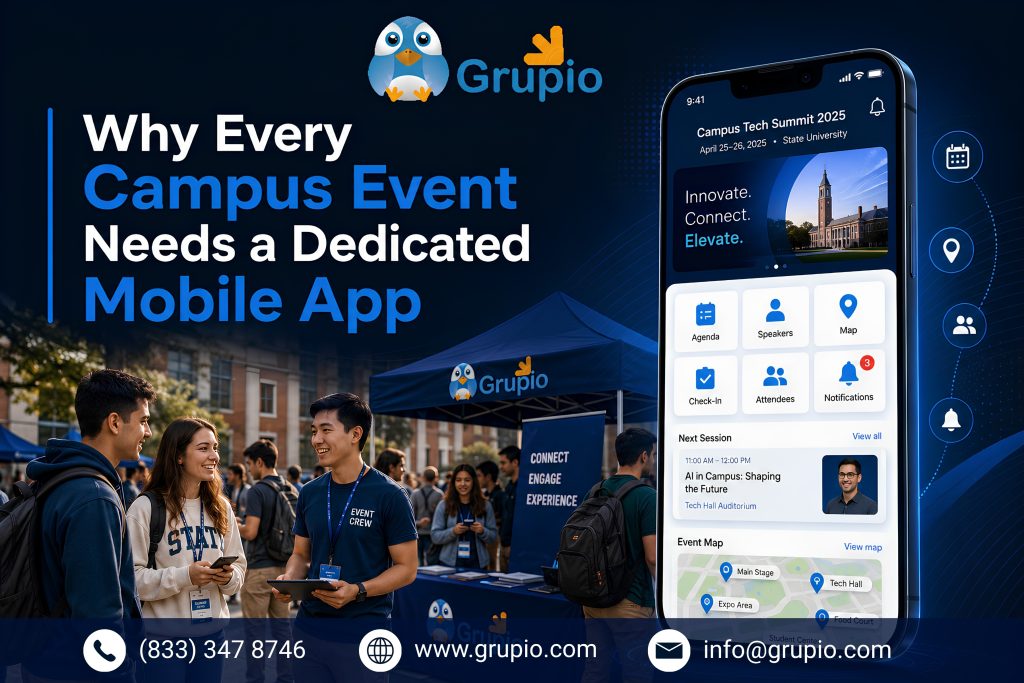
University Event App

Every semester, universities host high-stakes events like orientation week, career fairs, homecoming, commencement, and club recruitment nights. Every semester, the same coordination problems return. Schedules live in one PDF. Room changes are announced through emails that many students never check. Exhibitor and speaker information is often printed in booklets that become outdated by lunchtime.

The status quo isn’t for lack of effort. Event staff and student affairs teams often prepare for months. They build spreadsheets, print signage, and manually update a campus-wide “master schedule.” Even then, students rarely receive those updates in real time. The tools are solid, but paper, email blasts, and static webpages create the bottleneck.

Eventually, a schedule change, weather delay, or packed orientation session exposes the problem. Hundreds of students arrive at the wrong room. An employer may sit at an empty table because the printed map is outdated. That’s usually the moment a university starts looking seriously at a dedicated event app instead of another spreadsheet.

Because of that shift in thinking, campus event technology has moved from “nice to have” to a standard line item in student affairs and career services budgets. According to EDUCAUSE’s ongoing research on student technology expectations, students increasingly expect mobile-first, real-time information from their institutions, not static PDFs. A dedicated app meets that expectation. It provides schedules, maps, notifications, and directories in one place. It is built for how students already use their phones instead of forcing a general campus app to manage high-volume events.

Simplifying Orientation Days with Real-Time Schedules & Notifications
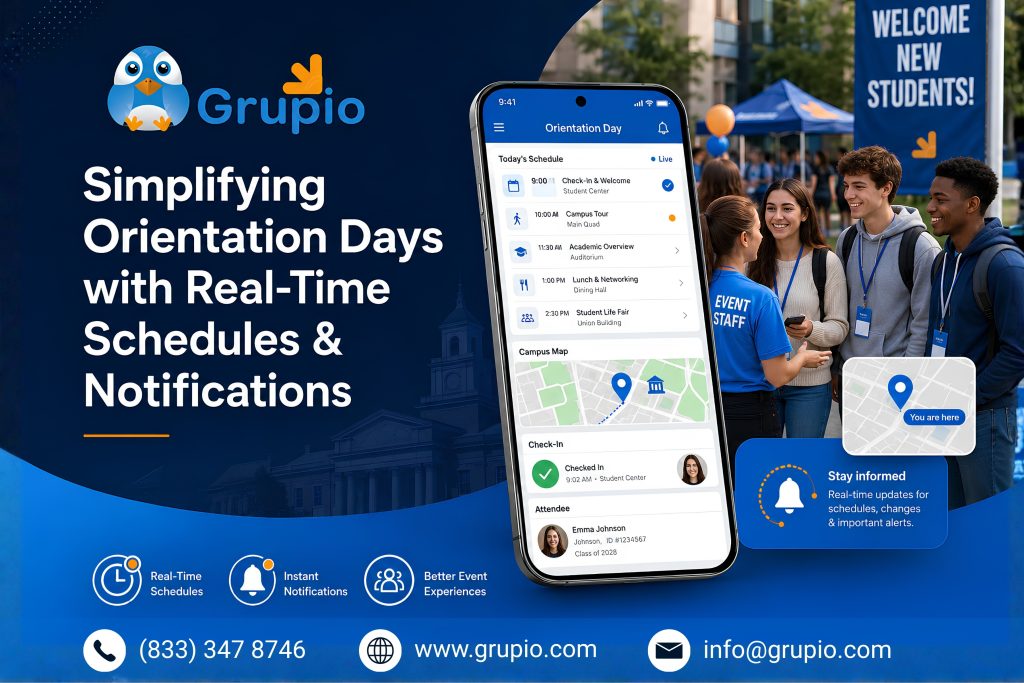
Student Orientation App

Orientation is often the first real test of a campus event app. It compresses an entire semester’s worth of coordination into just two or three days. New students are learning the campus, meeting advisors, and choosing courses. They are also trying to find their next session. At the same time, their families often attend separate activities.

A dedicated app turns that chaos into something navigable. Instead of using a printed booklet, students receive a live, personalized schedule. It updates instantly when a room changes or a session runs longer than expected. Push notifications replace the group text that inevitably gets three replies of “wait, where are we meeting?” And because the schedule lives on the device students already have in their pocket, there’s no “I lost my folder” excuse on day two.

Once that first layer works, the real value appears in the data. Administrators can see which sessions are overcrowded and which are under-attended. They also learn where students spend their time instead of waiting weeks for survey results. That turns orientation from a one-shot event into something a university can actually iterate on year over year.

Boosting Career Fair Success with Interactive Maps & Exhibitor Profiles
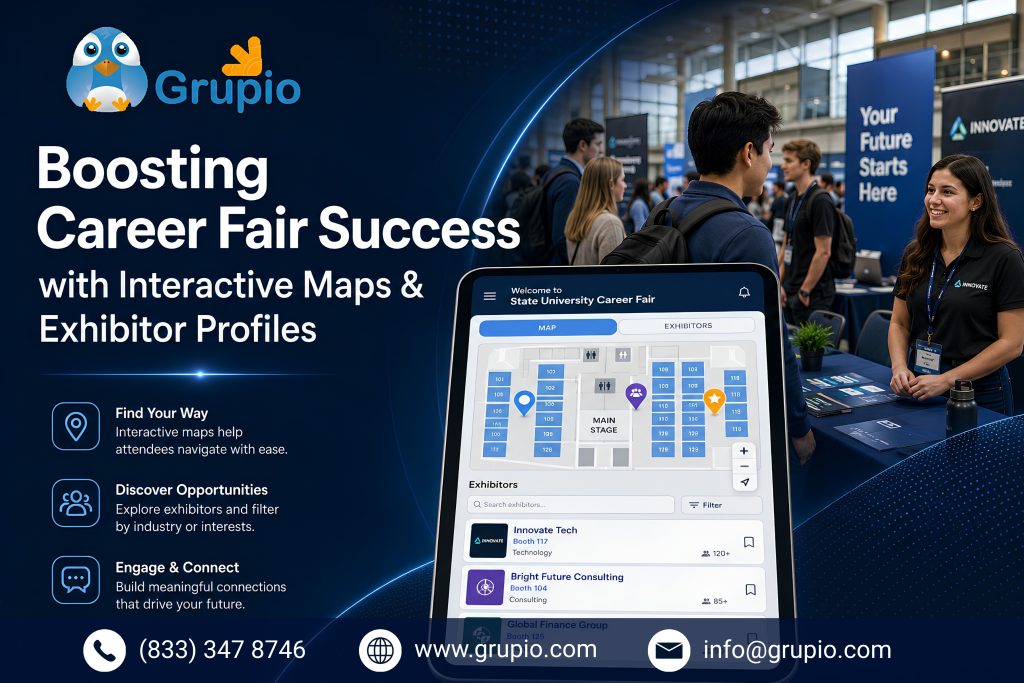
Career Fair App

Career fairs carry a different kind of pressure. Students have a limited window to impress employers. Recruiters are also managing back-to-back conversations. A confusing floor plan can cost a student an important opportunity.

An interactive map inside the event app solves the most basic version of this problem — showing exactly where each employer’s table sits, updated instantly if a company has to relocate. The bigger advantage comes from exhibitor profiles. Students can review company descriptions, open roles, and recruiter bios before the event. They arrive with specific questions instead of a generic introduction.”

Better-prepared students have more meaningful conversations with employers. They are also more likely to receive follow-up interviews. This strengthens career services outcomes and employer relationships. which matters directly to a university’s career services outcomes and, increasingly, to the employer relationships that keep companies coming back year after year. Career fair platforms built specifically for higher education, such as Career Fair Plus, have grown around exactly this need: giving students a searchable employer directory and giving career services teams a way to measure engagement instead of guessing at it from sign-in sheets.

Building Student & Faculty Connections Through In-App Networking
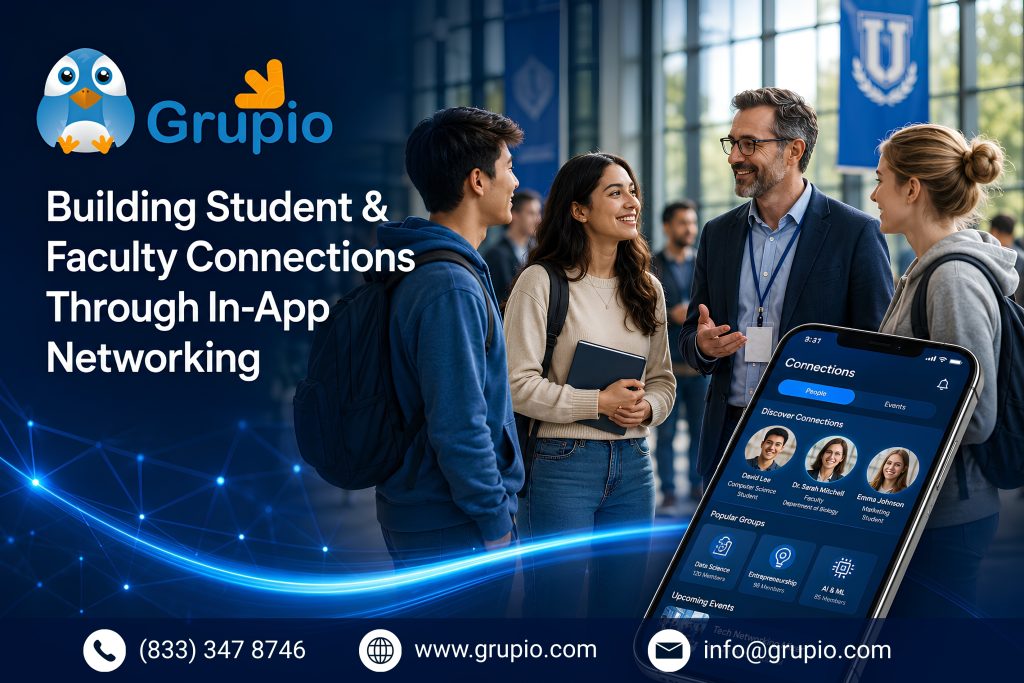
Campus Networking App

Orientation and career fairs are the obvious use cases, but the deeper transformation is what happens between events. A well-built campus app doesn’t disappear once the career fair ends — it becomes a year-round layer of connection between students, faculty, and each other.

In-app directories help students find classmates in the same major. They can RSVP to club meetings or message faculty advisors without searching through old emails or syllabi. Discussion boards and interest groups keep students connected after events. Activities like hackathons, guest lectures, and student mixers give them more reasons to continue using the app.

This ongoing engagement gives universities something that career fairs and orientation alone cannot provide. They gain a reliable communication channel with students. This supports daily campus activities and helps create a stronger sense of belonging.

Branding Your University’s Identity Across Every Student’s Phone
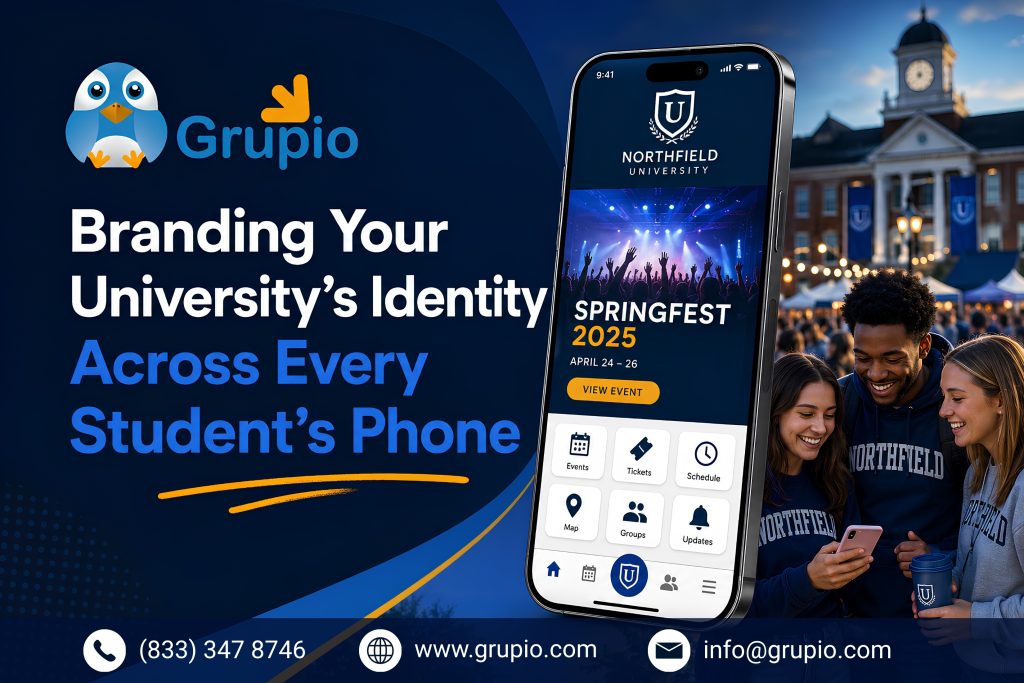
Branded University Event App

There’s a quieter benefit underneath all of this: every time a student opens the app to check an orientation schedule or browse career fair exhibitors, they’re seeing the university’s colors, mascot, and voice — not a generic third-party tool with the school’s logo pasted on top as an afterthought.

A well-designed campus app becomes a consistent brand touchpoint across the entire student lifecycle: the same visual identity from the first orientation notification a freshman receives to the graduation-day schedule a graduating senior checks four years later. That consistency matters more than it might seem — it signals that the university invested in the experience, not just the event.

Over time, what started as a solution for orientation challenges becomes something bigger. The app becomes a trusted, branded home for campus life. Students can find accurate information in one place instead of managing paper, emails, and outdated updates.

Frequently Asked Questions

1. What is a university event app, and how is it different from a general campus app?

A university event app is a mobile tool designed for live event management. It supports orientation, career fairs, homecoming, and commencement with features like live schedules, maps, and exhibitor directories. A general campus app may include event features, but dedicated event apps are usually easier to update and manage during busy events.

2. Do students actually use these apps, or do they default back to email and group chats?

Adoption depends heavily on how the app is rolled out. Apps that are pushed at a mandatory touchpoint — like requiring students to check in via the app at orientation, or requiring an RSVP through it for a career fair session — see far higher usage than apps that are simply “available” in the app store. Real-time notifications (schedule changes, room updates) also drive repeat opens, since students learn quickly that the app has information they can’t get anywhere else.

3. How do career fair apps benefit employers, not just students?

Employers get a built-in audience of pre-qualified candidates who’ve already reviewed their company profile and open roles before walking up to the table, which tends to produce more focused conversations. Many platforms also give employers post-event data — how many students viewed their profile, who they connected with — which helps recruiting teams justify travel and staffing budgets for the next fair.

4. Is it expensive for a university to build or license an event app?

Costs vary widely depending on whether a university licenses an existing higher-ed event platform versus building custom software in-house. Licensing an established platform is generally faster to deploy and lower-risk for a single annual event like a career fair, while a custom-built app makes more sense for institutions that want deep integration with their own student information systems.

5. What data should a university track to measure an event app’s success?

Universities can track useful metrics such as app downloads, active users during the event, session check-ins, booth visits, notification open rates, and survey completion. (which is much easier to collect in-app than via a separate email survey). For career fairs specifically, tracking student-to-employer connections and follow-up interview requests ties the app directly to career services outcomes, not just attendance numbers.

Event Format 101: The One Decision That Can Make or Break Your Entire Event

Every successful event starts with a single, often-overlooked decision: the format. Long before you book a venue, hire a speaker, or design a single slide, you have to decide how people will actually experience your event in person, online, or somewhere in between. Get this choice right, and everything else (budget, marketing, logistics, content) falls into place more easily. Get it wrong, and you’ll spend the rest of your planning timeline fighting an uphill battle.

Yet event format is frequently treated as an afterthought, something decided in five
minutes during a kickoff call rather than the strategic foundation it actually is.
This article breaks down why the format matters so much, and how to choose the one that
fits your goals, audience, and resources.

Understand What Event Format Really Means

 
understand what event format scaled
Before comparing options, it helps to be clear on what’s actually on the table.
Broadly, event formats fall into three categories:

  • In-person events — physical gatherings where attendees share a
    single location. Think conferences, trade shows, workshops, galas, and networking mixers.
  • Virtual events — fully online experiences delivered through webinars,
    livestreams, or virtual event platforms, with no physical venue involved.
  • Hybrid events — a blend of both, where some attendees join in person
    while others participate remotely, often through live streaming and interactive digital tools.

Within each category, there’s also a sub-decision about structure: Is it a single
keynote-style session, a multi-track conference, a roundtable discussion, a workshop,
or a networking-first mixer? The format isn’t just “online vs. offline” — it’s the
entire shape of the experience, including pacing, interactivity, and how content gets delivered.

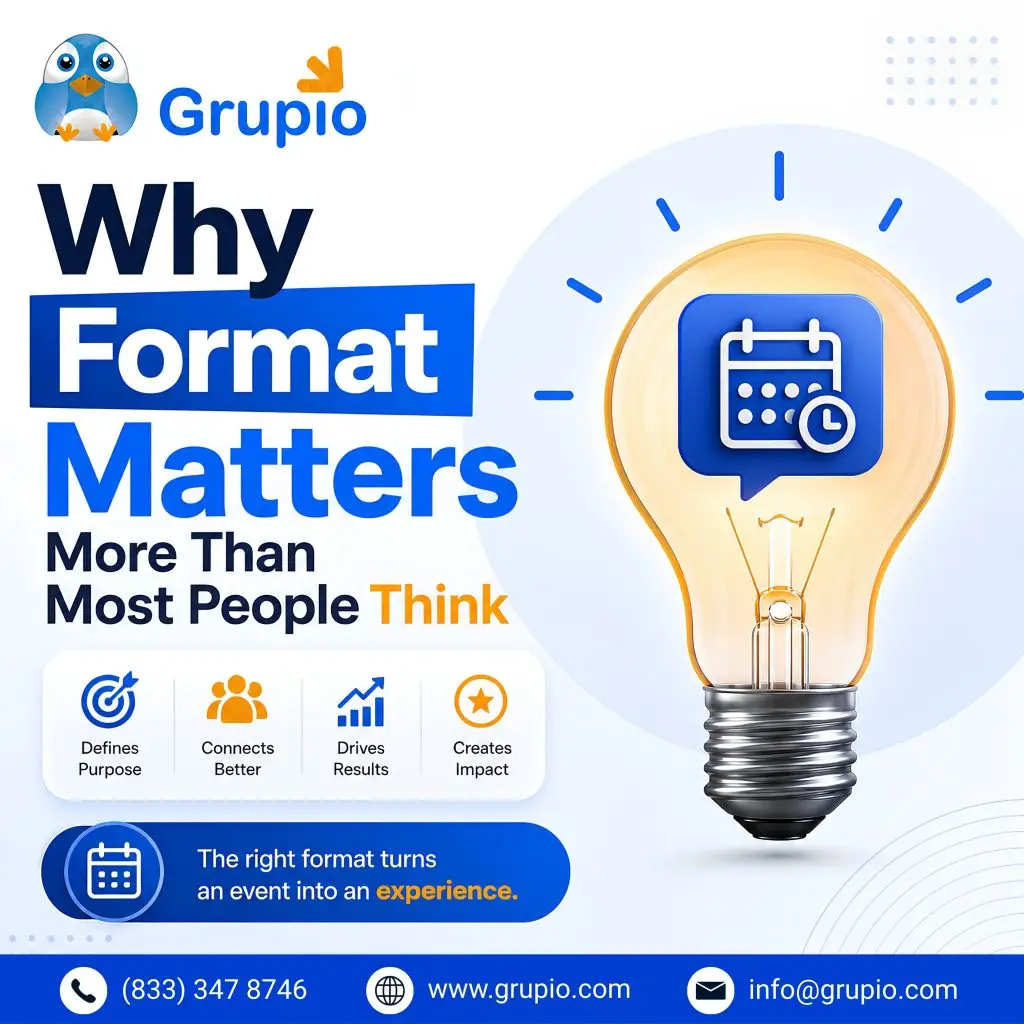
Why Format Matters More Than Most People Think

event format planning guide
It’s tempting to treat format as a logistics question — a box to check before moving
on to “the real planning.” In practice, format is a strategic lever that shapes nearly
every other decision you’ll make.

It determines your budget structure. In-person events carry venue,
catering, and travel costs. Virtual events shift spending toward platform fees,
production quality, and digital engagement tools. Hybrid events often require budgeting
for both, plus the added complexity of syncing two experiences.

It shapes attendee experience and energy. Spontaneous hallway
conversations, body language, and shared physical energy are nearly impossible to
replicate online — but virtual formats offer convenience, accessibility, and reach
that physical rooms can’t match.

It influences your reach and inclusivity. A virtual or hybrid format
removes travel and geographic barriers, opening the door to attendees who couldn’t
otherwise participate — whether due to cost, time, disability, or distance.

It affects measurable outcomes. The format changes what you can
realistically track: foot traffic and badge scans at in-person events versus click-through
rates, watch time, and chat engagement online.

In short, the format isn’t a downstream detail — it’s the lens through which every
other planning decision gets filtered.

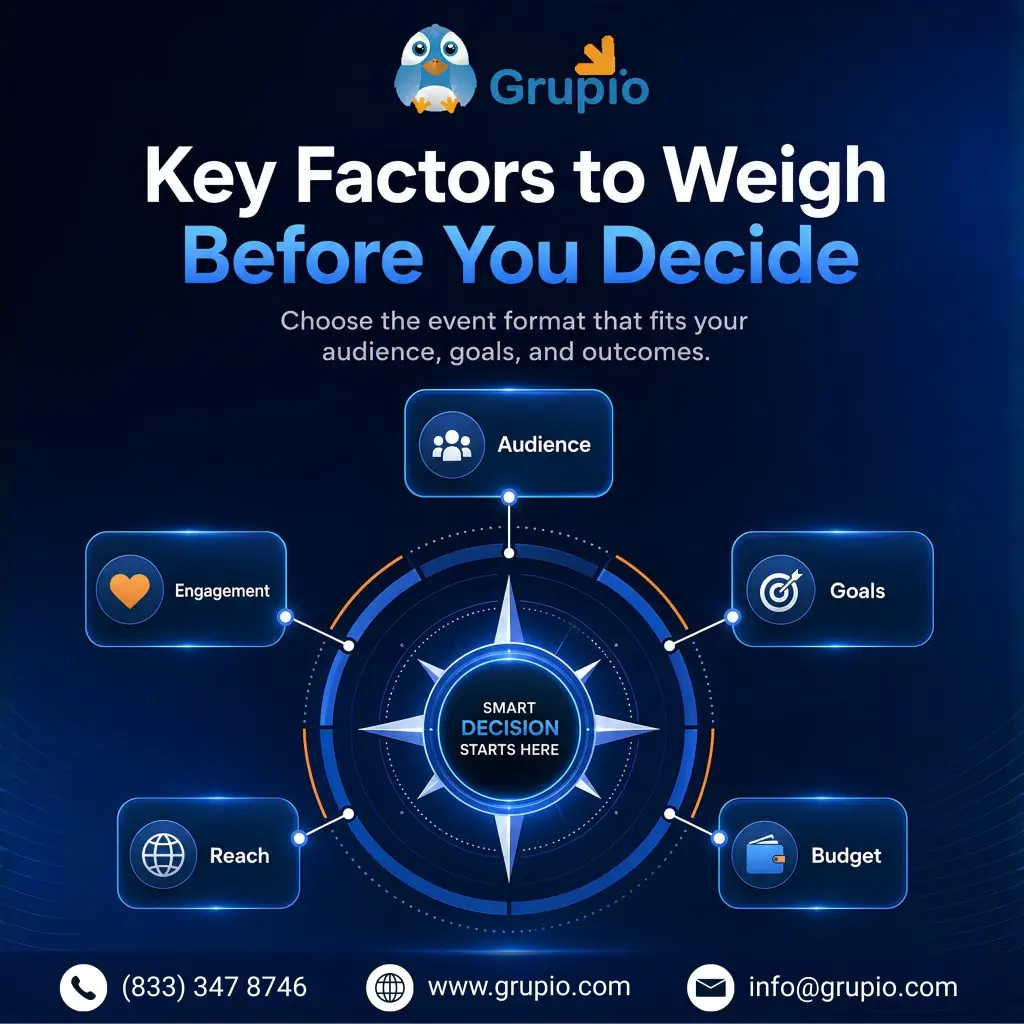
Key Factors to Weigh Before You Decide

key factors to weigh
Choosing a format isn’t about picking what’s trendy or what worked for someone else.
It’s about matching the format to your specific situation. Here are the factors that
should drive the decision:

  • Your objective. Are you trying to build community, generate leads, educate, sell, or celebrate?
  • Your audience. Where are they located? How tech-savvy are they?
  • Budget and resources. Be honest about what you can sustain.
  • Content type. Interactive workshops often perform better in person.
  • Timeline. Virtual events can usually be organized faster than in-person ones.
  • Desired outcomes and metrics. Define success before selecting a format.

Running through this list honestly — even briefly — will eliminate at least one format
option before you’ve spent a dollar.

Matching Format to Event Type

Different goals naturally pull toward different formats. Here’s a general guide
(not a rulebook):

Event Goal Best-Fit Format Why
Building deep relationships or community In-person Physical presence builds trust and memorable connection faster.
Reaching a large, geographically spread audience Virtual Removes travel cost and time barriers.
Maximizing both reach and engagement Hybrid Combines in-room energy with remote accessibility.
Hands-on training or skill-building In-person Tactile, supervised practice is hard to replicate online.
Thought leadership or educational content Virtual or Hybrid Easy to record, repurpose, and scale.
High-stakes networking or deal-making In-person Informal, unscripted interactions drive outcomes.

Of course, exceptions exist in every category — a well-designed virtual workshop can
absolutely build community, and a hybrid sales kickoff can drive real deal-making.
Treat this table as a starting hypothesis, not a final answer.

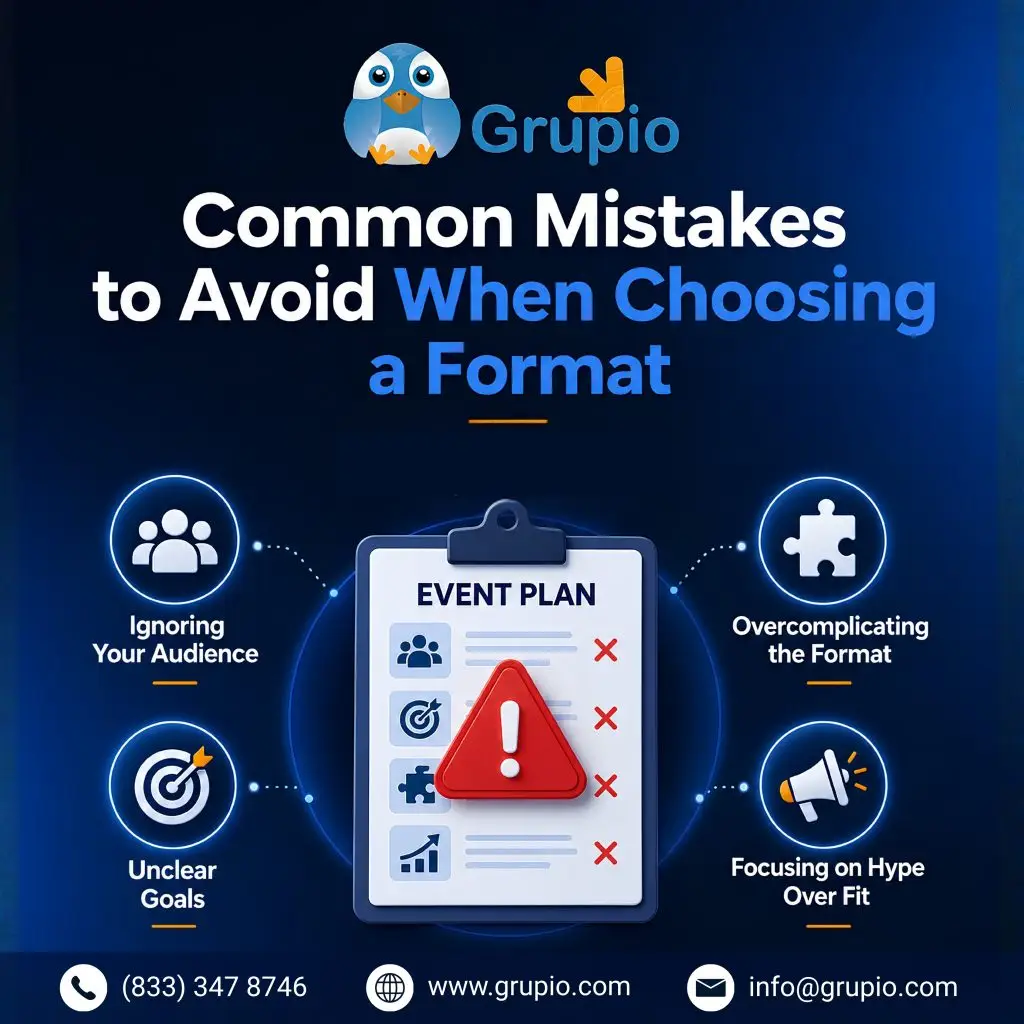
Common Mistakes to Avoid When Choosing a Format

common mistake
Even experienced organizers fall into predictable traps when locking in a format:

  • Choosing based on habit, not strategy. “We’ve always done it this way” is not a reason. Revisit the decision for every event rather than defaulting to last year’s format.
  • Underestimating hybrid complexity. Hybrid events aren’t simply “in-person plus a camera.” They require dedicated planning for two simultaneous audiences, separate engagement strategies, and often a bigger production budget than either format alone.
  • Ignoring audience preferences. Surveying your audience even informally before locking in a format can prevent low turnout or poor engagement.
  • Locking in the format too early.
  • Deciding on format before clarifying objectives often leads to a mismatch that’s expensive to correct later.
  • Skipping a backup plan. Weather, travel disruptions, and last-minute venue issues can derail in-person events; platform outages can derail virtual ones. Always have a contingency plan regardless of format.

Avoiding these missteps alone can save significant budget and stress down the line.

Conclusion

Choosing the right event format isn’t a box to check off your planning list — it’s the
foundation everything else gets built on. It shapes your budget, your audience’s
experience, your reach, and ultimately whether your event achieves what you set out to do.

Before you book a venue or a platform, take the time to clarify your objectives,
understand your audience, and honestly assess your resources. The format you choose
should serve your goals — not the other way around.

When in doubt, start with the outcome you want, work backwards to the experience that
delivers it, and only then decide whether that experience belongs in a room, online,
or both.

Frequently Asked Questions

1. What’s the biggest factor in choosing an event format?

Your event’s core objective. Whether you’re prioritising relationship-building, broad
reach, education, or sales should guide the format more than budget or trend alone.

2. Is hybrid always the “best of both worlds”?

Not necessarily. Hybrid events can offer the broadest reach, but they also require
more planning, a bigger budget, and dedicated strategies for both in-person and remote
audiences. Done poorly, hybrid can underdeliver for both groups.

3. How do I know if my audience prefers in-person or virtual?

Look at past event data, send a short pre-event survey, or consider practical factors
like geographic spread, travel willingness, and how your audience has engaged with
previous events.

4. Are virtual events cheaper than in-person events?

Often, yes — virtual events typically avoid venue, travel, and catering costs.
However, high-quality virtual events still require investment in production,
platform tools, and engagement features, so costs can add up.

5. Can I change the event format after planning has started?

It’s possible, but costly. Switching formats midway often means renegotiating vendor
contracts, redesigning content, and resetting attendee expectations. It’s far more
efficient to lock in the format early based on clear objectives.


How to Leverage Mobile Event Management App While Organizing Events?

No lie; organizing events is a strenuous task.

But thanks to event management apps, making the jobs of event planners like hosting all sorts of events easier. (more…)

Zeena Awan

Zeena Awan is a dynamic Senior Project Manager at Grupio, recognized for her proven ability to lead complex, large-scale projects from inception to successful delivery. With extensive experience in project planning, execution, and process optimization, she excels at streamlining workflows, aligning cross-functional teams, and driving efficiency across operations.

Zeena is highly regarded for her strategic problem-solving skills, strong leadership, and commitment to excellence, consistently ensuring projects are delivered on time and to the highest standards of quality. At Grupio, she plays a pivotal role in enhancing operational processes, fostering collaboration, and implementing scalable solutions that align team performance with organizational goals. Her focus on both client satisfaction and team success has positioned her as a trusted leader in ensuring seamless project outcomes.

How to Start Successful Event Planning Business?

Dreaming about starting a successful event planning venture? If starting an event management company is your goal then there are several reasons to go ahead and start. But COVID-19 has everything under lockdown. Use this time to your advantage and research a bit about it. To help you start the process of your event planning business. We have arranged a step guide that will help you get an idea before you get in touch with clients. (more…)

Zeena Awan

Zeena Awan is a dynamic Senior Project Manager at Grupio, recognized for her proven ability to lead complex, large-scale projects from inception to successful delivery. With extensive experience in project planning, execution, and process optimization, she excels at streamlining workflows, aligning cross-functional teams, and driving efficiency across operations.

Zeena is highly regarded for her strategic problem-solving skills, strong leadership, and commitment to excellence, consistently ensuring projects are delivered on time and to the highest standards of quality. At Grupio, she plays a pivotal role in enhancing operational processes, fostering collaboration, and implementing scalable solutions that align team performance with organizational goals. Her focus on both client satisfaction and team success has positioned her as a trusted leader in ensuring seamless project outcomes.

Healthcare Mobile App & Its Smart Features

Technology is gradually transforming every aspect of our existence. Technology-oriented solutions, especially in healthcare have seen a lot of advancements. Immediate relief and enhanced offerings in the healthcare industry increase the spectrum at which they provide services. HCPs communicate and collaborate with patient care as mobility solutions. Healthcare Mobile App has helped to streamline various healthcare operations. It empowers affordable and efficient healthcare practices and engaging patients. Healthcare Mobile App is a cost-effective way to streamline the best healthcare providing services.
(more…)

Zeena Awan

Zeena Awan is a dynamic Senior Project Manager at Grupio, recognized for her proven ability to lead complex, large-scale projects from inception to successful delivery. With extensive experience in project planning, execution, and process optimization, she excels at streamlining workflows, aligning cross-functional teams, and driving efficiency across operations.

Zeena is highly regarded for her strategic problem-solving skills, strong leadership, and commitment to excellence, consistently ensuring projects are delivered on time and to the highest standards of quality. At Grupio, she plays a pivotal role in enhancing operational processes, fostering collaboration, and implementing scalable solutions that align team performance with organizational goals. Her focus on both client satisfaction and team success has positioned her as a trusted leader in ensuring seamless project outcomes.

Enterprise Event Apps to Make Office Meetings More Fun

What is common between events, conferences, and seminars these days? The answer is mobile apps. The type of event doesn’t matter, but event management apps are now the pillar of enhancing event experience. From effective networking to real-time updates and rich data set insights, enterprise event apps versatility makes them an irreplaceable tool when it comes to event planning. (more…)

Zeena Awan

Zeena Awan is a dynamic Senior Project Manager at Grupio, recognized for her proven ability to lead complex, large-scale projects from inception to successful delivery. With extensive experience in project planning, execution, and process optimization, she excels at streamlining workflows, aligning cross-functional teams, and driving efficiency across operations.

Zeena is highly regarded for her strategic problem-solving skills, strong leadership, and commitment to excellence, consistently ensuring projects are delivered on time and to the highest standards of quality. At Grupio, she plays a pivotal role in enhancing operational processes, fostering collaboration, and implementing scalable solutions that align team performance with organizational goals. Her focus on both client satisfaction and team success has positioned her as a trusted leader in ensuring seamless project outcomes.

How University App Can Engage Students amid COVID-19?

Universities and schools are moving their learning online after shutting down their campuses and other operations due to COVID-19. This is a great opportunity for the Edtech industry to grow exponentially and launch their university app. As people are advised to maintain social distancing and avoid public gatherings. Shifting to online learning systems has helped ensure schools and colleges that studies are not affected due to this pandemic. Focus on online learning platforms has increased ten folds due to the spread of COVID-19. (more…)

Zeena Awan

Zeena Awan is a dynamic Senior Project Manager at Grupio, recognized for her proven ability to lead complex, large-scale projects from inception to successful delivery. With extensive experience in project planning, execution, and process optimization, she excels at streamlining workflows, aligning cross-functional teams, and driving efficiency across operations.

Zeena is highly regarded for her strategic problem-solving skills, strong leadership, and commitment to excellence, consistently ensuring projects are delivered on time and to the highest standards of quality. At Grupio, she plays a pivotal role in enhancing operational processes, fostering collaboration, and implementing scalable solutions that align team performance with organizational goals. Her focus on both client satisfaction and team success has positioned her as a trusted leader in ensuring seamless project outcomes.

Why is the Tradeshow App must for Exhibitors?

People do not step out of houses without their phones. You’ll see everyone checking their phones every few minutes. It has become a part of our day to day life that we can not think about living without it. From our emails, calls, SMS to social media browsing; there are tons of things we can do on our phones. Especially when it comes to event management companies, they can unravel a whole new world via event and tradeshow app. They can capitalize on this by developing android and iOS apps for their users. (more…)

Zeena Awan

Zeena Awan is a dynamic Senior Project Manager at Grupio, recognized for her proven ability to lead complex, large-scale projects from inception to successful delivery. With extensive experience in project planning, execution, and process optimization, she excels at streamlining workflows, aligning cross-functional teams, and driving efficiency across operations.

Zeena is highly regarded for her strategic problem-solving skills, strong leadership, and commitment to excellence, consistently ensuring projects are delivered on time and to the highest standards of quality. At Grupio, she plays a pivotal role in enhancing operational processes, fostering collaboration, and implementing scalable solutions that align team performance with organizational goals. Her focus on both client satisfaction and team success has positioned her as a trusted leader in ensuring seamless project outcomes.

10 Best Features Of Virtual Event Platform

COVID-19 is a pandemic that has forced us to stay inside. One good thing that came out of this situation is digitalization and remote working culture. It is not just limited to offices, virtual event platforms like podcasts, webinars, conferences, etc are on the rise. (more…)

Zeena Awan

Zeena Awan is a dynamic Senior Project Manager at Grupio, recognized for her proven ability to lead complex, large-scale projects from inception to successful delivery. With extensive experience in project planning, execution, and process optimization, she excels at streamlining workflows, aligning cross-functional teams, and driving efficiency across operations.

Zeena is highly regarded for her strategic problem-solving skills, strong leadership, and commitment to excellence, consistently ensuring projects are delivered on time and to the highest standards of quality. At Grupio, she plays a pivotal role in enhancing operational processes, fostering collaboration, and implementing scalable solutions that align team performance with organizational goals. Her focus on both client satisfaction and team success has positioned her as a trusted leader in ensuring seamless project outcomes.

Engaging your Sponsors with Event Branding Packages

One of the greatest challenges that event professionals face is finding and securing sponsors. Sponsors were earlier satisfied with logo placement as brand engagement but now they expect to drive awareness via meaningful, effortless and long-lasting advertisements. They look for a deeper connection with the participants. Connect more with your attendees using event branding packages and an event management app. (more…)

Zeena Awan

Zeena Awan is a dynamic Senior Project Manager at Grupio, recognized for her proven ability to lead complex, large-scale projects from inception to successful delivery. With extensive experience in project planning, execution, and process optimization, she excels at streamlining workflows, aligning cross-functional teams, and driving efficiency across operations.

Zeena is highly regarded for her strategic problem-solving skills, strong leadership, and commitment to excellence, consistently ensuring projects are delivered on time and to the highest standards of quality. At Grupio, she plays a pivotal role in enhancing operational processes, fostering collaboration, and implementing scalable solutions that align team performance with organizational goals. Her focus on both client satisfaction and team success has positioned her as a trusted leader in ensuring seamless project outcomes.