How University Event Apps Are Transforming Campus Life: Orientations, Career Fairs & Beyond

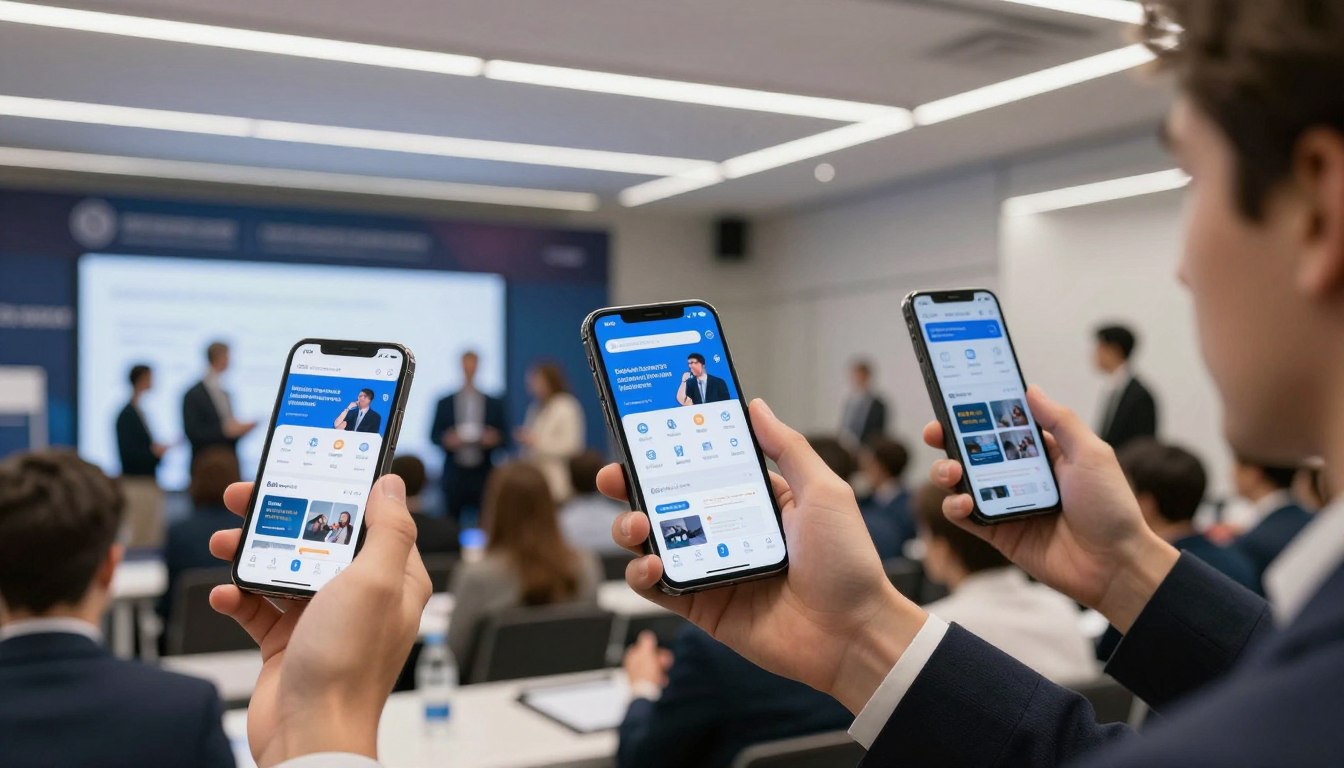
Picture a first-year student on move-in day. She has a paper map that’s already smudged from the humidity, a printed schedule that doesn’t match the one posted outside the dining hall, and a growing sense that she’s going to miss the one session that actually matters. A University Event App solves these common challenges by giving students instant access to schedules, maps, notifications, and event updates in one place.

Now multiply that experience by three thousand incoming students. Add a career fair with 120 employers spread across a field house. That is the reality of campus event logistics today. This is exactly why a University Event App has become an essential tool for universities looking to improve orientation, career fairs, and student engagement.

This is the world a dedicated campus event app was built to fix — and it’s worth understanding why that shift is happening now, not just how the apps work.

Why Every University Event App Matters for Modern Campus Events
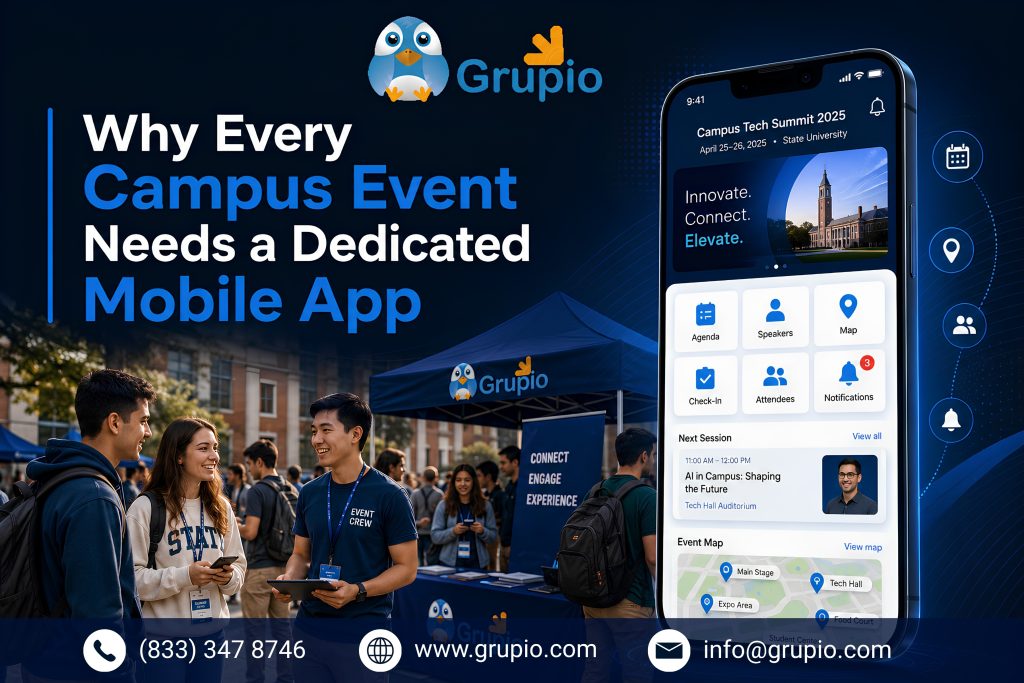
University Event App

Every semester, universities host high-stakes events like orientation week, career fairs, homecoming, commencement, and club recruitment nights. Every semester, the same coordination problems return. Schedules live in one PDF. Room changes are announced through emails that many students never check. Exhibitor and speaker information is often printed in booklets that become outdated by lunchtime.

The status quo isn’t for lack of effort. Event staff and student affairs teams often prepare for months. They build spreadsheets, print signage, and manually update a campus-wide “master schedule.” Even then, students rarely receive those updates in real time. The tools are solid, but paper, email blasts, and static webpages create the bottleneck.

Eventually, a schedule change, weather delay, or packed orientation session exposes the problem. Hundreds of students arrive at the wrong room. An employer may sit at an empty table because the printed map is outdated. That’s usually the moment a university starts looking seriously at a dedicated event app instead of another spreadsheet.

Because of that shift in thinking, campus event technology has moved from “nice to have” to a standard line item in student affairs and career services budgets. According to EDUCAUSE’s ongoing research on student technology expectations, students increasingly expect mobile-first, real-time information from their institutions, not static PDFs. A dedicated app meets that expectation. It provides schedules, maps, notifications, and directories in one place. It is built for how students already use their phones instead of forcing a general campus app to manage high-volume events.

Simplifying Orientation Days with Real-Time Schedules & Notifications
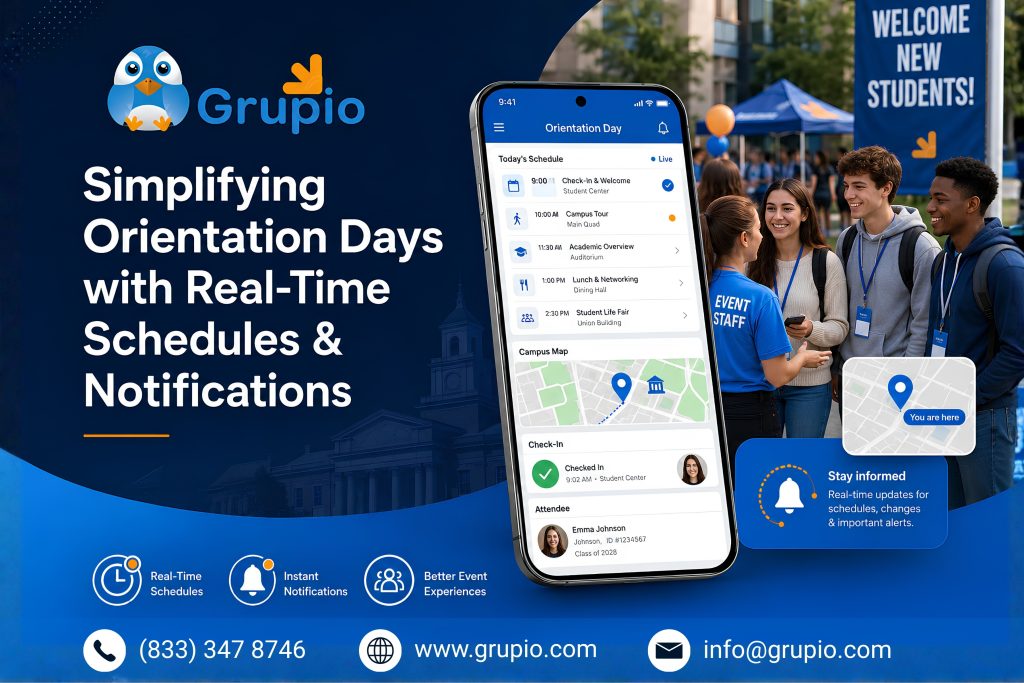
Student Orientation App

Orientation is often the first real test of a campus event app. It compresses an entire semester’s worth of coordination into just two or three days. New students are learning the campus, meeting advisors, and choosing courses. They are also trying to find their next session. At the same time, their families often attend separate activities.

A dedicated app turns that chaos into something navigable. Instead of using a printed booklet, students receive a live, personalized schedule. It updates instantly when a room changes or a session runs longer than expected. Push notifications replace the group text that inevitably gets three replies of “wait, where are we meeting?” And because the schedule lives on the device students already have in their pocket, there’s no “I lost my folder” excuse on day two.

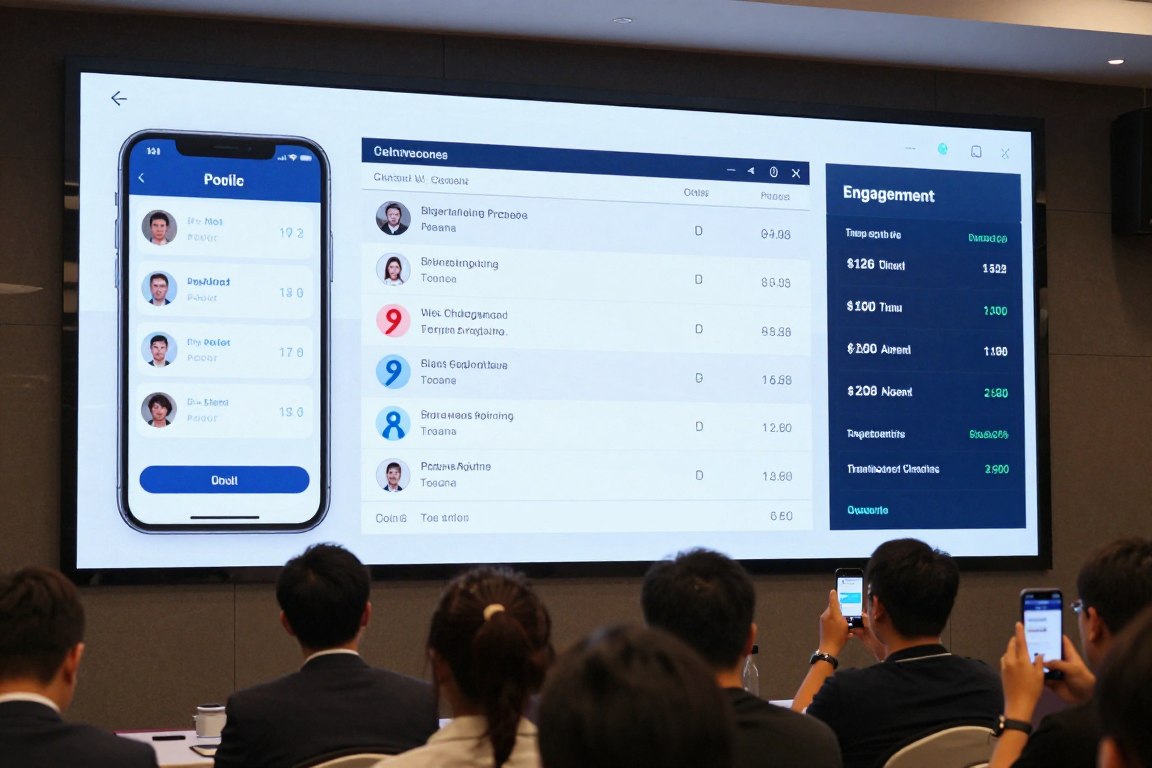
Once that first layer works, the real value appears in the data. Administrators can see which sessions are overcrowded and which are under-attended. They also learn where students spend their time instead of waiting weeks for survey results. That turns orientation from a one-shot event into something a university can actually iterate on year over year.

Boosting Career Fair Success with Interactive Maps & Exhibitor Profiles
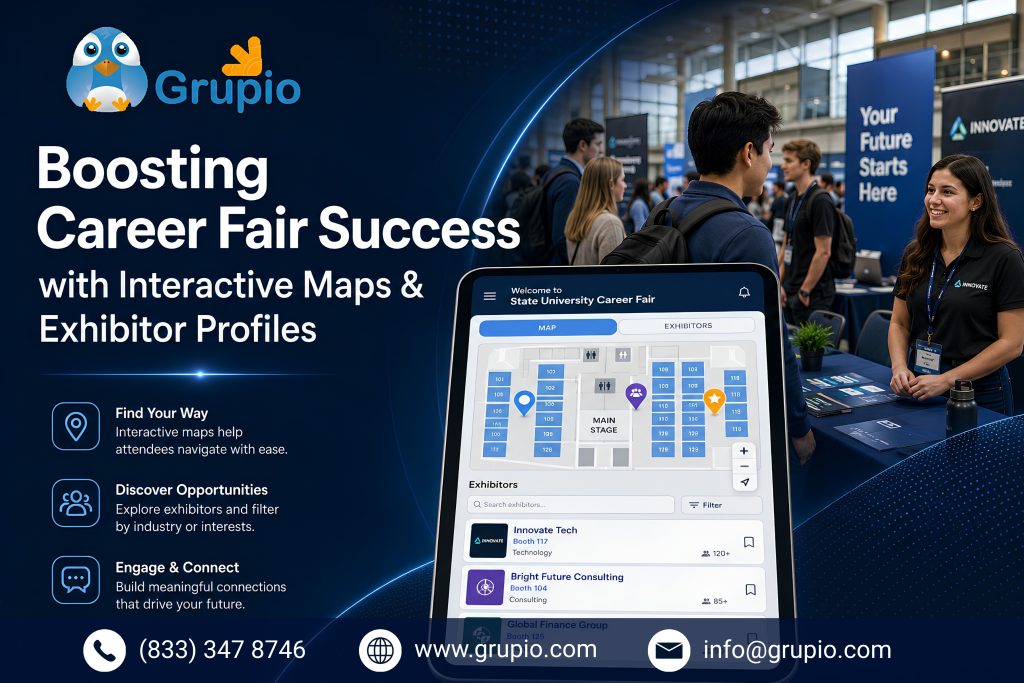
Career Fair App

Career fairs carry a different kind of pressure. Students have a limited window to impress employers. Recruiters are also managing back-to-back conversations. A confusing floor plan can cost a student an important opportunity.

An interactive map inside the event app solves the most basic version of this problem — showing exactly where each employer’s table sits, updated instantly if a company has to relocate. The bigger advantage comes from exhibitor profiles. Students can review company descriptions, open roles, and recruiter bios before the event. They arrive with specific questions instead of a generic introduction.”

Better-prepared students have more meaningful conversations with employers. They are also more likely to receive follow-up interviews. This strengthens career services outcomes and employer relationships. which matters directly to a university’s career services outcomes and, increasingly, to the employer relationships that keep companies coming back year after year. Career fair platforms built specifically for higher education, such as Career Fair Plus, have grown around exactly this need: giving students a searchable employer directory and giving career services teams a way to measure engagement instead of guessing at it from sign-in sheets.

Building Student & Faculty Connections Through In-App Networking
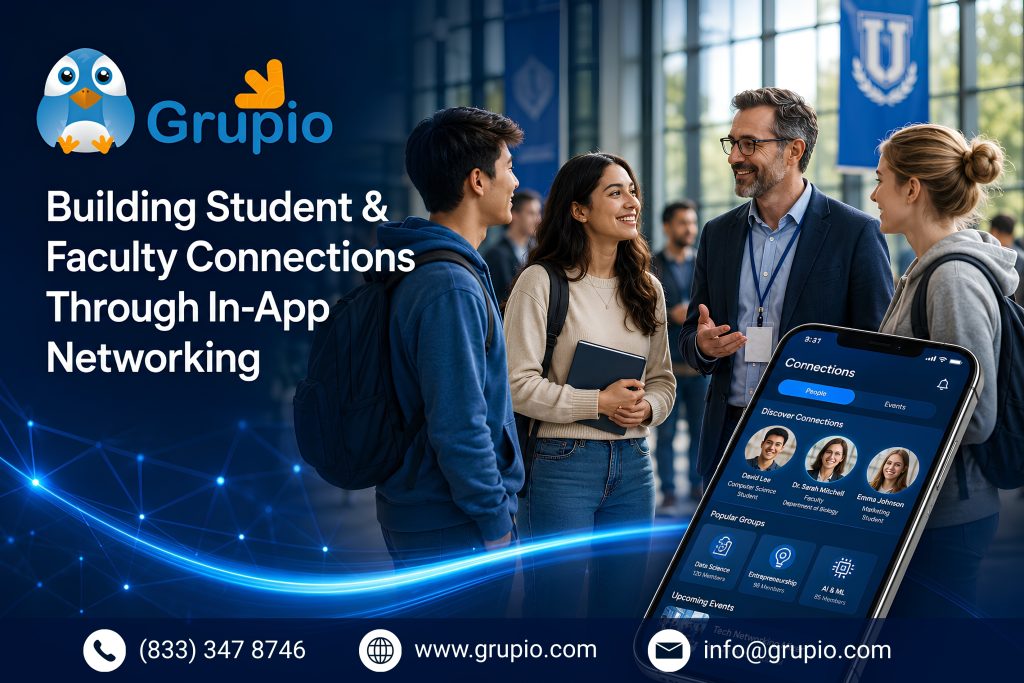
Campus Networking App

Orientation and career fairs are the obvious use cases, but the deeper transformation is what happens between events. A well-built campus app doesn’t disappear once the career fair ends — it becomes a year-round layer of connection between students, faculty, and each other.

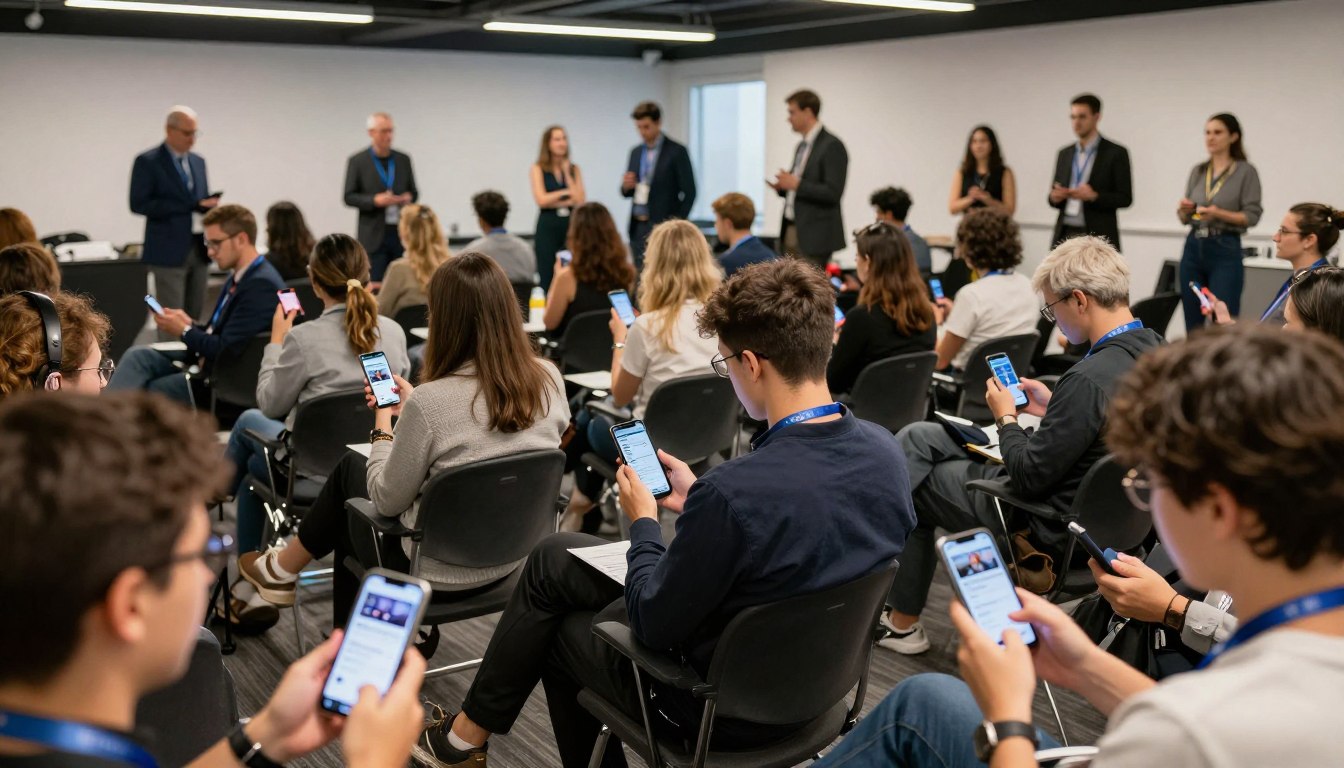
In-app directories help students find classmates in the same major. They can RSVP to club meetings or message faculty advisors without searching through old emails or syllabi. Discussion boards and interest groups keep students connected after events. Activities like hackathons, guest lectures, and student mixers give them more reasons to continue using the app.

This ongoing engagement gives universities something that career fairs and orientation alone cannot provide. They gain a reliable communication channel with students. This supports daily campus activities and helps create a stronger sense of belonging.

Branding Your University’s Identity Across Every Student’s Phone
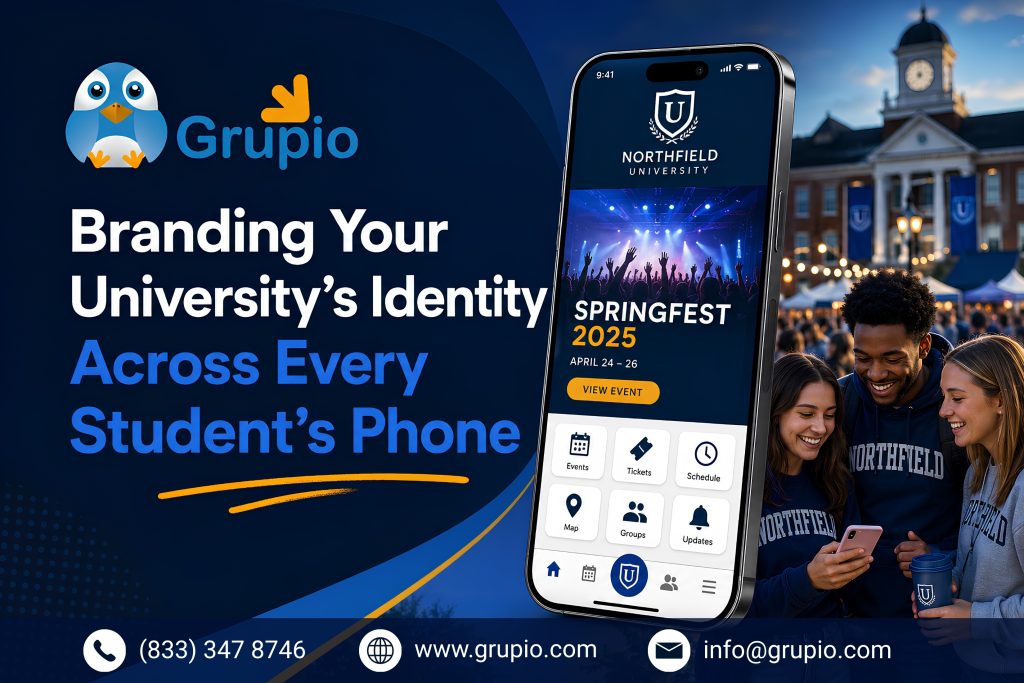
Branded University Event App

There’s a quieter benefit underneath all of this: every time a student opens the app to check an orientation schedule or browse career fair exhibitors, they’re seeing the university’s colors, mascot, and voice — not a generic third-party tool with the school’s logo pasted on top as an afterthought.

A well-designed campus app becomes a consistent brand touchpoint across the entire student lifecycle: the same visual identity from the first orientation notification a freshman receives to the graduation-day schedule a graduating senior checks four years later. That consistency matters more than it might seem — it signals that the university invested in the experience, not just the event.

Over time, what started as a solution for orientation challenges becomes something bigger. The app becomes a trusted, branded home for campus life. Students can find accurate information in one place instead of managing paper, emails, and outdated updates.

Frequently Asked Questions

1. What is a university event app, and how is it different from a general campus app?

A university event app is a mobile tool designed for live event management. It supports orientation, career fairs, homecoming, and commencement with features like live schedules, maps, and exhibitor directories. A general campus app may include event features, but dedicated event apps are usually easier to update and manage during busy events.

2. Do students actually use these apps, or do they default back to email and group chats?

Adoption depends heavily on how the app is rolled out. Apps that are pushed at a mandatory touchpoint — like requiring students to check in via the app at orientation, or requiring an RSVP through it for a career fair session — see far higher usage than apps that are simply “available” in the app store. Real-time notifications (schedule changes, room updates) also drive repeat opens, since students learn quickly that the app has information they can’t get anywhere else.

3. How do career fair apps benefit employers, not just students?

Employers get a built-in audience of pre-qualified candidates who’ve already reviewed their company profile and open roles before walking up to the table, which tends to produce more focused conversations. Many platforms also give employers post-event data — how many students viewed their profile, who they connected with — which helps recruiting teams justify travel and staffing budgets for the next fair.

4. Is it expensive for a university to build or license an event app?

Costs vary widely depending on whether a university licenses an existing higher-ed event platform versus building custom software in-house. Licensing an established platform is generally faster to deploy and lower-risk for a single annual event like a career fair, while a custom-built app makes more sense for institutions that want deep integration with their own student information systems.

5. What data should a university track to measure an event app’s success?

Universities can track useful metrics such as app downloads, active users during the event, session check-ins, booth visits, notification open rates, and survey completion. (which is much easier to collect in-app than via a separate email survey). For career fairs specifically, tracking student-to-employer connections and follow-up interview requests ties the app directly to career services outcomes, not just attendance numbers.
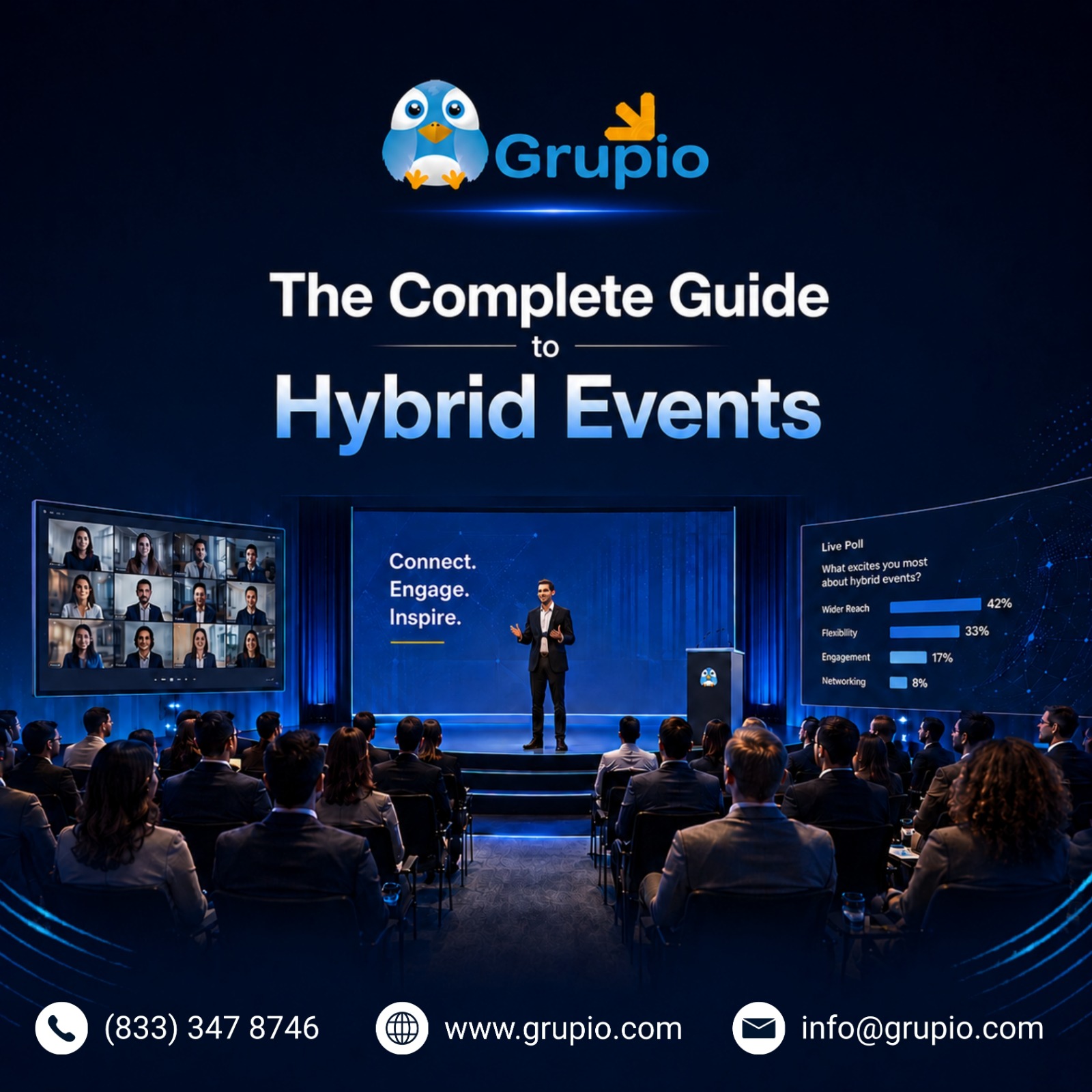
The Complete Guide to Hybrid Event: How to Plan, Execute & Engage

hero Hybrid Events
Planning a conference today rarely means choosing between an in-person room or a virtual stream. Most US event teams now do both at once, and the real question has shifted to how to plan a hybrid event without stitching six tools together. The shift is everywhere: a regional medical association running its annual summit with attendees split between Chicago and the West Coast, a software company hosting users across three time zones, a university juggling alumni from every part of the country.
This guide covers every step, from format selection to post-event reporting, and shows where a strong hybrid event app fits in. Grupio, a hybrid event platform built for US-based conferences and associations, will come up where it is genuinely useful, not as a constant sales pitch. By the end, you will know exactly what good hybrid event management software looks like, what to ask vendors during demos, and how to plan a hybrid event your attendees actually finish.

What Is a Hybrid Event?

What Is a Hybrid Event
A hybrid event is one event running in-person and online at the same time, with both audiences treated as first-class attendees. The in-person room has the keynote stage, booth floor, and hallway conversations. The virtual side gets live streams, on-demand replays, and networking built for people who never had to book a flight. The two sides should share the same agenda, the same speakers, and ideally the same hybrid conference app, so attendees in either format feel they are part of the same event, not a watered-down version of it. A well-built hybrid event app makes this connection seamless across both audiences.

Hybrid is no longer the backup plan it became during 2020. It is the default format for multi-day conferences, customer summits, and association annual meetings in the US. Industry surveys consistently show steady growth in adoption of virtual and hybrid events, and most large corporate organizers run at least one hybrid program every year. Healthcare, higher education, and B2B technology sectors have moved fastest, but mid-market associations are catching up quickly as their members increasingly expect remote participation as a default option.

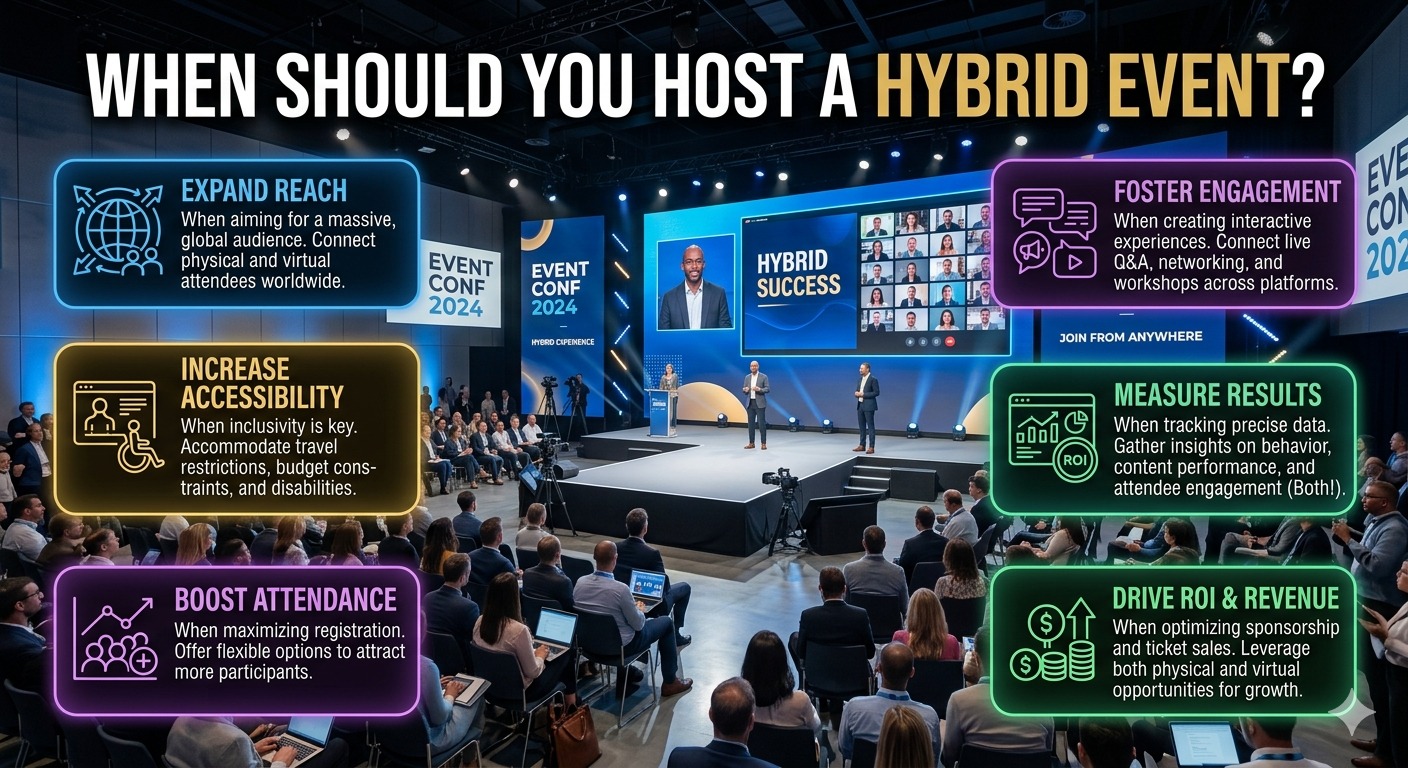
When Should You Host a Hybrid Event?

when_should_you_host_a_hybrid_event

Hybrid vs. In-Person vs. Virtual: Choosing the Right Format

Not every event needs both audiences. A small executive offsite usually works best in person, where face-to-face trust building is the entire point. A short webinar or quarterly all-hands runs cleaner as fully virtual, since the production overhead of going hybrid is rarely worth it for a 45-minute session. Hybrid events sit in the middle and shine for larger conferences, trade shows, association meetings, and town halls where you want both depth and reach.

A pre-event survey is the cheapest way to make this call. Ask how attendees plan to attend, how far they would travel, and whether they would watch sessions later if a stream were available. If a large share say they will only attend with a virtual option, you have your answer.

Signs a Hybrid Event Is the Right Choice

Clear signals: your venue caps below projected demand, your audience spans multiple time zones, your sponsors want exposure beyond the room, or part of your audience can no longer justify the travel budget. Any one is reason enough. Two or more, and the format picks itself. The same applies if you have repeat attendees who used to come every year but quietly stopped traveling after 2020.

Types of Hybrid Events

types_of_hybrid_events

Internal Hybrid Events

Sales kickoffs, global town halls, leadership summits, and large team meetings. The shared problem: not every employee can fly to one city. A hybrid format keeps in-room energy for those who attend, while remote team members get full access to keynotes, breakouts, and Q&A. For multinational organizations, this is often the only practical way to bring an entire workforce into the same event without weeks of travel coordination and a budget no finance team would approve.

External Hybrid Events

User conferences, customer summits, product launches, association annual meetings, and trade shows. External audiences expect production value, networking, and on-demand replays. This is where strong hybrid event solutions earn their keep, and where the wrong choice of tools shows up immediately in attendee complaints, sponsor frustration, and lower renewal rates the following year.

Core Benefits of Going Hybrid

Wider reach and stronger attendance. Virtual tickets remove the biggest registration friction: cost and travel time. Organizations with a national or international audience typically see a meaningful lift in total attendance once a virtual option is added, and many of those virtual attendees convert to in-person registrations the following year once they have seen the event firsthand.

Better content engagement. On-demand replays mean attendees no longer choose between two simultaneous sessions. They can watch one live, queue the other for later, and revisit favorites months down the road. This single change usually drives a noticeable increase in total content consumption per registrant.

Lower carbon footprint. Fewer flights, fewer hotel nights, fewer printed materials. For organizations with ESG reporting commitments, this matters more every year.

Higher sponsorship value and ROI. Sponsors get exposure to both audiences in one program, plus measurable data on who watched what. To maximize sponsor ROI with a powerful hybrid event platform, you need an analytics layer that backs up impressions with real engagement numbers, not estimates.

Essential Elements of a Successful Hybrid Event

Engaging Content Strategy

The biggest mistake hybrid organizers make is treating virtual attendees as an afterthought. The mindset that works is one event, two experiences. Keep session lengths shorter than your in-person agenda, because screen attention fades faster than ballroom attention. Build live polls and Q&A into every major session. Strong hybrid event engagement starts with content that respects both audiences, and live polling for events is one of the simplest ways to make virtual attendees feel included, because their vote shows on the same screen the in-room audience is looking at.

Marketing Both Experiences

Sell each experience on its own merits. A branded event website should make clear what the in-person ticket includes and what the virtual ticket includes. Segmented email campaigns nurture the two lists differently, because what motivates a virtual attendee is rarely what motivates someone to fly across the country. In-person sells the room, the dinners, the side conversations. Virtual sells flexibility, replay access, and the ability to attend without leaving the office.

Seamless Registration Paths

Build separate registration flows for in-person and virtual. Cleaner data, cleaner badges, cleaner email lists. Add an abandoned registration follow-up sequence, because a meaningful share of registrations stall mid-form and a single nudge recovers many. A good virtual and in-person event platform handles both flows from one back end, so your team is not exporting two CSVs to reconcile attendees on event day.

Appointment Scheduling & Networking Tools

Networking is where hybrid events most often fall short. The room talks to itself, the virtual side talks to itself, and the two never meet. Strong event networking tools fix this with cross-format attendee directories, in-app messaging, and scheduled one-to-one meetings. Use a mobile event app to sync calendars and enable attendee networking, and the experience starts to feel like one event instead of two. A unified mobile event app for hybrid events beats a patchwork of disconnected tools every time.

Analytics & Post-Event Follow-Up

Track session attendance and engagement scores separately for each audience. Surveys should ask format-specific questions. Sponsor reporting should show booth visits, session attendance, lead capture, and content downloads in one combined view. The same analytics layer becomes your strongest evidence when you go back to leadership next year asking for budget, because nothing convinces a CFO faster than a unified dashboard with clean numbers.

How to Plan a Hybrid Event Step by Step

how_to_plan_a_hybrid_event
This is the part most teams searching for how to plan a hybrid event actually need: a clear sequence, not a feature list. The best hybrid event management software in the world will not save a program that has not been planned properly, and good hybrid conference management starts long before the first session goes live. Each step below assumes you have already chosen hybrid as your format and are now moving into execution.

Step 1: Define Your Goals & Audience

Before touching technology, write down what success looks like. Lead generation? Education? Community building? Then define both audiences: who is the in-person attendee, who is the virtual one, and what does each need. The clearer this definition is on day one, the easier every downstream decision becomes, from venue selection to which sessions you stream live versus record for later.

Step 2: Choose the Right Technology Stack

Your hybrid event technology stack should cover unified registration, live streaming, a mobile app, and analytics in as few tools as possible. Every extra integration is one more point of failure on event day. Grupio’s event management software covers all these in one dashboard, which is one reason it appears on most US association shortlists when teams compare hybrid event management software. When evaluating vendors, ask them to walk through one full attendee journey, from registration to post-event survey, in a single screen share. The platforms that hesitate are usually the ones with patched-together backends, no matter how polished the front end looks during a demo.

Step 3: Build Your Hybrid Agenda

Mix shorter live sessions with longer on-demand content. Time zones matter more than most planners realize. If your audience spans the US and Europe, repeating a keynote or making it available on demand within hours of the live broadcast keeps everyone engaged. Block real breaks. Virtual attendees stop watching when sessions run back-to-back.

Step 4: Prepare Your Team & Speakers

Assign a dedicated virtual attendee host. This person surfaces chat questions into live Q&A and flags stream issues to production. Coach speakers on camera presence. A speaker who is great on stage is not automatically great on screen. Ten minutes of practice with the actual mobile event app for hybrid events you will use on the day saves hours of confusion later, especially with speakers who have only ever presented to in-person rooms.

Step 5: Launch, Monitor & Engage in Real Time

Push notifications, gamification, and live Q&A are the three levers that drive hybrid event engagement on the day. Use notifications for schedule changes and room moves. Run live polling for events at every session you can. Assign one team member to monitor the virtual chat full-time, because silence on the virtual side does not mean engagement, it usually means confusion.

Step 6: Post-Event Actions

Within 24 to 48 hours, send recordings, surveys, and sponsor reports. Engagement drops fast after an event, and the first two days are when attendees still care enough to respond. Use the same window to thank speakers, share highlight clips on social, and start the conversation with prospects whose lead-capture data the platform already has on file.

Common Hybrid Event Challenges (And How to Solve Them)

Even well-resourced teams running virtual and hybrid events hit the same handful of issues. The good news is each one is fixable with the right preparation.

Time zone conflicts. Solve with on-demand content and a key live repeat. For multinational audiences, plan one live broadcast in the morning US time and another in the evening, both with chat moderation.

Virtual attendee disengagement. Solve with frequent polling, gamification, and exclusive virtual-only sessions or networking lounges. Give the virtual side a reason to stay logged in beyond the keynote.

Technical failures. Solve with redundant streaming setups, a backup encoder, and an offline-capable hybrid event app that keeps working if venue Wi-Fi falters. Run a full dress rehearsal 48 hours out, with the actual stream, the actual mobile event app for hybrid events, and the actual production team in the room.

Feeling like two separate events. Solve with unified branding, shared content moments where both audiences are visibly part of the same room, and cross-format networking.

How Grupio Powers Seamless Hybrid Events

Grupio is built for organizers who need hybrid event management software that handles both audiences without stitching together five different tools. It functions as a true virtual and in-person event platform, not a web tool with a mobile add-on.

Each event gets a custom branded hybrid conference app, a true mobile event app for hybrid events designed for both audiences, with integrated live streaming, real-time polling, Q&A, push notifications, attendee networking with appointment scheduling, and an analytics dashboard giving sponsors and organizers a unified view of engagement across both audiences.

Offline functionality is built in, which matters for any venue with unreliable Wi-Fi. The branding goes deeper than a logo: app icon, splash screen, navigation colors, and the way speakers and sponsors are showcased are all tailored to the event, not pulled from a generic vendor template.

Setup typically runs two to four weeks. Several Grupio clients have stayed for six to nine consecutive years, including the elected officials of California’s 58 counties and Payroll Vault for their annual franchise conferences.

Reviews on G2, Capterra, and the App Store frequently call out the support team by name, which is worth weighing when comparing hybrid conference management vendors. In an industry where many vendors disappear once the contract is signed, that kind of long-tenure support is genuinely rare.

Ready to Transform Your Event Management?

Discover how the right conference app can save time, reduce costs, and boost attendee engagement at your next event.

Hybrid Event FAQs

What is a hybrid event?

A hybrid event combines in-person and virtual attendance in one program, where both audiences experience the same content and have access to engagement features built for their format. The goal is not to replicate the in-person experience online, but to design two formats that complement each other.

How do you engage virtual attendees at a hybrid event?

Use live polling, gamification, exclusive virtual-only sessions, a dedicated virtual attendee host, frequent breaks, shorter session lengths, and clear visual cues that the room and the stream are part of the same event. Strong event networking tools also help, as they let virtual attendees connect directly with in-person attendees. The right hybrid event app makes most of this turnkey rather than something your team has to manually orchestrate.

What technology do I need for a hybrid event?

At minimum: a unified registration platform, a virtual and in-person event platform with live streaming, a mobile event app for hybrid events, networking tools, and a single analytics dashboard. Fewer tools, more integration. Anything more complicated and you are creating problems for your own production team.

How is a hybrid event different from a virtual event?

A virtual event is online only. A hybrid event runs both formats at the same time, with in-person and online audiences sharing the same agenda, speakers, and core content. The complexity is meaningfully higher, but so is the reach.

Final Thoughts: Make Hybrid Work for Your Organization

Hybrid events are no longer a workaround. They are the standard format for conferences, summits, and association meetings that want reach, on-demand content, sponsor value, and the data that proves ROI to leadership.

A properly built virtual and in-person event platform is now a basic requirement, not a luxury. Teams that get hybrid right treat both audiences as equal, pick a tight hybrid event technology stack instead of patching tools together, and invest in real engagement moments that connect the room and the stream.

The right hybrid event management software does not just save your team time during the event, it gives you the analytics and follow-up tools that make next year’s pitch to leadership a much easier conversation.

Knowing how to plan a hybrid event end to end, and choosing hybrid event solutions built for both audiences from day one, is what separates programs that grow year over year from ones that quietly stall.

Ready to power your next hybrid event? Explore Grupio’s hybrid event platform.

10 Ways To Successfully Promote Your Event

Strategy and streamlining operations ahead of time are important when it comes to event promotion. There are different methods and plans that can be used to promote events. However, understanding the key techniques is very important for creating effective and reliable event marketing as well as event app promotion strategies. (more…)

Zeena Awan

Zeena Awan is a dynamic Senior Project Manager at Grupio, recognized for her proven ability to lead complex, large-scale projects from inception to successful delivery. With extensive experience in project planning, execution, and process optimization, she excels at streamlining workflows, aligning cross-functional teams, and driving efficiency across operations.

Zeena is highly regarded for her strategic problem-solving skills, strong leadership, and commitment to excellence, consistently ensuring projects are delivered on time and to the highest standards of quality. At Grupio, she plays a pivotal role in enhancing operational processes, fostering collaboration, and implementing scalable solutions that align team performance with organizational goals. Her focus on both client satisfaction and team success has positioned her as a trusted leader in ensuring seamless project outcomes.

7 Best Ways for Event Promotion and Branding

Events are an excuse and an opportunity for people to step out of our mundane life and network with like-minded people on the company’s dime. On one hand, event planning companies work tirelessly on finding ways for event promotion, event branding, its  planning and execution. (more…)

Zeena Awan

Zeena Awan is a dynamic Senior Project Manager at Grupio, recognized for her proven ability to lead complex, large-scale projects from inception to successful delivery. With extensive experience in project planning, execution, and process optimization, she excels at streamlining workflows, aligning cross-functional teams, and driving efficiency across operations.

Zeena is highly regarded for her strategic problem-solving skills, strong leadership, and commitment to excellence, consistently ensuring projects are delivered on time and to the highest standards of quality. At Grupio, she plays a pivotal role in enhancing operational processes, fostering collaboration, and implementing scalable solutions that align team performance with organizational goals. Her focus on both client satisfaction and team success has positioned her as a trusted leader in ensuring seamless project outcomes.

How to Start Successful Event Planning Business?

Dreaming about starting a successful event planning venture? If starting an event management company is your goal then there are several reasons to go ahead and start. But COVID-19 has everything under lockdown. Use this time to your advantage and research a bit about it. To help you start the process of your event planning business. We have arranged a step guide that will help you get an idea before you get in touch with clients. (more…)

Zeena Awan

Zeena Awan is a dynamic Senior Project Manager at Grupio, recognized for her proven ability to lead complex, large-scale projects from inception to successful delivery. With extensive experience in project planning, execution, and process optimization, she excels at streamlining workflows, aligning cross-functional teams, and driving efficiency across operations.

Zeena is highly regarded for her strategic problem-solving skills, strong leadership, and commitment to excellence, consistently ensuring projects are delivered on time and to the highest standards of quality. At Grupio, she plays a pivotal role in enhancing operational processes, fostering collaboration, and implementing scalable solutions that align team performance with organizational goals. Her focus on both client satisfaction and team success has positioned her as a trusted leader in ensuring seamless project outcomes.

Healthcare Mobile App & Its Smart Features

Technology is gradually transforming every aspect of our existence. Technology-oriented solutions, especially in healthcare have seen a lot of advancements. Immediate relief and enhanced offerings in the healthcare industry increase the spectrum at which they provide services. HCPs communicate and collaborate with patient care as mobility solutions. Healthcare Mobile App has helped to streamline various healthcare operations. It empowers affordable and efficient healthcare practices and engaging patients. Healthcare Mobile App is a cost-effective way to streamline the best healthcare providing services.
(more…)

Zeena Awan

Zeena Awan is a dynamic Senior Project Manager at Grupio, recognized for her proven ability to lead complex, large-scale projects from inception to successful delivery. With extensive experience in project planning, execution, and process optimization, she excels at streamlining workflows, aligning cross-functional teams, and driving efficiency across operations.

Zeena is highly regarded for her strategic problem-solving skills, strong leadership, and commitment to excellence, consistently ensuring projects are delivered on time and to the highest standards of quality. At Grupio, she plays a pivotal role in enhancing operational processes, fostering collaboration, and implementing scalable solutions that align team performance with organizational goals. Her focus on both client satisfaction and team success has positioned her as a trusted leader in ensuring seamless project outcomes.

How University App Can Engage Students amid COVID-19?

Universities and schools are moving their learning online after shutting down their campuses and other operations due to COVID-19. This is a great opportunity for the Edtech industry to grow exponentially and launch their university app. As people are advised to maintain social distancing and avoid public gatherings. Shifting to online learning systems has helped ensure schools and colleges that studies are not affected due to this pandemic. Focus on online learning platforms has increased ten folds due to the spread of COVID-19. (more…)

Zeena Awan

Zeena Awan is a dynamic Senior Project Manager at Grupio, recognized for her proven ability to lead complex, large-scale projects from inception to successful delivery. With extensive experience in project planning, execution, and process optimization, she excels at streamlining workflows, aligning cross-functional teams, and driving efficiency across operations.

Zeena is highly regarded for her strategic problem-solving skills, strong leadership, and commitment to excellence, consistently ensuring projects are delivered on time and to the highest standards of quality. At Grupio, she plays a pivotal role in enhancing operational processes, fostering collaboration, and implementing scalable solutions that align team performance with organizational goals. Her focus on both client satisfaction and team success has positioned her as a trusted leader in ensuring seamless project outcomes.

10 Best Features Of Virtual Event Platform

COVID-19 is a pandemic that has forced us to stay inside. One good thing that came out of this situation is digitalization and remote working culture. It is not just limited to offices, virtual event platforms like podcasts, webinars, conferences, etc are on the rise. (more…)

Zeena Awan

Zeena Awan is a dynamic Senior Project Manager at Grupio, recognized for her proven ability to lead complex, large-scale projects from inception to successful delivery. With extensive experience in project planning, execution, and process optimization, she excels at streamlining workflows, aligning cross-functional teams, and driving efficiency across operations.

Zeena is highly regarded for her strategic problem-solving skills, strong leadership, and commitment to excellence, consistently ensuring projects are delivered on time and to the highest standards of quality. At Grupio, she plays a pivotal role in enhancing operational processes, fostering collaboration, and implementing scalable solutions that align team performance with organizational goals. Her focus on both client satisfaction and team success has positioned her as a trusted leader in ensuring seamless project outcomes.

Tips to Engage Your Virtual Event Attendees

COVID-19 pandemic and the resulting lockdown to overcome has changed our perspective towards everything in life. Face-to-face meetings are not possible due to which a lot of event planning companies are turning towards virtual events. (more…)

Zeena Awan

Zeena Awan is a dynamic Senior Project Manager at Grupio, recognized for her proven ability to lead complex, large-scale projects from inception to successful delivery. With extensive experience in project planning, execution, and process optimization, she excels at streamlining workflows, aligning cross-functional teams, and driving efficiency across operations.

Zeena is highly regarded for her strategic problem-solving skills, strong leadership, and commitment to excellence, consistently ensuring projects are delivered on time and to the highest standards of quality. At Grupio, she plays a pivotal role in enhancing operational processes, fostering collaboration, and implementing scalable solutions that align team performance with organizational goals. Her focus on both client satisfaction and team success has positioned her as a trusted leader in ensuring seamless project outcomes.

Planning your Virtual Event App

Due to COVID- 19, Virtual events are on the rise during this lockdown period. It is no surprise that more and more companies are investing in mobile event app technology for virtual event planning. If you are not already a part of this race, then please join without further ado. (more…)

Zeena Awan

Zeena Awan is a dynamic Senior Project Manager at Grupio, recognized for her proven ability to lead complex, large-scale projects from inception to successful delivery. With extensive experience in project planning, execution, and process optimization, she excels at streamlining workflows, aligning cross-functional teams, and driving efficiency across operations.

Zeena is highly regarded for her strategic problem-solving skills, strong leadership, and commitment to excellence, consistently ensuring projects are delivered on time and to the highest standards of quality. At Grupio, she plays a pivotal role in enhancing operational processes, fostering collaboration, and implementing scalable solutions that align team performance with organizational goals. Her focus on both client satisfaction and team success has positioned her as a trusted leader in ensuring seamless project outcomes.