AI Resources for the Event Planning Industry: A Complete Guide

AI Resources for Event Planning are transforming how event professionals organize conferences, exhibitions, trade shows, and corporate events. From creating exhibitor prospectuses and sponsorship proposals to drafting marketing content and registration forms, AI tools help planners save time, improve accuracy, and streamline every stage of event management.

Picture a typical event planner three years ago: a spreadsheet for RSVPs, a Word doc for the sponsorship deck, a folder of past exhibitor prospectuses to copy-paste from, and a to-do list that never actually got shorter. Every event meant starting most of this from scratch because there wasn’t really a faster way—you either wrote it yourself or paid someone else to.

That’s no longer true, and it’s worth understanding exactly what changed, because “just use AI” isn’t a strategy
on its own. This guide walks through where AI actually fits into the event planning workflow — from your first
outline to the final registration form — so you can pick tools deliberately rather than bolting on whatever’s
trending.

Getting Started: How AI Is Transforming Event Planning
How-AI-Is-Transforming-Event-Planning

Every event, whether it’s a 40-person workshop or a 4,000-person conference, runs on the same handful of
repetitive documents: briefs, prospectuses, proposals, marketing copy, and forms. None of that work is
creative in the way a keynote speech is — it’s structured, repeatable, and time-consuming, which is exactly
the kind of task AI handles well.

The shift happened when large language models got good enough to hold an event’s full context — audience,
budget, venue, sponsors, timeline — across a long conversation, rather than needing a fresh prompt for every
paragraph. That means a planner can now draft an exhibitor prospectus, a sponsorship pitch, and a post-event
survey in one afternoon instead of one week, and revise all three together when the budget or the venue changes.

The planners getting the most value aren’t using AI to replace judgment about vendors, venues, or guest
experience — those calls still need a human who knows the room. They’re using it to compress the paperwork
around those decisions.

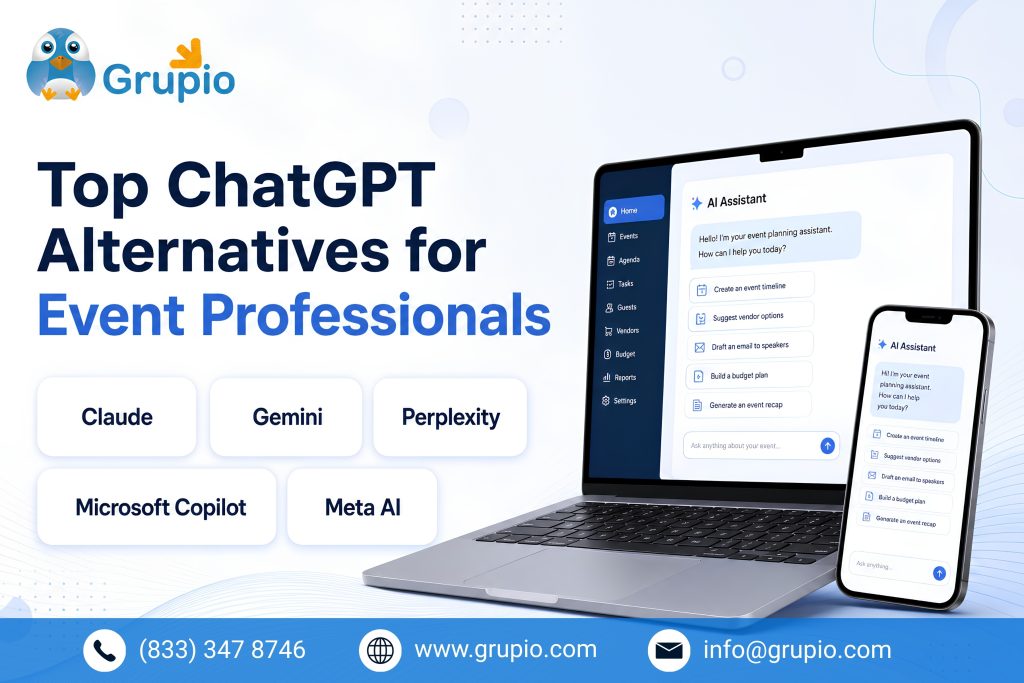
Top ChatGPT Alternatives for Event Professionals
Top-ChatGPT-Alternatives-for-Event-Professionals

ChatGPT gets most of the attention, but several tools are built specifically around planning workflows rather
than general chat:

  • Claude handles long documents well — feed it last year’s full sponsorship deck and this
    year’s budget, and it can draft a revised version that keeps your voice and structure intact.
  • Notion AI works within the same workspace where most planners already keep their
    run-of-show, guest lists, and vendor notes, so drafts stay attached to the source data rather than living
    in a separate chat window.
  • Perplexity is worth using specifically for research — for comparing venues, catering
    vendors, or past attendance data — because it cites sources rather than just asserting facts.
  • Canva’s AI tools turn a rough outline into a formatted sponsorship one-pager or social
    graphic without a separate design pass.

None of these fully replaces the others — most planners end up using two or three for different stages of the
same event.

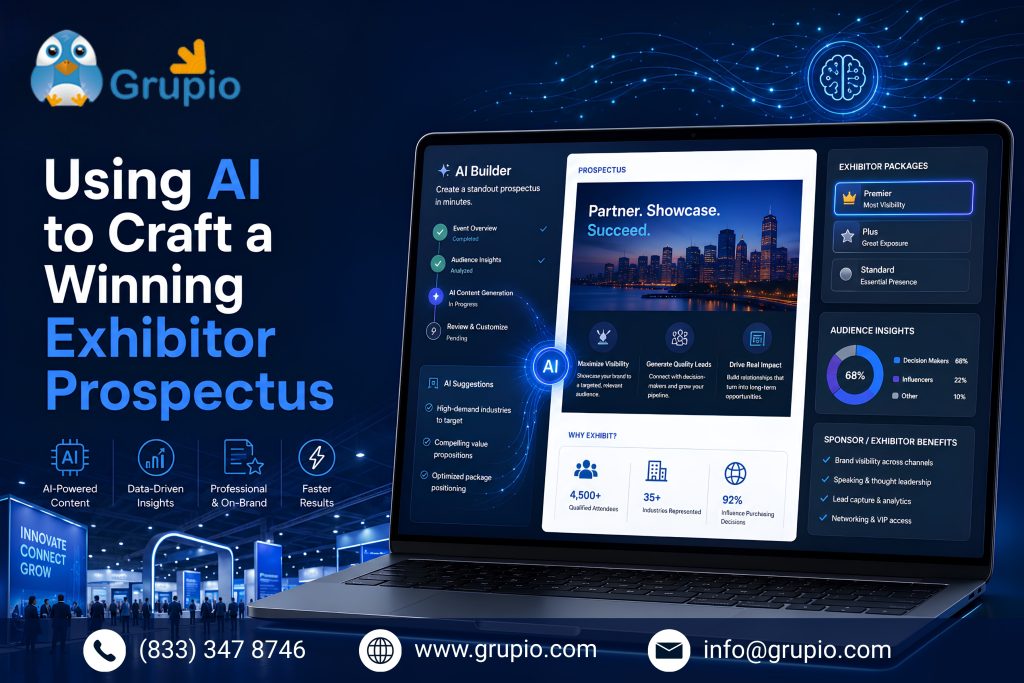
Using AI to Craft a Winning Exhibitor Prospectus
Using-AI-to-Craft-a-Winning-Exhibitor-Prospectus

An exhibitor prospectus has to do two jobs at once: prove the event is worth an exhibitor’s booth fee, and
make the logistics (booth sizes, dates, deadlines, contact info) impossible to misread. That combination of
persuasive and precise is exactly where a lot of first drafts go wrong — either too promotional with no hard
details, or so full of specs it reads like a contract.

AI is useful here specifically because you can draft the persuasive sections and the logistics table in the
same pass, then ask the model to check that every claim in the “why exhibit” section is backed by a number in
the specs (attendance figures, past exhibitor ROI, audience demographics). If you don’t have real numbers yet,
don’t let AI invent them — a fabricated attendance figure in a prospectus is a credibility risk the first time
a prospective exhibitor asks for the source.

AI-Powered Sponsorship Proposals and Marketing Plans
AI-Powered-Sponsorship-Proposals-and-Marketing-Plans

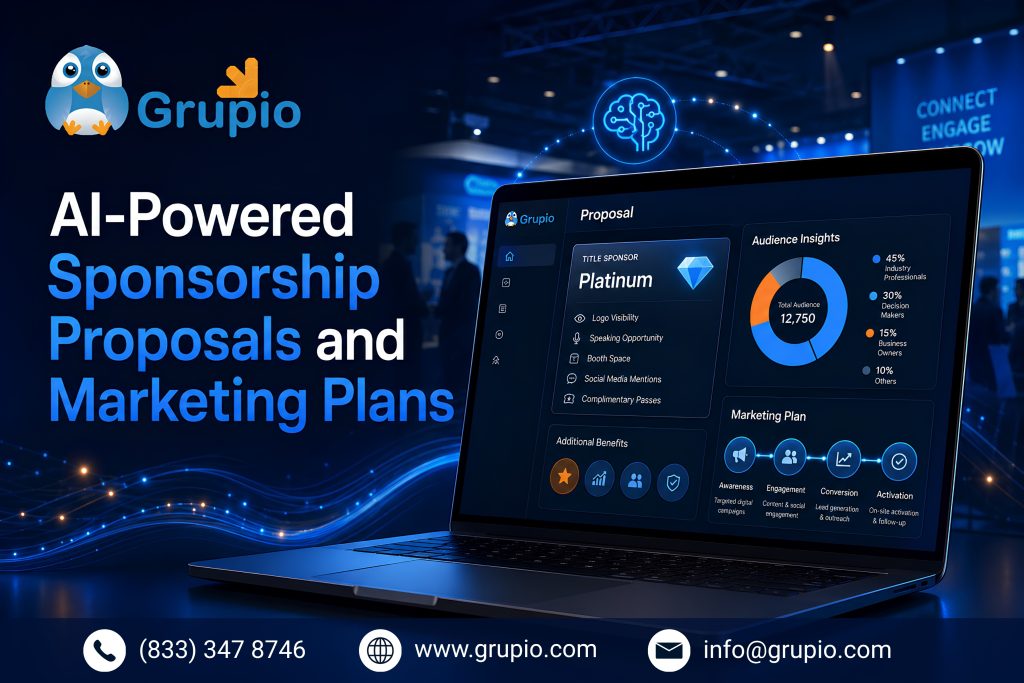
A sponsorship proposal lives or dies on tiering — vague “gold, silver, bronze” packages with no clear
differentiation are the single most common complaint sponsors raise. AI is genuinely good at generating tier
structures fast: ask for three sponsorship levels with clearly escalating benefits (logo placement, speaking
slots, booth size, email mentions), then have it draft the accompanying one-page marketing plan showing how
you’ll actually deliver visibility — social posts, email cadence, on-site signage.

The marketing plan is where AI earns its keep beyond just writing: it can turn a rough content calendar into
full drafts of the emails and social captions themselves, then adjust the tone for each sponsor tier (a title
sponsor’s mentions should read differently than a supporting sponsor’s).

The keyword data bears this out — searches for sponsorship proposal templates and sample sponsorship letters
are consistently high-volume, which suggests most planners are still building these from a blank page rather
than a system. That’s the gap AI closes.

From Registration Forms to Event Briefs: AI Tools for Every Planning Stage
AI-Tools-for-Every-Planning-Stage

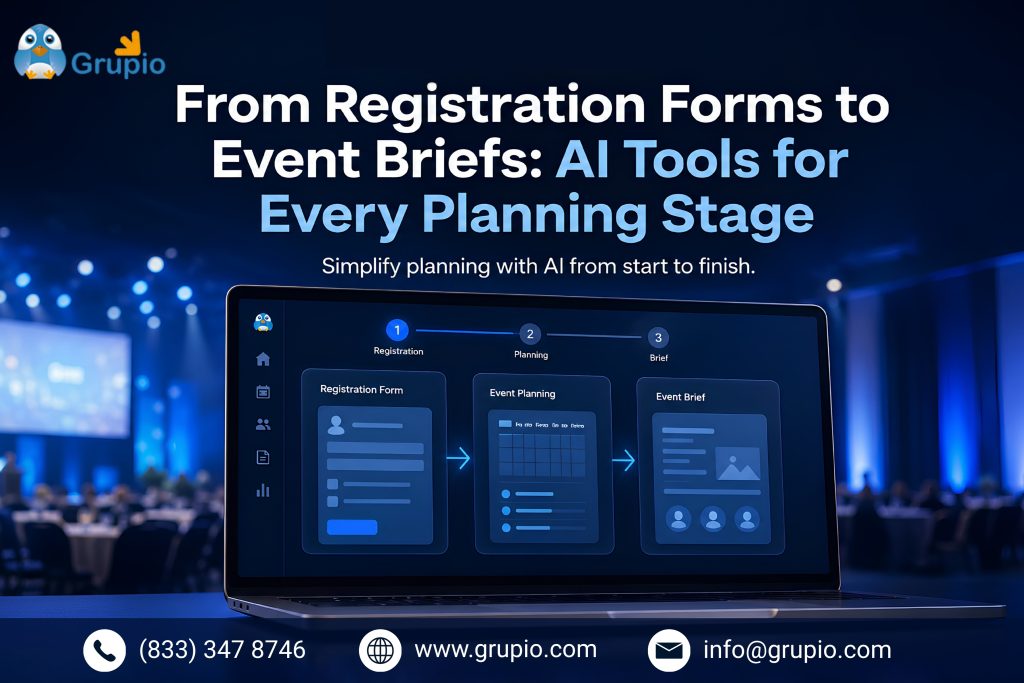
The final mile of planning is a string of smaller documents that each seem minor on their own but add up fast:
the registration form, the internal event brief, the staff briefing sheet, the post-event survey. AI shortens
each of these because they share so much source material — your event brief and your registration form both
pull from the same date, venue, and audience details, so drafting one well makes the next one faster.

A workable sequence: draft the event brief first (objective, audience, budget, key dates), then feed that
brief into the same conversation to generate the registration form fields, the exhibitor form, and a
first-draft staff briefing — each one inheriting the same facts instead of you re-typing them.

Frequently Asked Questions

What are AI resources for event planning?

AI resources for event planning include tools that help organizers create event briefs, exhibitor prospectuses, sponsorship proposals, marketing campaigns, registration forms, and post-event surveys. These tools reduce repetitive work, improve productivity, and allow planners to focus more on delivering successful events.

Which AI tool is best for event planners?

The best AI tool depends on your workflow. ChatGPT is ideal for content creation, Claude works well with long documents, Notion AI helps organize planning tasks, Perplexity is useful for research, and Canva AI makes it easy to design promotional materials and sponsorship assets.

Can AI create an exhibitor prospectus?

Yes. AI can generate a professional exhibitor prospectus by drafting event overviews, exhibitor benefits, booth packages, timelines, and frequently asked questions. However, you should always verify event dates, pricing, attendance figures, and other factual information before publishing.

Can AI help write sponsorship proposals?

Absolutely. AI can generate sponsorship packages, define tier benefits, write personalized proposal letters, and create marketing plans for sponsors. Providing your brand guidelines and previous proposals will help produce content that matches your organization’s tone and style.

How can AI improve event marketing?

AI helps event marketers create email campaigns, social media posts, blog articles, landing page copy, promotional schedules, and advertising ideas in less time. It also makes it easier to tailor content for different audiences while maintaining a consistent brand voice.

Is AI reliable for event planning documents?

AI is highly effective for drafting and organizing content, but it should not replace human review. Event planners should always fact-check budgets, schedules, venue details, sponsor information, and attendance statistics before sharing documents with clients or exhibitors.

How much time can AI save during event planning?

The time savings vary by project, but many planners find that AI reduces document creation time by 50–80%. Tasks that previously took hours—such as writing event briefs, sponsorship proposals, registration forms, and marketing content—can often be completed in minutes with proper editing.

5 Smart Ways to Boost Venue Revenue Through Weekday Bookings

Most event venue revenue live and die by the weekend. Friday through Sunday fills up fast, while Monday through Thursday sits quiet and underused. That gap is one of the biggest missed revenue opportunities in the industry. The good news: weekday bookings are easier to win than you might think. This guide breaks down five proven strategies to turn slow days into steady income.

Why Weekday Bookings Are a Hidden Revenue Opportunity

weekdays booking revenue opportunity

Empty weekdays are not just idle space — they are unrealized profit. Every Tuesday or Wednesday your venue sits dark, your fixed costs keep running with nothing coming in. Filling even a fraction of those days can lift annual revenue without adding a single square foot. Smart venue operators treat midweek demand as a separate market with its own audience and pricing. Here is why that shift pays off.

Less Competition for Your Space

Weekends are crowded with weddings, galas, and parties, so planners often scramble for limited dates. Weekdays flip that dynamic in your favor. With fewer events competing for the same slots, you can offer clients real flexibility on timing and setup. That breathing room makes your venue an easy “yes” for corporate meetings, training days, and pop-up events. Less competition also means you spend less on aggressive discounting to win the booking.

Stronger, Longer-Lasting Client Relationships

Weekday clients are often businesses, not one-time celebrants, and businesses book again and again. A company that runs a smooth Wednesday workshop at your venue will come back next quarter. These repeat relationships are far cheaper to maintain than chasing new leads every weekend. Over time, a handful of loyal corporate accounts can stabilize your entire calendar. That predictability is gold for cash flow and staffing decisions.

A Reputation That Works in Your Favor

A venue that hosts polished weekday events builds a name as professional and dependable, not just festive. Word travels fast in local business circles when a meeting space delivers. Each successful midweek event becomes a referral source and a portfolio piece. This kind of reputation attracts higher-value clients who care about reliability and service. Strong word-of-mouth is the cheapest, most credible marketing you can earn.

Smoother Operations, Happier Staff

Cramming every event revenue into a two-day window burns out your team and strains your equipment. Spreading bookings across the week eases that pressure dramatically. Staff get more consistent schedules instead of brutal weekend marathons followed by dead time. Vendors and cleaners can work at a sane pace, which lifts quality across the board. A balanced calendar simply makes your venue easier and more pleasant to run.

5 Strategies to Win More Weekday Business

5 strategies for weekday busniess

Knowing the opportunity is one thing — capturing it is another. The strategies below are practical, low-risk, and built for real venue operators. Each one targets a specific reason planners hesitate to book midweek. Apply even two or three consistently and your weekday revenue will climb. Here is exactly how to make it happen.

1. Let Technology Do the Selling

Busy corporate planners rarely have time for in-person site visits during a workweek. Virtual tours solve this by letting them explore your space in minutes from a laptop. Add a short tech showcase highlighting your AV setup, fast Wi-Fi, and hybrid-meeting capabilities. These features are exactly what business clients screen for when choosing an event venue. Make the digital experience effortless and you close bookings before competitors even reply.

2. Make Getting There Easy

Accessibility quietly decides many weekday bookings, especially for daytime corporate events. Clients want ample parking, transit access, and a location their attendees can reach without stress. Spell out these conveniences clearly on your website and in every proposal. Consider partnerships with nearby parking lots or rideshare credits to remove friction. When you make the logistics simple, you remove the biggest excuse not to book.

3. Reward Repeat Clients

Loyalty programs turn a single weekday event into an ongoing revenue stream. Offer tiered discounts, priority dates, or bundled perks for clients who book midweek regularly. A simple membership model gives businesses a clear reason to commit to your venue long term. Track repeat bookings and reach out personally before their next planning cycle begins. Rewarding loyalty costs little and locks in revenue your competitors can’t easily steal.

4. Grow Through Smart Marketing and Local Partners

Targeted digital ads let you reach corporate planners exactly when they are searching for weekday space. Focus your venue revenue and  marketing on keywords like “weekday meeting venue” and “corporate event space near me.” Pair that with partnerships among local businesses, hotels, and chambers of commerce. These partners send qualified referrals and co-promote your space to audiences you can’t reach alone. Combined, paid reach and local trust fill your midweek calendar faster.

5. Give Planners a Reason to Show Up

Sometimes the booking just needs a hook, and themed weekday events deliver one. Host networking mixers, wellness workshops, or industry showcases that planners want to attend and replicate. These events demonstrate your space in action and generate fresh leads on the spot. Promote them through email and social media to keep your venue top of mind. A clever weekday theme transforms a slow Tuesday into a sold-out signature event.

Turn Empty Weekdays Into Your Venue’s Biggest Advantage

turn weekdays into your venue advantage

Weekday bookings are not a consolation prize — they are a serious growth engine for any event venue. The competition is lighter, the clients are loyal, and the operations run smoother. By leaning on technology, accessibility, loyalty, smart marketing, and standout events, you fill the quiet days profitably. Start with one strategy, measure the results, and build from there. Your slowest days could soon become your most valuable.

Grupio: Medical Event App Built for CME-Accredited Programs

Picture a 600-attendee medical event of cardiology congress on a Tuesday morning. Five parallel tracks run across three wings of the convention centre. The printed handbook went to the printer ten days ago and is already out of date: two speakers swapped sessions, one room changed, and a satellite symposium moved up by an hour.

Delegates are clinicians with hospital pagers in their coat pockets. They cannot afford to walk into the wrong room. This is the operational reality medical conference apps are built to handle, and it is why platform choice has stopped being optional for CME-accredited programs.

This guide is for organisers evaluating platforms. It covers why generic event apps fall short, the features that matter for CME programming, how attendance tracking actually works, what to ask vendors, and where Grupio fits.

The same logic applies whether you run medical current events for a national specialty society or coordinate CME programming inside an academic medical centre.

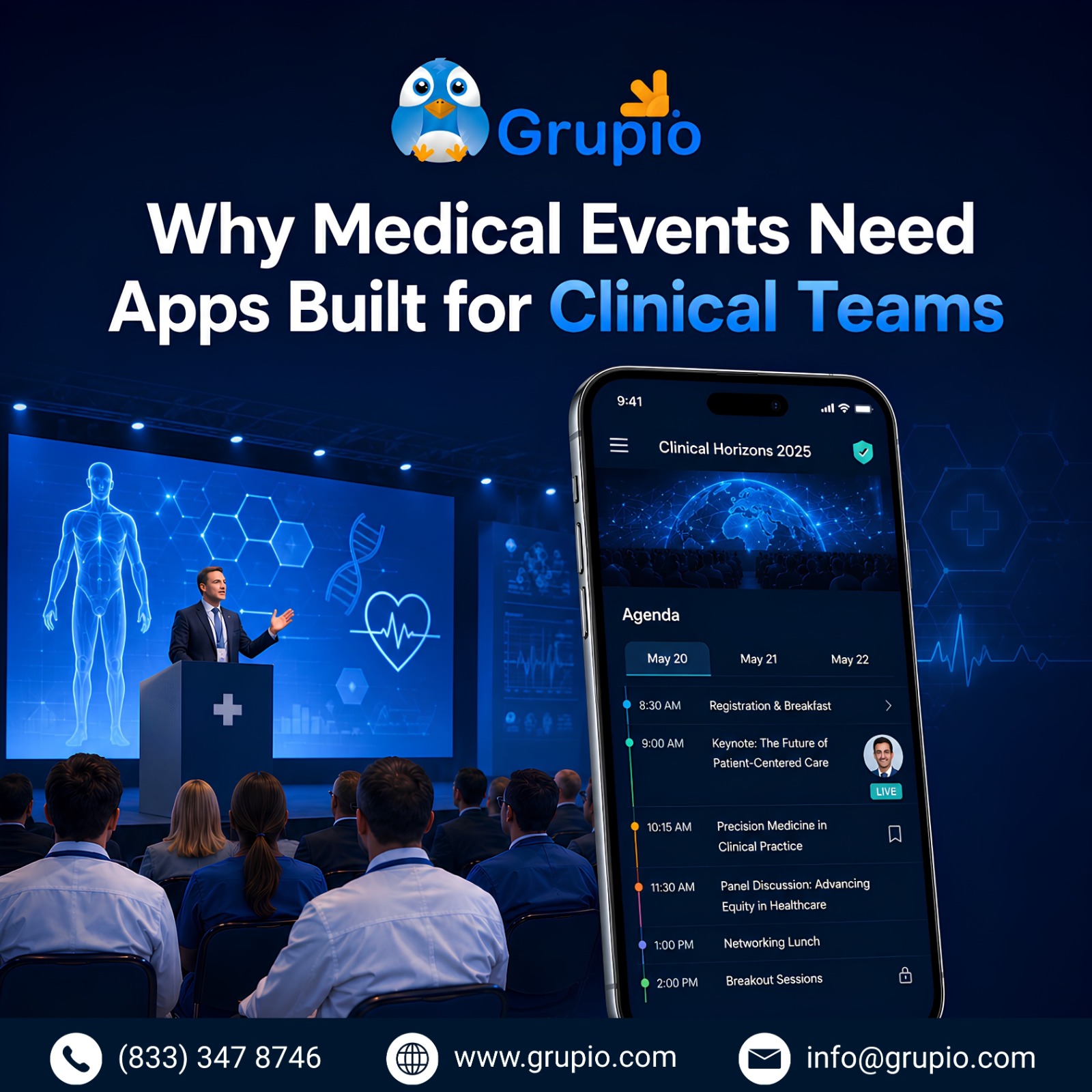
Why Medical Events Need Apps Built for Clinical Teams

Why_Medical_Event_Need_Apps_Built_For_Clinincal_Teams

Generic event apps are built for marketing summits and trade shows. Medical congresses are not those. Four realities make the gap obvious.

1. Density of Content

A national specialty meeting routinely runs five to ten parallel tracks for three to five days, plus poster halls with several hundred contributions and satellite symposia. A standard agenda module designed for a one-track corporate event breaks at this scale.

2. CME Accreditation Requirements

ACCME-accredited events need session-level attendance tracking, preserved credit categories, and audit-ready exports. Most generic apps were never designed to produce these. CME compliance is the single feature most often missing from event platforms marketed as healthcare-ready. Many organisers discover that a generic healthcare event platform cannot support the reporting requirements expected from a continuing medical education app.

3. Clinical Workload and Offline Reality

Delegates are working clinicians. Hospital pagers go off mid-keynote. Convention centre Wi-Fi predictably collapses by mid-morning when hundreds of devices connect simultaneously. An offline event app is not a premium feature here; it is the baseline. Any mobile app for medical events should continue functioning when connectivity drops.

4. Privacy Expectations

Clinical audiences are conservative about data collection. Forced social profiles, mandatory account creation, and attendee tracking drive adoption rates near zero with this group.

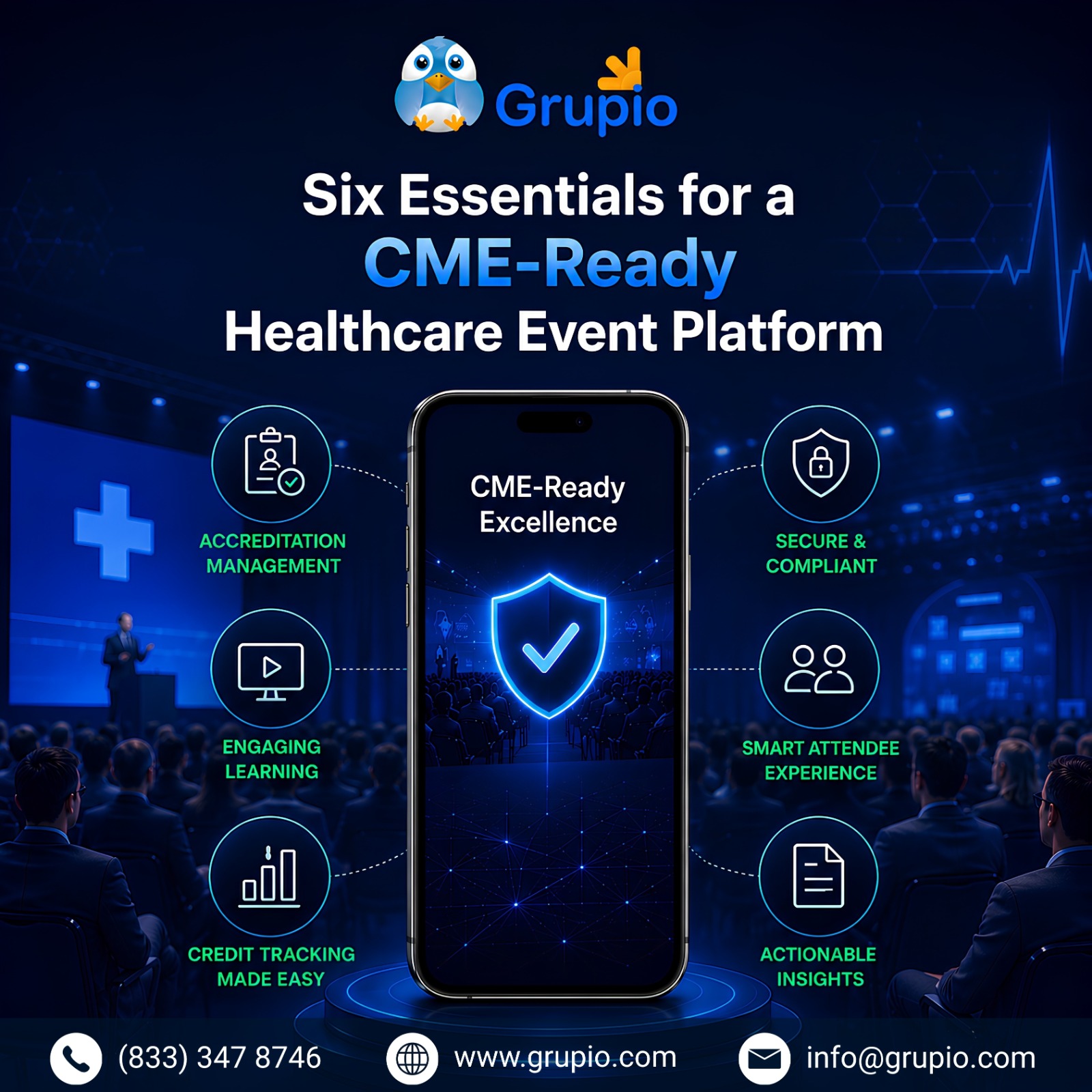
Six Essentials for a CME-Ready Healthcare Event Platform

Six Essentials for a CME-Ready Healthcare Event Platform

Once organisers accept that medical conference apps are a separate category, the question becomes what specifically to require.

1. Session-Level CME Tracking

Attendance has to be recorded against each accredited session individually, not the event as a whole. Credit categories need to be preserved, including AMA PRA Category 1, MOC, and specialty board credits. Certificates should be generated from the credentialed provider’s template rather than a generic vendor template.

2. Offline Access for the Whole Programme

Full agenda, abstracts, speaker bios, and room maps should cache to each delegate’s device on first open. The programme must remain usable in lecture halls, exhibition floors, and conference centres where connectivity is unreliable.

3. Multi-Track Conflict Detection

When a delegate bookmarks overlapping sessions, the personal agenda should flag conflicts at both the day and session level. This is especially important when both sessions offer CME credits.

4. Poster Hall Search

A clinical event app should treat poster halls as searchable, filterable inventories organised by disease area, study phase, or subspecialty.

5. Privacy-First Architecture

  • No mandatory account creation
  • Aggregated usage analytics only
  • Privacy-aware handling of clinical identifiers
  • GDPR readiness for international congresses

6. Integration With Existing Submission Systems

The scientific committee already manages submissions in platforms such as Indico, ConfTool, or society-specific systems. A continuing medical education app should integrate with these systems through clean imports.

How Medical Event Management Software Tracks CME Credits

How Medical Event Management Software Tracks CME Credits

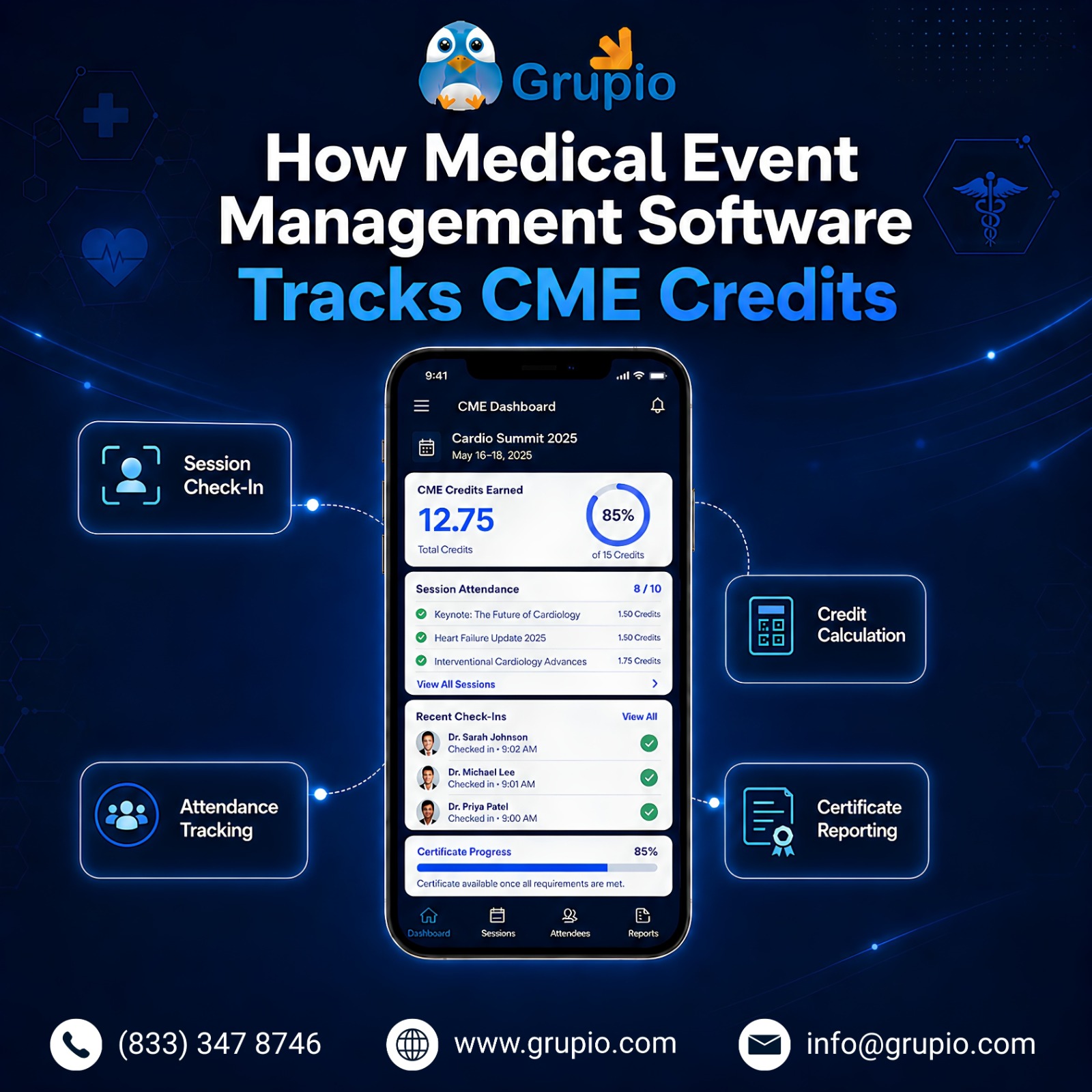
The mechanics matter because this is where most platforms claiming healthcare support actually fall apart. A real medical event management software solution and mobile app for medical events must handle the entire CME lifecycle, from session-level attendance tracking to certificate generation and audit-ready reporting.

CME credits attach to individual sessions during programme import, carried over from the source system without manual re-entry. Delegates check in via QR code or session-level confirmation at the door, which records timestamped attendance against the specific credit category. At event close, the platform exports an attendance log in the format the accrediting body requires, whether that is ACCME PARS, a specialty board template, or a state medical society format.

For organizations managing medical current events throughout the year, automation becomes even more valuable. Event medics, event medical services teams, and coordinators responsible for event medic services often rely on accurate schedules and attendance records to support operational planning around congress activities.

Certificates generate automatically from the credentialed provider’s template. The platform is the automation layer; the accreditation itself stays with the provider. Audit-ready reports compile to a single export rather than a week of spreadsheet stitching across registration, badge scans, and certificate vendors.

This matters more than any delegate-facing feature, because ACCME reaccreditation cycles depend on clean attendance records. A medical conference app that handles the credit chain correctly pays for itself in administrative time, and a mobile app for medical events that gets it wrong creates risk that lasts longer than the event.

What Medical Event Apps Must Prove Before You Buy

How Medical Event Management Software Tracks CME Credits

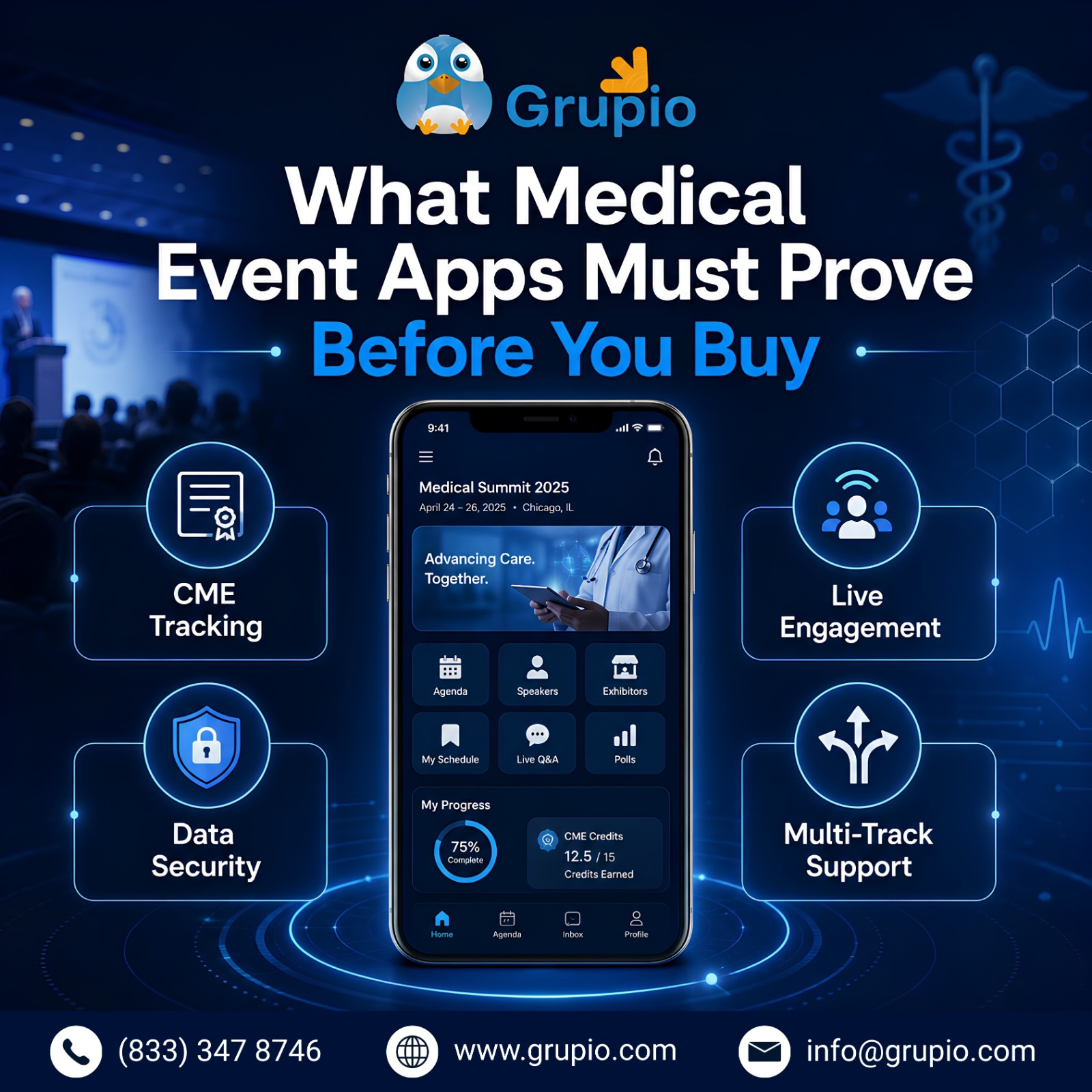
Treat vendor demos as evidence-gathering, not theater. Seven questions separate medical event apps that hold up in production from ones that look polished in a sales call.
Whether the event is a specialty congress, annual meeting, or series of medical current events, organizers should verify that every feature works in a real-world clinical environment.

Is offline mode complete, or partial? Some platforms cache the agenda but leave abstracts, poster lists, or maps online-only. Ask the sales engineer to enable airplane mode mid-demo and navigate live.

Is CME tracking native, or bolted on? Ask to see the actual attendance export format and a sample certificate, not a feature checklist.

What happens with last-minute schedule changes? Real congresses see speaker swaps the morning of. Delta updates should push to delegate devices without requiring a full app rebuild.

Does it require attendee logins? Forced sign-up reliably tanks adoption in clinical audiences.

How does it handle pharma-supported satellite symposia? The boundary between commercial visibility and medical education integrity needs explicit handling.

What is the import path from Indico, ConfTool, or your society’s system? A good healthcare event platform and clinical event app layer on top of the existing scientific workflow, not next to it.

Pricing model. Per-attendee, per-event, or annual? For larger congresses, scale economics shift the answer. Confirm exactly what is included against Grupio’s pricing page before signing.

Where Grupio Fits in the Picture

Where Grupio Fits in the Picture

Grupio has powered CME and healthcare events for over a decade, including specialty society annual meetings, hospital grand rounds programs, and continuing medical education courses. The platform handles parallel tracks, session-level attendance, custom-branded apps, offline functionality, and audit-ready exports without forcing organizers into a second CMS.

For organizations running medical current events, the platform provides a practical way to keep clinicians informed without relying on printed materials. Event medics, event medical services providers, and event medic services teams benefit from the same real-time schedule updates used by attendees and faculty.

Setup runs two to four weeks. Accredited university medical centres qualify for the free university plan, which covers a meaningful share of US CME programming since so much of it runs through academic medical centres. Reviews on G2, Capterra, and the App Store frequently call out the support team by name, which matters when something needs fixing at 7 AM on day one of a congress.

Organisers can review the healthcare and CME solutions page or request a working demo against their actual programme.

Frequently Asked Questions

What Is a Medical Conference App?

A purpose-built mobile app for medical events that handles CME tracking, parallel tracks, offline access, and accreditor-ready reporting. These are features generic event apps lack, which is why medical conference apps exist as a distinct category.

How Do Medical Conference Apps Handle CME Credits?

Credits attach to individual sessions during programme import. Attendance is recorded against each session at check-in, and certificates generate from the credentialed provider’s template at event close. The platform handles automation; the accreditation stays with the provider.

Are Medical Event Apps HIPAA-Compliant?

Most well-designed medical event apps and clinical event app solutions avoid handling protected health information altogether, which is a cleaner answer than chasing certification. They default to privacy-first analytics, support CME compliance requirements, skip mandatory accounts, and produce audit trails aligned with hospital and academic medical center expectations. Confirm specific compliance posture with each vendor before signing.

How Much Do Medical Conference Apps Cost?

Pricing varies widely. Mid-market platforms like Grupio start around $500 to $1,000 per event and scale with attendee count. Enterprise platforms typically run higher with custom annual quotes. Accredited university medical centres may qualify for free plans.

Why CME Events Need the Right Medical Event App Now

Medical conference apps have moved from optional enhancement to required infrastructure for CME-accredited events. The right mobile app for medical events reduces administrative load on the program team, improves the delegate experience for working clinicians, and produces the audit trail accreditation review requires.

Whether you manage large annual congresses, recurring medical current events, or programs supported by event medics, event medical services, and event medic services teams, selecting the right platform has become a strategic decision rather than a technical one.

The worst time to evaluate event technology is two months before a major congress. By then, the scientific programme is locked, the registration system is processing, and the program team has no bandwidth to switch tools.

Organisers ready to walk through Grupio against a specific congress can request a demo. Bring the programme structure, the CME categories in play, and any integration constraints.

Grupio vs Other Event Apps (2026) — Full Comparison of Top Event Technology Platforms 

Choosing the right event mobile application in 2026 is more challenging than ever. With dozens of tools on the market—Cvent, Whova, Bizzabo, EventMobi, Hopin, ON24 and more—planners need clarity on what actually matters when selecting an event management software, mobile conference app, or hybrid event platform. 

The U.S. event tech market is projected to grow significantly, driven by shifts toward hybrid experiences, AI-powered engagement, and streamlined check-in solutions. Companies want tools that:
✔ improve attendee experience
✔ reduce event-day friction
✔ increase engagement
✔ simplify schedule management
✔ deliver sponsor ROI
✔ support hybrid and virtual attendees 

This guide compares Grupio to the major event apps widely used in 2026. 

No hype.
No marketing fluff.
Just a real breakdown of strengths, limitations, and features.  

The Big Players in 2026 Event Technology 

Here are the platforms most U.S. organizations consider: 

  • Grupio

Mobile-focused, affordable, powerful for conferences, associations, and corporate events. 

  • Cvent Event App

Enterprise-grade, expensive, feature-rich with heavy infrastructure. 

  • Whova

Popular among small–mid sized events; strong community features. 

  • EventMobi

Flexible app with solid customization at higher price tiers. 

  • Bizzabo

Strong analytics and hybrid tools; expensive and enterprise-focused. 

  • Hopin

Large-scale virtual + hybrid events (post-2023 pivot). 

  • ON24

Primarily virtual events and webinars, used heavily in corporate sectors. 

Each platform has strengths — but also limitations.
Let’s compare them feature-by-feature.  

 1. Mobile App Experience & Ease of Use 

Feature Grupio Cvent Whova EventMobi Bizzabo
Native iOS/Android ✓ ✓ ✓ ✓ ✓
Offline Mode ✓ Limited No No No
Multi-Track Agenda ✓ ✓ ✓ ✓ ✓
Real-Time Updates ✓ ✓ ✓ ✓ ✓
Loading Speed Fast Medium Fast Medium Heavy UI

 Verdict:
Grupio wins for offline mode + speed.
Cvent is heavy, Whova is simple, EventMobi looks nice but loads slowly on older devices.  

2. Check-In, Badge Printing & Attendance Tracking 

Tool Grupio Cvent Whova Bizzabo
QR Check-In ✓ ✓ ✓ ✓
NFC Support ✓ Limited No Limited
Badge Printing ✓ Paid Add-on No Paid Add-on
Session Scanning ✓ ✓ Limited ✓

Insights: 

  • Grupio and Cvent offer the strongest check-in options 
  • Whova is limited beyond QR 
  • EventMobi & Bizzabo require premium tiers 

Industry benchmark: mobile check-in reduces wait times by 30–50% (general operations data).  

3. Exhibitor, Sponsor & Lead Retrieval Features

Sponsors want data. Exhibitors want leads.
Here is how apps compare: 

Feature Grupio Cvent Whova EventMobi Bizzabo
Lead Retrieval ✓ ✓ ✓ ✓ ✓
Exhibitor Directory ✓ ✓ ✓ ✓ ✓
Sponsored Banners ✓ Paid Limited ✓ ✓
Sponsored Push Alerts ✓ Paid Limited Paid Paid

Verdict:
Grupio and EventMobi give the most sponsor features without add-ons.
Cvent has everything, but everything is extra and expensive.  

4. Engagement Tools for Attendees 

Engagement Tool Grupio Cvent Whova EventMobi Bizzabo
Live Polls ✓ ✓ ✓ ✓ ✓
Surveys ✓ ✓ ✓ ✓ ✓
Gamification ✓ Limited ✓ Limited ✓
Social Feed ✓ No ✓ No No
Photo Sharing ✓ ✓ ✓ ✓ ✓

Verdict:
Whova is strong in social engagement.
Cvent has many features but feels corporate.
Grupio balances everything without feeling overwhelming.  

5. Hybrid & Virtual Event Capabilities 

Hybrid Tools Grupio Cvent EventMobi Bizzabo Hopin
Live Streaming Embed ✓ ✓ ✓ ✓ ✓
Virtual Agenda ✓ ✓ ✓ ✓ ✓
VOD ✓ ✓ ✓ ✓ ✓
Networking Tools Basic Strong Medium Strong Strong
Virtual Booths ✓ ✓ ✓ ✓ ✓

Verdict:
Bizzabo, Hopin, and Cvent lead in hybrid complexity.
Grupio covers essentials without charging enterprise pricing.  

6. Analytics & Reporting 

Analytics Grupio Cvent Bizzabo Whova
Session Attendance ✓ ✓ ✓ ✓
App Usage ✓ ✓ ✓ ✓
Exhibitor Leads ✓ ✓ ✓ ✓
Real-Time Dashboard ✓ ✓ ✓ Limited

Verdict:
Cvent & Bizzabo have advanced analytics.
Grupio has strong analytics for conferences at far better value.  

7. Ease of Use for Organizers 

Organizer dashboard usability: 

Platform Difficulty
Grupio ⭐ Easy
Whova ⭐ Easy
EventMobi ⭐⭐ Moderate
Cvent ⭐⭐⭐ Hard
Bizzabo ⭐⭐⭐ Hard

Verdict:
Cvent & Bizzabo require training.
Grupio and Whova are intuitive.
EventMobi sits in the middle.  

8. Pricing Transparency (2026) 

Grupio: 

✔ Clear pricing
✔ Affordable for all event sizes
✔ No forced multi-year contracts 

Cvent: 

❌ Most expensive
❌ Pricing hidden
❌ Pay per module 

Whova: 

✔ Affordable
❌ Pricing varies dramatically by event size 

EventMobi: 

✔ Flexible
❌ Add-ons increase cost 

Bizzabo: 

❌ Very expensive
❌ Enterprise focus 

Hopin: 

❌ Virtual-focused pricing
✔ Good for hybrid/virtual-first brands 

Grupio’s transparent pricing makes it a fit for associations, nonprofits, universities, and corporate events. 

 9. Customer Support Experience 

A critical issue for event-day performance. 

Platform Support
Grupio 24/7 U.S.-based support
Cvent Ticket-based; slow during peak seasons
Whova Email support
EventMobi Tiered support (premium levels required)
Bizzabo Dedicated support for high-tier plans

Verdict: 

Grupio is consistently praised for fast response + human support. 

10. Overall Value for Money 

Cvent — best for large enterprise + big budgets 

Whova — good for small/medium community events 

EventMobi — solid but pricier 

Bizzabo — strong analytics; costly 

Hopin — great for virtual-first companies 

Grupio — best overall balance of price + power + ease  

Final Verdict — Which Event App Wins in 2026? 

If you want: 

  • enterprise complexity → Cvent or Bizzabo 
  • community engagement → Whova 
  • flexible creative tools → EventMobi 
  • virtual-only focus → Hopin or ON24 

But if you want:
✔ strong features
✔ mobile-first design
✔ hybrid support
✔ real-time analytics
✔ offline mode
✔ intuitive admin tools
✔ U.S. support
✔ and affordable pricing 

Grupio offers the best balance in 2026.
For conferences, associations, education events, corporates, and expos — it’s the most reliable, scalable, and budget-friendly choice. 

Event Tech Vocabulary 2026 – Event Terms Every Planner Should Know

Event technology has advanced faster in the past five years than in the previous decade combined. As we move deeper into 2026, planners are expected to understand the systems, software, digital tools, and technical language behind event management apps, event management platforms, hybrid event software, mobile conference apps, and event registration software.

This glossary contains 80+ verified acronyms and terms widely used across the U.S. events industry — by planners, AV teams, venues, corporate organizers, and event-tech professionals.

Let’s begin.

Core Event Technology & Software Terms

EMS — Event Management Software/System

Software used to plan, manage, deliver, and analyze events. Event management apps like Grupio fall under this category.

API — Application Programming Interface

A connector that allows your event app to work with CRMs, ticketing systems, check-in tools, and marketing platforms.

UX — User Experience

How easy, intuitive, and enjoyable the event mobile app feels for attendees.

UI — User Interface

The layout and visual design of the app’s screens, buttons, and navigation.

CMS — Content Management System

System used to manage schedules, speakers, exhibitors, documents, push notifications, and more.

SaaS — Software as a Service

Cloud-hosted event platforms accessed by login (e.g., event apps, registration systems).

SSO — Single Sign-On

Attendees log in using one set of credentials (Google, Microsoft, corporate login).

SAML — Security Assertion Markup Language

A secure method for authenticating SSO users.

NFC — Near Field Communication

Used for contactless check-ins and smart badges.

OCR — Optical Character Recognition

Technology used for badge scanning and document reading.

AR — Augmented Reality

Used in event apps for interactive venue maps, exhibitor product previews, and 3D overlays.

VR — Virtual Reality

Used for immersive demonstrations, virtual tours, or hybrid presentations.

AI — Artificial Intelligence

Used in networking matchmaking, personalized recommendations, chatbots, and event analytics.

ML — Machine Learning

A branch of AI that improves predictions over time.

BLE — Bluetooth Low Energy (Beacons)

Used for indoor positioning, heat maps, and attendee tracking.

PWA — Progressive Web App

A lightweight app accessed through the browser without installation.

RTMP — Real-Time Messaging Protocol

Technology used for livestreaming sessions in hybrid events.

CDN — Content Delivery Network

Used to ensure smooth video playback and fast app loading.

Engagement, Registration & Event Marketing Terms

QR — Quick Response Code

Used for mobile check-in, contactless entry, and lead retrieval.

EDM — Electronic Direct Mail

Email-based event marketing approach.

CTA — Call to Action

Buttons or prompts like “Register Now,” “Join Session,” “Download App.”

CTR — Click-Through Rate

Measures how many people clicked on your event marketing links.

UVP — Unique Value Proposition

What makes your event different or better (exhibitors, speakers, tech tools, sessions).

UGC — User-Generated Content

Photos, posts, and contributions made by attendees inside your event app.

ROI — Return on Investment

Total value generated vs. total cost.

ROO — Return on Objective

Success measured based on engagement or learning outcomes (not money).

CAC — Customer Acquisition Cost

How much it costs to attract an attendee or exhibitor.

ATT — App Tracking Transparency

Rules affecting user-tracking permissions on iPhones.

Hybrid, Virtual & Remote Event Technology

VOD — Video on Demand

Recorded sessions available after the event.

VoIP — Voice over Internet Protocol

Used for virtual speaker calls and digital communication.

ATS — Attendee Tracking System

Tracks attendance, movements, and session participation.

VEP — Virtual Event Platform

Platforms used to host and deliver online sessions.

Breakout Rooms

Virtual sub-sessions used for workshops, networking, and roundtables.

Latency

The time delay in livestreams — critical for speaker coordination.

Bandwidth

Required internet strength for streaming quality video.

Planning, Logistics & Onsite Operations Terms

BEO — Banquet Event Order

A document outlining catering requirements, schedules, room setups, and services.

RFP — Request for Proposal

Issued to venues, AV companies, and software providers for competitive bidding.

RFQ — Request for Quote

Used when gathering price comparisons.

SME — Subject Matter Expert

Specialized speaker or expert presenter.

AV / A/V — Audio Visual

Equipment and production teams responsible for microphones, screens, lights, and display systems.

F&B — Food and Beverage

Catering services and meal planning handled by venues.

CVB — Convention & Visitors Bureau

Local organization that supports event planning, venue selection, and tourism.

DMC — Destination Management Company

Handles local logistics, transportation, tours, and entertainment.

PAX — Number of Attendees

Common term in seating, catering, and registration.

ETA — Estimated Time of Arrival

Used for speakers, VIPs, vendors, and deliveries.

CAD — Computer-Aided Design

Used for booth layouts, venue maps, and production diagrams.

MOD — Manager on Duty

Primary operations manager during an event.

WBS — Work Breakdown Structure

Organizes tasks and timelines for event project management.

SOP — Standard Operating Procedure

Instructions for safety, operations, or vendor workflow.


Security & Compliance Terms (Critical for 2026)

GDPR — General Data Protection Regulation

Applies if your event includes European attendees.

CCPA — California Consumer Privacy Act

Regulates attendee data collection in the U.S.

MFA — Multi-Factor Authentication

2-step verification for secure access.

SSL — Secure Sockets Layer

Protects web traffic and event websites.

TLS — Transport Layer Security

Modern version of SSL encryption.

IP — Internet Protocol

Basic communication standard on networks.

VPN — Virtual Private Network

Used for secure communication between planners and vendors.

DDoS — Distributed Denial of Service Attack

Cyber threat that floods servers — relevant for virtual events.

KMS — Key Management Service

Used for managing encryption keys securely.


Venue, Production & Staging Terms

FOH — Front of House

Public-facing area where attendees interact (registration desk, seating, stage).

BOH — Back of House

Staff-only zones for operations and equipment.

LED — Light Emitting Diode

Screens, stage displays, and signage.

HDMI — High Definition Multimedia Interface

Standard display connector.

PTZ Camera — Pan-Tilt-Zoom Camera

Remotely controlled cameras used in hybrid events.

RF — Radio Frequency

Used for wireless microphones and communication systems.

Stage Plot

Diagram showing performer and AV equipment placement.

Show Flow / Run Sheet

Minute-by-minute production document for speakers, AV, and stage managers.


Attendee Experience & Event App Interaction Terms

NPS — Net Promoter Score

Measures attendee satisfaction and loyalty.

CEUs / CE Credits — Continuing Education Units

Used in academic, medical, scientific, and corporate training events.

RFID — Radio-Frequency Identification

Used for smart badges, tracking, and cashless payments.

Lead Retrieval

Tool exhibitors use to collect attendee details via QR or NFC.

Wayfinding

Digital maps inside event apps for navigation.

Gamification

Interactive challenges, quizzes, points, and leaderboards to boost engagement.

Push Notification

Real-time alerts sent to attendees’ devices.

Why Knowing Event Tech Terms Matters in 2026

As event technology becomes smarter and more integrated, planners must understand the vocabulary behind:

  • Event mobile applications
  • Mobile conference apps
  • Event management platforms
  • Event planning software
  • Online conference apps
  • Event registration software
  • Hybrid event software

Whether you’re planning a conference, corporate event, expo, or hybrid meeting, a modern platform like Grupio makes it easy to manage schedules,
content, check-ins, engagement, analytics, and sponsors from one unified event app.


Case Study: How Payroll Vault Elevated Their National Franchise Conference with Grupio’s Event App

Introduction
Planning a large-scale conference across multiple franchises can be challenging—especially when attendee engagement, communication, and feedback all need to come together seamlessly.
Payroll Vault, a leading payroll and workforce management franchise organization based in the U.S., found the perfect digital partner in Grupio, an innovative event app and conference management platform.
Since 2019, Payroll Vault has relied on Grupio to power its Annual National Conference, transforming it into an engaging, data-driven, and community-focused event experience.

About Payroll Vault
  Payroll Vault is a franchise-based organization offering full-service payroll and HR solutions for small to mid-sized businesses across the United States. Their Annual National Conference is the cornerstone of their  brand culture—bringing together franchise owners, corporate leaders, and vendor partners to learn, collaborate, and celebrate achievements.

The Challenge
As the Payroll Vault network expanded, the event team needed a more efficient way to: 

  • Centralize event information in one easy-to-access platform 
  • Engage attendees and facilitate interaction before, during, and after the conference 
  • Gather real-time feedback to improve session quality and training outcomes 
  • Capture and share event memories to foster a sense of belonging among attendees 

Their goal was to deliver a modern, mobile-first conference experience that reflects their brand’s innovation and community-driven values.  

The Solution: Grupio’s Event App 

Grupio provided Payroll Vault with a comprehensive event app solution designed to simplify management, increase engagement, and strengthen attendee connections. 

  1. User-Friendly Event Experience

Attendees enjoyed an intuitive interface that made it simple to view session schedules, find speaker bios, and receive live updates—reducing confusion and keeping everyone informed. 

  1. Enhanced Communication & Engagement

Push notifications, chat features, and interactive tools created real-time connections between franchisees, corporate staff, and vendors, ensuring everyone stayed aligned. 

  1. Actionable Feedback

Grupio’s built-in survey and rating tools helped Payroll Vault collect valuable feedback on speakers, sessions, and overall event satisfaction—fueling data-driven improvements for future conferences. 

  1. Visual Storytelling Through Photo Galleries

Attendees shared special conference moments using Grupio’s photo gallery feature, creating a vibrant visual record of the event and strengthening community ties. 

  1. A Connected Franchise Community

Grupio helped Payroll Vault build a peer-support hub, encouraging franchisees and vendor partners to share insights, ideas, and best practices—both during and beyond the event.  

The Results
By adopting Grupio, Payroll Vault achieved measurable improvements in attendee satisfaction, event communication, and post-event engagement. 

  • Streamlined information access and logistics 
  • Increased engagement through real-time updates and interactions 
  • More insightful feedback for future event planning 
  • A stronger sense of community across franchise locations 

Grupio has become a core part of Payroll Vault’s event strategy, ensuring that each National Conference delivers a memorable, seamless, and impactful experience.  

Client Testimonial
“We have been using Grupio’s exceptional event application for our Annual National Conference since 2019, and we couldn’t be more delighted with the outstanding results it has brought to our Payroll Vault Franchising family! Grupio has been instrumental in enhancing communication, engagement, and community across our events. 

The team behind Grupio is exceptionally supportive and always goes the extra mile to ensure our conference runs smoothly. We highly recommend Grupio’s event application for any organization looking to elevate their event experiences.”
— Payroll Vault Franchising Team
Conclusion
Grupio continues to empower Payroll Vault to host innovative, data-driven franchise conferences that inspire collaboration and strengthen relationships across their growing network.
For organizations seeking to elevate their conference or franchise events, Grupio offers the perfect blend of technology, engagement, and support—turning every event into a success story. 

Calculating the ROI of Your Event App: A Guide to Proving Value to Stakeholders

When you propose investing in an event management platform, the first question you’re likely to get from a stakeholder is, “What’s the return on investment?” This is a fair question but answering it can be challenging. An event app isn’t just a cost; it’s a strategic asset that provides both tangible and intangible returns.

This guide will demystify the process, providing a framework for you to prove the value of your event mobile application and make a strong case for your investment.

Understanding What Constitutes “ROI” for an Event App

ROI isn’t just a simple calculation of revenue minus cost. For a tool like an event app, it encompasses a wide range of metrics, both quantifiable and qualitative.

The Tangible ROI: Hard Metrics You Can Measure

These are the direct financial benefits that can be easily measured and presented in a report.

  • Cost Reduction: Think about what you would spend without an app.

    • Printing Costs: Eliminating paper agendas, maps, and brochures.

    • Staffing: Reducing the need for numerous information desks or assistants by providing all information in one place.

    • Lead Capture: Replacing costly scanners with built-in lead retrieval tools.

  • Increased Revenue: An app can open new income streams.

    • Sponsorships: Offering premium sponsorship tiers for in-app ad banners, push notifications, or branded sessions.

    • Ticket Sales: Driving last-minute registrations and ticket upgrades directly through the app.

  • Time Savings & Efficiency: While not a direct dollar amount, time saved is money earned.

    • Planning: A unified event planning software streamlines everything from agenda building to speaker management.

    • Registration: Offering a smoother, faster check-in process on-site.

The Intangible ROI: Proving Your Value with Data

These benefits are just as crucial as the tangible ones, as they directly impact attendee satisfaction, brand reputation, and future success. Your best event management apps should provide the data to prove these points.

Enhanced Attendee Engagement & Satisfaction:

  • Use your event coordinator tools to track live poll participation, Q&A usage, and session ratings. High numbers here show that your attendees are actively engaged, which leads to higher satisfaction and retention.

  • The app can also track networking interactions, showing how many new connections were made among attendees.

Improved Networking & Connections:

  • A great mobile conference app facilitates networking through attendee directories, private messaging, and meeting scheduling. The number of connections made and messages sent is a powerful metric.

  • Actionable Insights for Future Events:

    • Every click, swipe, and login is a data point. Your event management computer software should provide detailed reports on which sessions were most popular, which speakers drove the most engagement, and which features were used most often.

    • This data is invaluable for optimizing future events and content strategies.

    Creating Your ROI Report: A Step-by-Step Guide

    Now that you have all the data, here’s how to put it into a compelling report for stakeholders.

    Step 1: Define Your Goals (Before You Buy)

    Before you even purchase a corporate event management software, define what success looks like. Is it increasing attendee satisfaction by 20%? Boosting sponsorship revenue by 15%? Reducing printed materials by 90%?

    Step 2: Track the Data (During & After the Event)

    Use your event technology service to track all the metrics we’ve discussed. Look for direct links between app usage and your goals. For example, did the push notification about the trade show floor drive more traffic? The analytics dashboard within your event management solution should provide these answers.

    Step 3: Present a Compelling Narrative

    Don’t just show a spreadsheet of numbers. Tell a story. Start with the problem you wanted to solve, introduce the app as the solution, and then use your data to show how it directly contributed to your goals.

    • “We aimed to reduce our paper waste, and by using the Grupio app, we saved over $5,000 on printing costs.”

    • “Our goal was to increase attendee engagement, and based on our app analytics, 95% of attendees participated in live polling, and we saw a 40% increase in Q&A session questions.”

    Conclusion:

    An app for conferences is much more than a digital brochure; it’s a powerful tool for driving engagement, boosting efficiency, and generating revenue. By meticulously tracking both the tangible and intangible returns, you can move beyond a simple cost/benefit analysis and present a compelling, data-driven case for your event technology investment. This is how you transform your event app from a line item into a strategic necessity.

    Ready to boost your event’s ROI? Request a personalized demo today and see how Grupio’s comprehensive analytics can prove your event’s value.

    Sustainable Event Planning: Eco-Friendly Practices for Modern Events

    If your event leaves behind more clutter than connection, something’s off. 

    Printed brochures that barely get a glance, plastic badges tossed after a few hours, and all that waste from single-use everything. It’s an old way of doing things.

    Today, people care about sustainability. And sustainable event planning isn’t about ticking a “green” box. It’s about rethinking the basics, like going digital where it matters, cutting unnecessary materials, and making smarter choices at every step.

    From digital schedules to compostable tableware, these sustainable event practices make a real difference, especially at scale. And for sustainable corporate events, it’s quickly becoming the standard, not the exception.

    Here’s everything on how to host sustainable corporate events that people and the planet actually appreciate.

    What Does Sustainable Event Planning Actually Mean?

    In simple terms, it means organizing events in a way that’s less wasteful, more mindful, and better for everyone involved, including the planet. You can see it as making smart choices that reduce environmental impact, support local communities, and still deliver a great experience.

    It’s not just about ditching plastic or switching to e-tickets. It’s about the full picture in which sustainable event management touches everything, like where your venue gets its power, how your attendees travel, and what ends up in the trash (or doesn’t). And yes, it affects how your brand is seen. People notice when you walk the talk.

    But be careful, there’s a big difference between real effort and greenwashing. Slapping a “green” label on an event doesn’t count unless your choices reflect all three key areas:

    • Environmental care
    • Social responsibility
    • Economic balance

    That’s what sets sustainable events apart from the rest.

    Why Should You Care About Hosting Sustainable Events?

    Reducing Waste and Environmental Impact

    Regular events usually leave behind a ton of waste, like single-use plastics and piles of printed materials that no one really wants. Sustainable events flip the script. By using things that can be reused, going digital where it counts, and choosing eco-friendly options, you can shrink your carbon footprint and create way less trash overall. It’s a win for the planet and everyone involved.

    Meeting Expectations of Modern Audiences

    These days, everyone, be it your guests, sponsors, or team, is more tuned into environmental issues. Putting together a sustainable corporate event isn’t just about checking a box; it shows you actually care and are doing your part. It sends a message that your brand is serious about more than just looking good on the surface.

    Smart Planning Can Lower Costs

    Sustainable planning is not always more expensive. Choosing digital programs, working with local vendors, and reusing materials can actually save money while maintaining a professional look and feel.

    Staying Ahead of Regulations

    Many venues and cities now require sustainability plans. Integrating eco-conscious practices early ensures compliance and opens doors to certifications and future event partnerships.

    What Are the Key Elements of Sustainable Event Management?

    It’s way easier when your venue is already on board with going green. Find a place that uses energy-saving lights, has water-saving features, and plenty of natural sunlight. If it’s LEED-certified, even better. And don’t forget accessibility. Making sure everyone feels welcome is a big part of what sustainable events are all about.

    Smarter Transportation Choices

    Encourage attendees to carpool or use shared shuttle services. If it fits your format, consider a hybrid setup to cut travel emissions entirely. These sustainable event ideas are easier to implement than most people expect.

    Catering That Doesn’t Cost the Earth

    Choose local vendors that offer seasonal and plant-forward menus. Say no to single-use containers and go for compostable or reusable tableware instead. Food waste management should be part of the plan, not an afterthought.

    Waste Management That Works

    Recycling bins should be easy to spot, and signage should be crystal clear. Switch to digital check-ins and event apps to cut down on printed materials. Avoid plastic wherever possible.

    Lower Energy Use, Smarter Setup

    Use LED lighting and energy-efficient AV equipment. Some organizers even rent solar-powered setups for outdoor events. In sustainable event management, every small choice adds up, especially when scaled across multiple events.

    What Are the Most Practical Sustainable Event Practices?

    1. Go Paperless with Event Apps

    If there’s one change that instantly cuts down waste, it’s going digital. Printing schedules, flyers, or feedback forms not only eats up budget but also leaves behind piles of waste. With digital platforms like Grupio event app, you can share everything digitally—agendas, speaker bios, maps, announcements, and even live polls.

    It keeps things organised, easy to update, and right at attendees’ fingertips. No printing panic, no paper clutter, just a smoother experience for everyone.

    2. Rent Instead of Buy

    Buying brand-new furniture, signage, or lighting might seem like the easiest route, but it usually ends with everything sitting in storage or being thrown out. Renting these elements is a smart way to reduce waste and stay flexible.

    You get what you need for the event without committing to long-term storage or creating unnecessary landfill waste. It is a practical step toward smarter, more sustainable event practices.

    3. Replace Bottled Water with Refill Stations

    Single-use water bottles are convenient but wasteful. Instead, set up branded water refill stations and offer reusable bottles if needed. It encourages guests to stay hydrated in a more eco-conscious way and adds to the event’s overall sustainability efforts. A simple shift like this shows that small steps can lead to a big impact.

    4. Choose Plant-Based Menus When Possible

    Going for plant-based catering doesn’t mean losing flavor or fun. These dishes often have a lighter environmental impact and can satisfy guests with all sorts of dietary needs. Including some delicious vegetarian or vegan choices helps reduce your event’s carbon footprint without sacrificing quality.

    5. Encourage Attendee Participation

    Sustainable events work best when everyone plays a part. Use event apps to share sustainability tips, promote recycling points, or even set challenges around eco-friendly behaviour. When attendees understand the goals and see how easy it is to contribute, they usually do. Involvement drives impact and leaves guests feeling good about their role in a more responsible event.

    How Can You Measure the Impact of Your Sustainable Event?

    Let’s understand this in Mini Case Study Format:

    Imagine this.

    You’ve just pulled off a sustainable conference after months of planning. This time, you really committed to cutting waste. No printed brochures, no plastic bottles—just smart choices all around.

    Here’s what you did:

    • Used the Grupio event app for digital schedules, check-ins, and updates instead of paper.
    • Set up water refill stations with reusable cups to avoid single-use plastics.
    • Partnered with local caterers who have green certifications.
    • Opted for energy-efficient lighting and equipment.

    After the event, you want to see how these efforts paid off. So, you:

    • Ran a carbon footprint calculator and found travel emissions dropped by 25% compared to last year.
    • Checked Grupio’s analytics and saw that 85% of attendees used the app’s digital schedule, cutting down on printed materials.
    • Sent out a quick survey asking attendees about their experience with the sustainable efforts. Most loved the paperless system and low-waste catering.
    • Got a report from your AV vendor showing how much energy was saved thanks to LED lighting.

    All these numbers and feedback gave you real proof that your sustainable event planning wasn’t just talk. It made a difference.

    That’s the power of tracking and using tools like the Grupio event app to see the impact clearly.

    What Are Some Common Mistakes in Sustainable Event Planning and How to Avoid Them?

    Ignoring Attendee Behavior

    You can have all the eco-friendly setups in place, but if attendees don’t play along, it doesn’t count for much. Recycling bins are only useful if people actually use them right. That’s why clear signs, announcements, or even small incentives can really motivate everyone to pitch in and make a real impact.

    Budget Blunders

    Sometimes, sustainable event planning can feel expensive, especially if vendors aren’t lined up properly. Overspending on green-certified suppliers without comparing options or negotiating can blow your budget. Planning ahead and vetting vendors carefully helps keep costs reasonable.

    Skipping Measurement and Reporting

    If you don’t track your results, how will you know if your efforts worked? It’s common to focus on the event itself and forget about follow-up. Gathering data on waste, energy use, or attendee feedback should be part of your plan.

    Focusing on Just One Area

    Sustainable events are about the whole picture. Fixating on catering alone, like only offering plant-based food, while ignoring transport emissions or waste management, means missing out on bigger gains. Balance your efforts across all areas for real impact.

    What Tools and Technologies Can Help You Plan a Greener Event?

    1. Use event apps to go completely paperless

    Digital schedules, interactive maps, and mobile check-ins reduce paper use while making the attendee experience smoother. It also makes last-minute changes easier to manage without needing to reprint anything.

    2. Track your footprint using emissions calculators

    Carbon calculators and sustainability dashboards help you understand how your event performed in terms of environmental impact. You can measure travel emissions, waste output, and more to see what worked and what didn’t.

    3. Keep your checklist organized with project management tools

    Some planning platforms are designed for green events. They help you manage vendor coordination, eco-friendly sourcing, and waste reduction efforts all in one place.

    4. Swap printouts for simple QR codes

    Instead of handing out printed agendas or brochures, use QR codes for things like menus, feedback forms, or event schedules. They’re easy to use and help reduce clutter at the venue.

    5. Use your data to improve the next event

    Sustainable event planning is an ongoing process. The more you track and learn, the easier it becomes to make every event greener and more effective.

    It’s Finally Time to Stop Wasting and Start Planning Smarter

    Sustainable event planning doesn’t have to be perfect. Start with what’s doable, like digital schedules, local vendors, better waste sorting, and build from there. The payoff? You cut costs, reduce waste, and your guests actually notice the effort. Over time, these small changes turn into your new normal.

    More than anything, sustainable events show people you’re thinking long-term, not just about one flashy day.

    And if you’re ready to make planning smoother without all the clutter, Grupio can help you get there in smarter, greener, and with way less stress.

    See what going greener looks like with Grupio.

    A Guide To Event Planning In California

    Event planning in California is a dynamic and thriving industry that requires a keen understanding of the diverse and vibrant landscape of the state. Whether you are organizing a corporate conference, a wedding, or a music festival, navigating the intricate details of planning an event in California demands a strategic approach. This comprehensive guide aims to provide insights and tips for successful event planning in the Golden State, covering key aspects from permits and venues to local trends and regulations to create lasting memories.

    (more…)

    6 Ways Using ChatGPT Can Enhance Your Event Planning Process

    Event planning is a multifaceted task that involves numerous intricate details, from sourcing speakers and sponsors to marketing strategies and logistical coordination. The introduction of AI, particularly ChatGPT, has revolutionized the event planning landscape by offering a powerful tool to streamline and enhance the planning process. In this article, we will explore six ways in which utilizing ChatGPT can significantly improve your event planning efforts, making them more efficient and effective.

    (more…)