
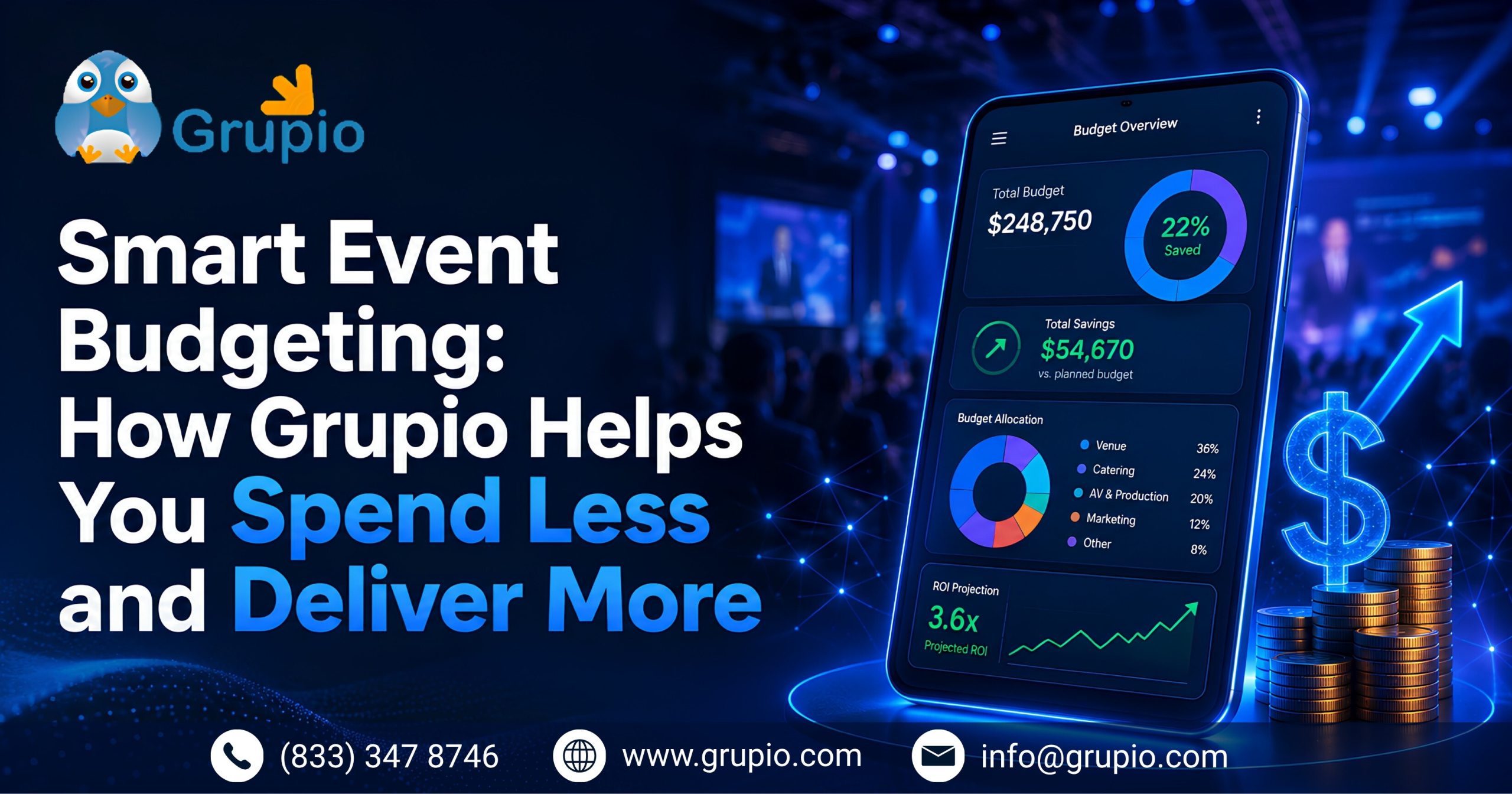
Every event planner remembers the moment a budget started slipping. In smart event budgeting, it’s often a florist quote that comes in 40% over estimate, or a venue fee that appears on the final invoice with no warning. The event still happened. It probably even went well. But the numbers told a different story than the plan did — and that gap between “planned” and “actual” is where most of the stress in event planning actually lives.
Every Event Starts With a Spreadsheet and a Guess
For most planners, budgeting still looks the same way it did a decade ago: a spreadsheet, a handful of vendor quotes pulled from memory or last year’s event, and a running total that gets updated whenever someone remembers to open the file. It works, until it doesn’t. Line items get missed. Vendor invoices arrive weeks after a verbal quote was given. Nobody notices the budget is 15% over until the event is two weeks away and the only options left are expensive ones.
This isn’t a planning failure — it’s a tooling failure. Budgets built in isolation, updated manually, and disconnected from vendor and attendee data are always going to drift. The fix isn’t more discipline. It’s a system that keeps the budget connected to the decisions being made around it in real time.
One Overrun Changes How You Plan the Next Event
It usually takes one bad experience — a budget blown by a single unexpected cost, or a sponsor asking hard questions about where the money went — before a planner starts looking for a better way to work. That search usually leads somewhere similar: a platform built specifically to keep spending visible and intentional from the very first planning session, not just at the final reconciliation. That’s the gap Grupio is built to close, and it comes down to six habits that separate a budget that holds from one that doesn’t.
Plan Early, Spend Smart

The single biggest predictor of a blown budget is how late it was built. When budgeting happens after the venue is booked and the vendors are half-selected, it becomes a math exercise in justifying decisions already made rather than a tool for making better ones. Building a realistic budget on day one — before contracts are signed — means every subsequent choice gets measured against a real number instead of a rough feeling. Grupio’s budgeting tools are designed to be the first step in event planning, not the last, so cost visibility shapes decisions instead of just recording them.
Prioritise What Attendees Actually Value
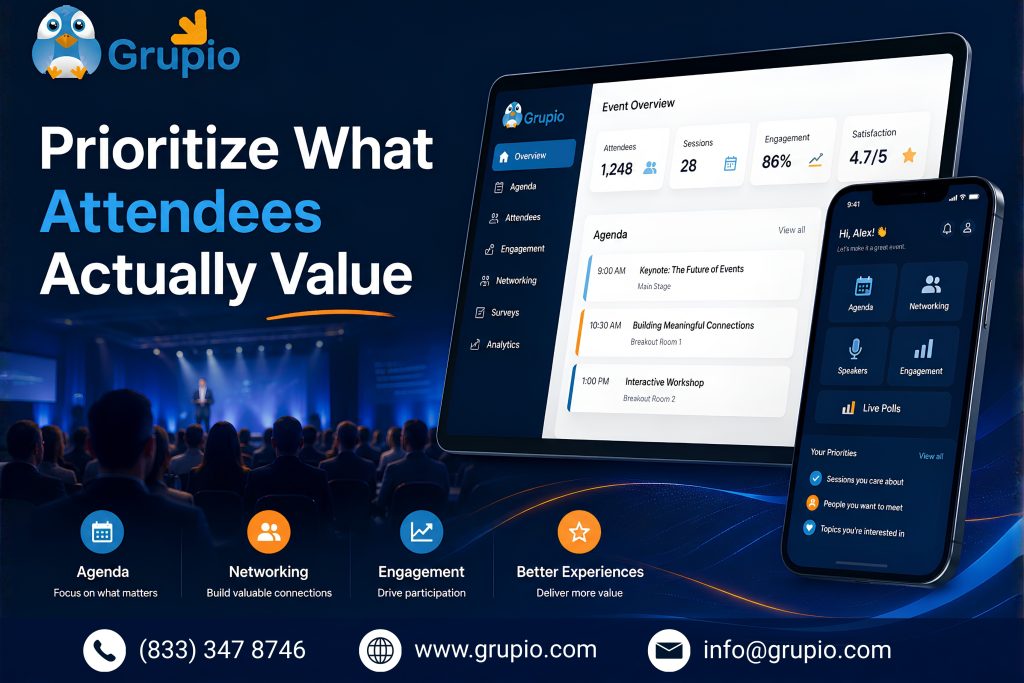
Not every line item in a traditional event budget earns its place. Elaborate stage design, printed programs, or a five-course plated dinner might be tradition, but they aren’t always what attendees remember or value. Smart budgeting means directing the largest share of spend toward the experiences that actually move the needle — better speakers, better networking time, better food quality — and trimming the items that exist mostly out of habit. Grupio helps surface this by connecting budget categories to attendee feedback and past event data, so planners can see which spend actually correlates with satisfaction.
Negotiate Better Vendor Deals

Every vendor negotiation is stronger when it’s backed by data instead of guesswork. Knowing what similar events have paid for comparable services, and having a clear picture of your own total spend across vendors, changes the conversation from “what’s your rate?” to “here’s what this should cost, and here’s why.” Grupio’s vendor insights give planners a benchmark to negotiate from, rather than negotiating blind against a quote that may or may not reflect market rate.
Track Every Expense in Real Time
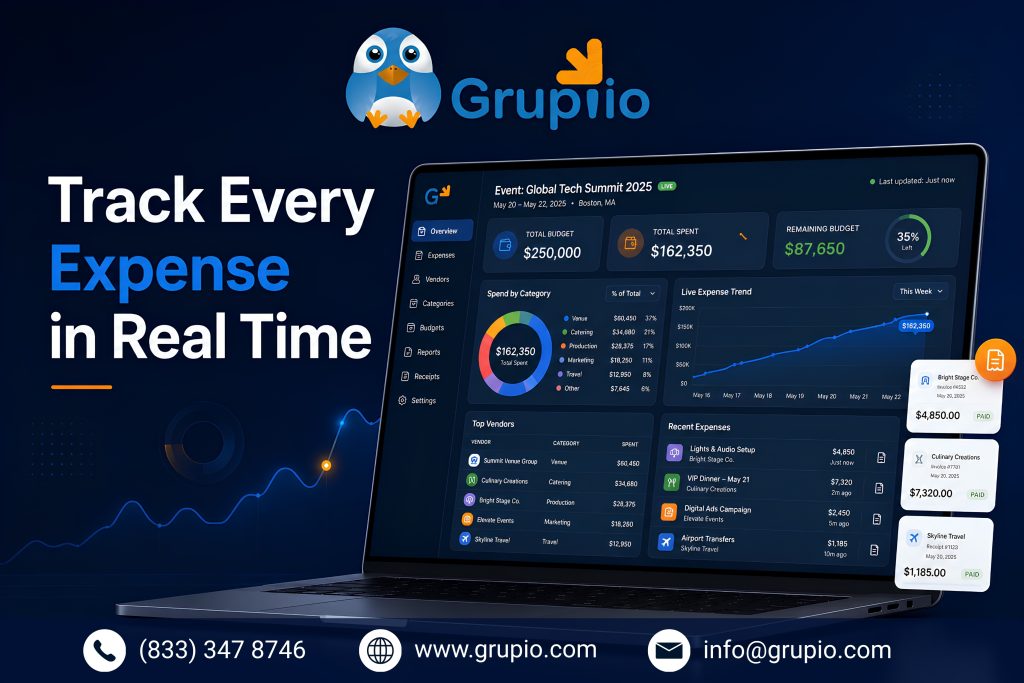
A budget that’s only accurate at the moment it’s built is not a useful budget for very long. Costs shift constantly — vendors add fees, quantities change, last-minute additions get approved in a hallway conversation and never make it into the spreadsheet. Live budget visibility means every one of those changes shows up immediately, not at the next scheduled review. With Grupio, spending updates in real time as commitments are made, so nobody discovers an overrun after it’s too late to course-correct.
Cut Costs Without Cutting Quality
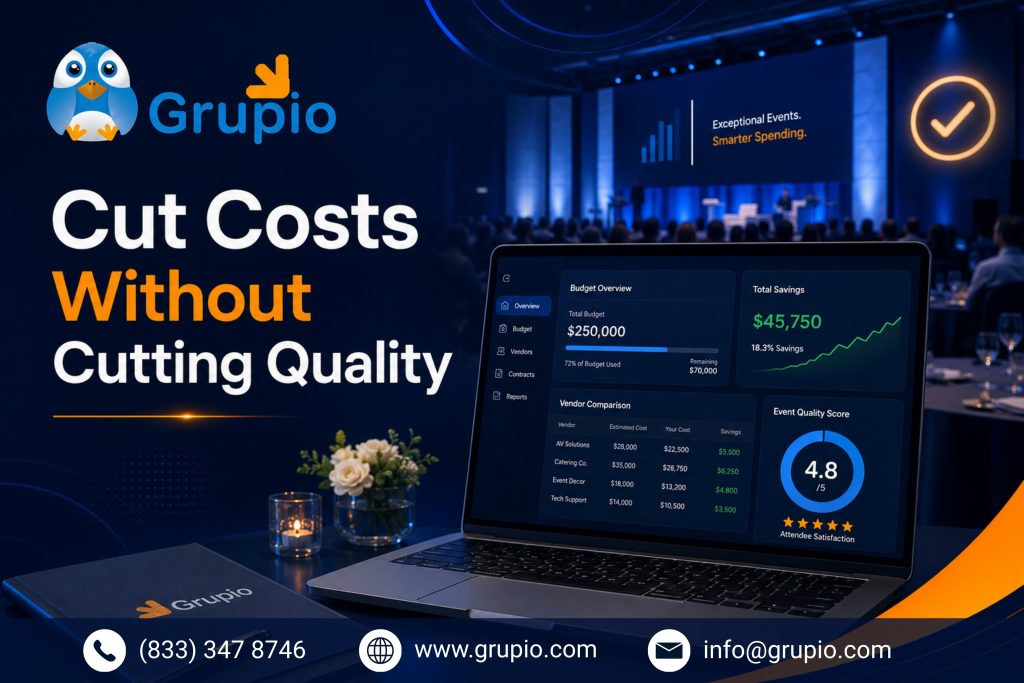
Cost-cutting has a bad reputation in event planning because it’s often done reactively and clumsily — cutting the wrong things at the wrong time because the budget just ran out. Done well, it looks different: identifying smarter alternatives ahead of time, before the pressure hits. A different catering format that costs less per head but tests just as well with attendees. A venue with better included amenities that reduces add-on costs. Grupio’s comparison tools make it easier to find those smarter swaps early, while there’s still time to choose them deliberately instead of desperately.
Plan for the Unexpected
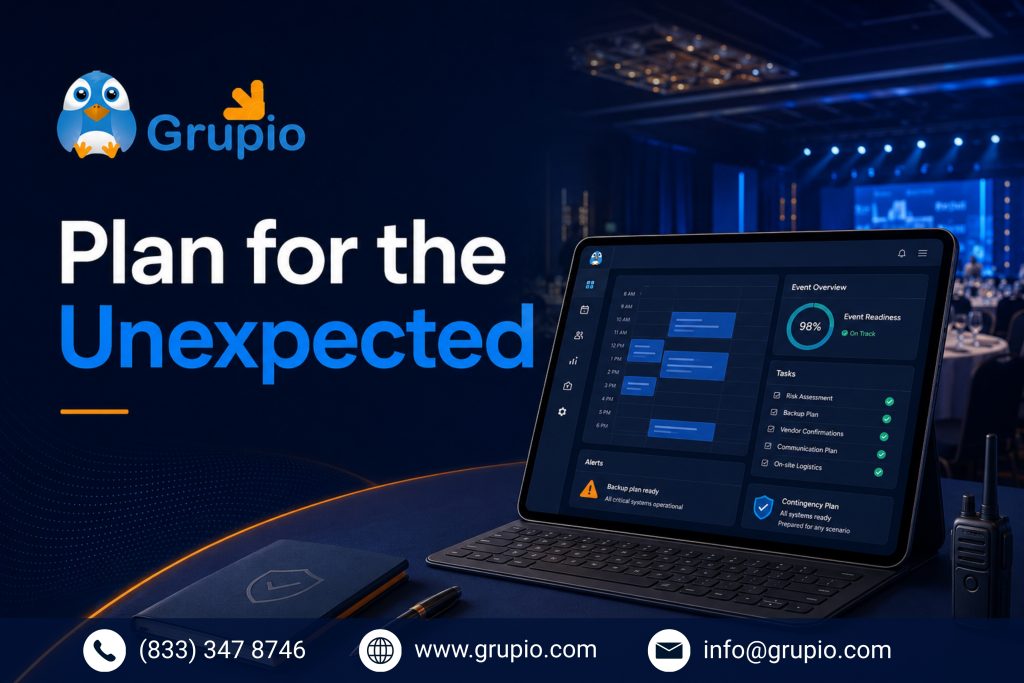
Every experienced planner has a story about the cost nobody saw coming — a weather delay, a last-minute AV upgrade, a vendor price increase between contract and event day. A contingency buffer isn’t pessimism; it’s the difference between a surprise that’s absorbed calmly and one that forces a scramble. Building that buffer into the budget from the start, and tracking it the same way every other line item is tracked, means surprises stay manageable instead of becoming the story of the event.
Until Finally, the Budget Becomes a Tool Instead of a Worry
The planners who stop dreading budget season aren’t the ones who got lucky with vendors or had a smaller event to manage. They’re the ones who moved budgeting to the front of the process, kept it visible throughout, and built in enough flexibility to absorb the unexpected without derailing everything else. That shift — from budget as an afterthought to budget as a live decision-making tool — is what platforms like Grupio are built to support.
If your last event’s numbers didn’t quite match your plan, that’s usually not a sign you need to work harder next time. It’s a sign that the system you were working within wasn’t giving you the visibility to catch problems while they were still small.
Frequently Asked Questions
1. What is smart event budgeting, and how is it different from a traditional event budget?
Smart event budgeting means building and managing your budget as a living part of the planning process, not a static document created once and checked at the end. It relies on early planning, real-time tracking, and data-informed decisions about where money should go — rather than a spreadsheet that’s only accurate on the day it was created.
2. When should I start budgeting for an event?
As early as possible — ideally before venues are booked or vendor contracts are signed. Budgeting first, rather than budgeting around decisions you’ve already made, gives you room to compare options and negotiate from a position of knowledge instead of urgency.
3. How much should I set aside as a contingency buffer?
The right number varies by event type and size, and there’s no single figure that fits every event — larger, more complex events with more moving vendor relationships generally warrant a larger buffer than a small internal gathering.
Note: Add your own guidance here: what contingency percentage has worked for your events, based on your own experience.
4. Can cutting costs actually hurt the attendee experience?
It can, but usually only when cuts are made reactively and without data — trimming whatever’s easiest to cut once the budget is already tight. Cuts made early and deliberately, based on what attendees actually value, tend to have little to no impact on the experience, and can sometimes improve it by redirecting spend toward things that matter more.
5. How does Grupio help with vendor negotiations specifically?
Grupio gives planners visibility into spending patterns and benchmarks across vendor categories, so negotiations can be grounded in real data about what similar services typically cost rather than accepting a first quote at face value.