

Why Modern Event Management Platforms Are Essential for Successful Events
An event management platform is the foundation of successful modern events. Instead of relying on spreadsheets, emails, and disconnected tools, organizers can manage registrations, schedules, attendee engagement, communication, and reporting from one centralized platform. As events continue to evolve across in-person, virtual, and hybrid formats, having the right event management platform is essential for delivering a seamless experience.
Planning an event used to mean juggling spreadsheets, email chains, sticky notes, and a dozen disconnected tools just to keep track of registrations, schedules, and attendee questions. As events have grown more complex—spanning in-person, virtual, and hybrid formats—that old approach simply doesn’t hold up anymore.
This is where an event management platform changes the game. Instead of stitching together separate systems for registration, communication, networking, and reporting, organisers now have access to a single, unified hub that handles it all. A modern event management software solution doesn’t just save time; it directly shapes the attendee experience, the quality of data you walk away with, and the overall success of your event.
Whether you’re running a 50-person workshop or a multi-day international conference, the right platform helps you work smarter, not harder. Below, we’ll walk through the most important benefits of using an all-in-one event platform, and show how Grupio brings these capabilities together to help you plan, run, and grow better events.
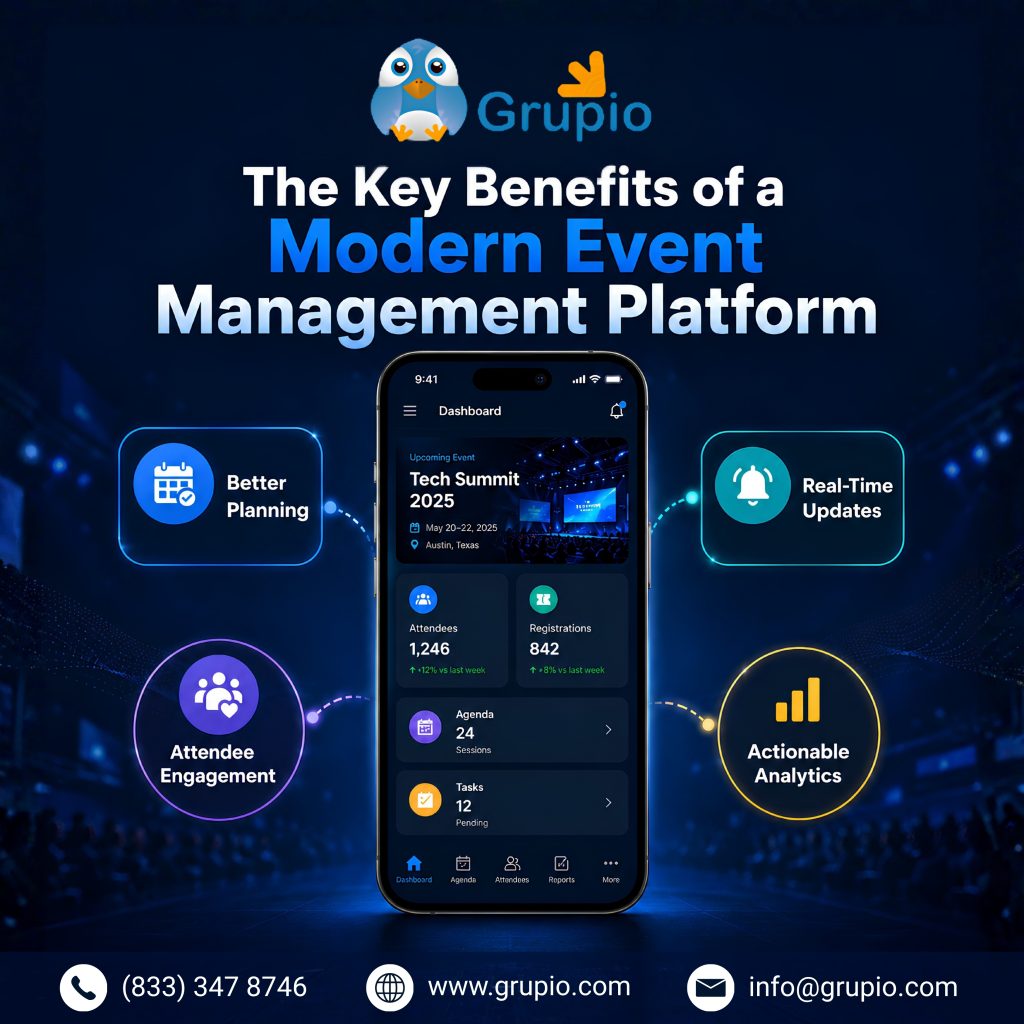
The Key Benefits of a Modern Event Management Platform
 Event Management Platform” width=”1024″ height=”1024″ class=”alignnone size-large wp-image-6644″ />
1. Centralised Event Management That Eliminates Manual Work
One of the biggest advantages of a true event management platform is centralisation. Rather than managing registration in one tool, attendee communication in another, and session scheduling in a third, everything lives in one place.
This means no more re-entering the same attendee data across multiple systems, no more lost emails buried in someone’s inbox, and no more last-minute scrambling because two team members updated the schedule differently. A centralised system reduces human error, saves countless hours of manual admin work, and gives your entire team a single source of truth.
With Grupio, organisers manage registration, agendas, communications, and attendee data from one dashboard—so your team spends less time on logistics and more time on strategy.
2. Mobile Event Apps That Enhance the Attendee Experience
Attendees expect convenience. A well-designed mobile event app puts the entire event experience in their pocket—schedules, speaker bios, maps, notifications, and more—without the need for printed programs or constant front-desk questions.
A mobile-first experience also makes attendees feel more engaged and informed throughout the event, leading to higher satisfaction and stronger word of mouth afterwards.
Grupio’s mobile app gives attendees a clean, intuitive way to navigate sessions, receive real-time updates, and stay connected to everything happening at your event, from their phone.
3. Real-Time Analytics and Reporting for Smarter Event Decisions
Data is one of the most underused assets in event planning. A capable event management platform captures attendance patterns, session popularity, engagement levels, and feedback in real time, giving organisers the insight needed to make decisions on the fly and improve future events.
Instead of waiting until after the event to assess how things went, real-time reporting lets you adjust on the spot—whether that means moving a session to a bigger room or sending a last-minute reminder to boost turnout.
Grupio provides organisers with live dashboards and post-event reports, turning attendee behaviour into actionable insights you can use immediately and long after the event ends.
4. Seamless Communication Before, During, and After Your Event
Clear communication can make or break the attendee experience. From pre-event reminders to last-minute schedule changes and post-event thank-yous, a strong event app keeps everyone informed without relying on scattered emails or social media posts that easily get missed.
Push notifications, in-app messaging, and automated email sequences ensure attendees never miss critical updates—and that your team doesn’t have to field the same questions over and over.
Grupio’s built-in communication tools let organisers send targeted notifications and updates at every stage of the event lifecycle, keeping attendees informed and engaged from sign-up to follow-up.
5. Personalised Agendas and Session Management
No two attendees want the same experience. Personalised agendas let each person build a schedule around the sessions, workshops, or speakers that matter most to them, rather than navigating a static, one-size-fits-all program.
This kind of flexibility doesn’t just improve satisfaction—it also gives organisers better data on which sessions are in highest demand, which helps with planning future events.
With Grupio, attendees can build their own personalised agendas, bookmark sessions, and get reminders before each one starts, making for a smoother, more relevant event experience.
6. Networking Features That Drive Meaningful Connections
For many attendees, networking is the real reason they show up. A modern event management software platform should make it easy for people to find and connect with the right people, whether that’s through attendee directories, matchmaking algorithms, or in-app messaging.
The easier you make networking, the more value attendees get out of your event, which directly impacts return attendance and referrals.
Grupio includes built-in networking tools that help attendees discover relevant connections, exchange contact details, and start conversations, all without leaving the app.
7. Gamification and Interactive Engagement That Increase Participation
Gamification—think leaderboards, scavenger hunts, polls, and point systems—has become one of the most effective ways to boost participation at events. It turns passive attendees into active participants and creates memorable, shareable moments.
Interactive features like live polls and Q&A also give speakers real-time feedback and keep audiences engaged during sessions, rather than just listening passively.
Grupio offers gamification and interactive features that organisers can customise to align with their event goals, helping drive participation and making the event more fun and memorable for attendees.
8. Hybrid and Virtual Event Support from a Single Platform
The shift toward hybrid and virtual formats isn’t going away. A capable hybrid event management software solution allows organizers to host in-person and remote attendees within a single ecosystem, without needing separate tools or workflows for each format.
This unified approach ensures virtual attendees get just as much value as those in the room—live streaming, virtual networking, and digital session access—all managed from the same backend.
Grupio supports hybrid and virtual events natively, giving organisers the flexibility to reach broader audiences without doubling their workload or budget.
9. Scalable Event Technology for Events of Every Size
Whether you’re hosting a 30-person internal meeting or a 10,000-attendee conference, your event management platform needs to scale with you. Tools that work for small events often buckle under the weight of larger ones, and enterprise tools can be overkill (and overpriced) for smaller gatherings.
Scalability also matters for organisations running multiple events of varying sizes throughout the year, as switching platforms repeatedly creates unnecessary friction and costs.
Grupio is built to scale, supporting everything from intimate meetups to large multi-day conferences, so you never have to outgrow your event technology.
10. Custom Branding That Delivers a Consistent Event Experience
Your event app and registration pages are an extension of your brand. Custom branding—logos, colours, fonts, and messaging—helps create a cohesive, professional experience that reinforces credibility and trust with attendees and sponsors alike.
For sponsored events, the ability to showcase sponsor branding within the platform also adds tangible value that can justify sponsorship investment.
Grupio allows full custom branding across the event app and web portal, ensuring your event looks and feels consistent with your organisation’s identity, and gives sponsors visibility where it matters.
11. Integrations That Keep Your Event Data Connected
An event platform shouldn’t operate in a silo. Integrations with CRM systems, email marketing tools, payment processors, and marketing automation platforms ensure attendee data flows smoothly into the rest of your business operations rather than getting trapped in the event tool.
This connectivity also reduces manual data exports and imports, which are often a source of errors and wasted time for event teams.
Grupio integrates with popular business tools, keeping attendee and event data synced across your existing tech stack without extra manual work.
Why an All-in-One Event Management Platform Is Better Than Multiple Event Tools
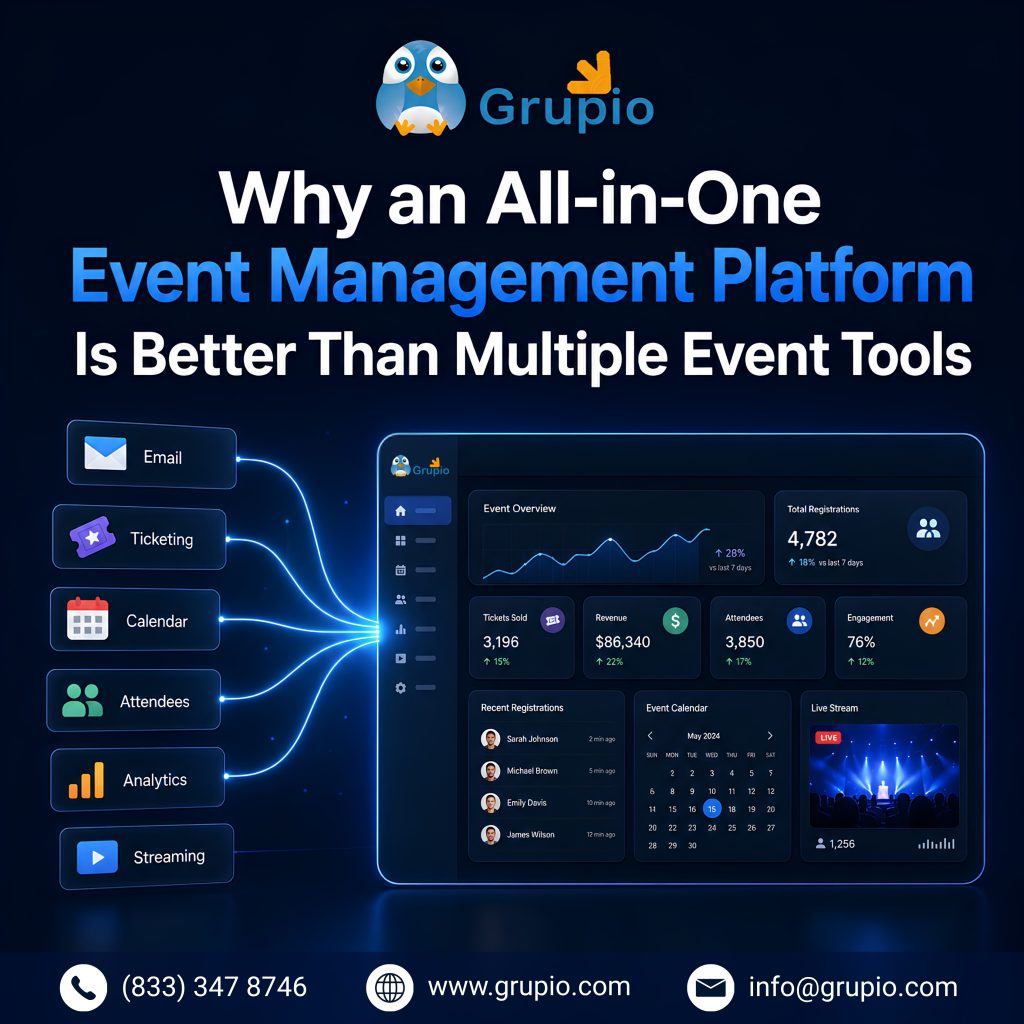
It’s tempting to piece together a “best of breed” stack—one tool for registration, another for the mobile app, a third for analytics, and so on. But in practice, this approach often creates more problems than it solves.
Disconnected tools mean disconnected data. Attendee information has to be manually synced (or worse, not synced at all) between systems, increasing the risk of errors and creating blind spots in your reporting. Your team also has to learn and manage multiple platforms, increasing training time and the risk that something falls through the cracks.
An all-in-one event management platform eliminates these pain points by housing registration, communication, mobile apps, analytics, and networking all under one roof. This not only simplifies the day-to-day workload for your team but also gives you a complete, unified view of your attendees and event performance, something that’s nearly impossible to achieve when data is scattered across multiple disconnected tools.
Beyond efficiency, there’s also a cost factor. Paying for and maintaining several separate subscriptions usually ends up more expensive than one consolidated platform, especially once you factor in the time spent managing integrations between tools that were never designed to work together in the first place.
How to Choose the Right Event Management Platform for Your Organisation
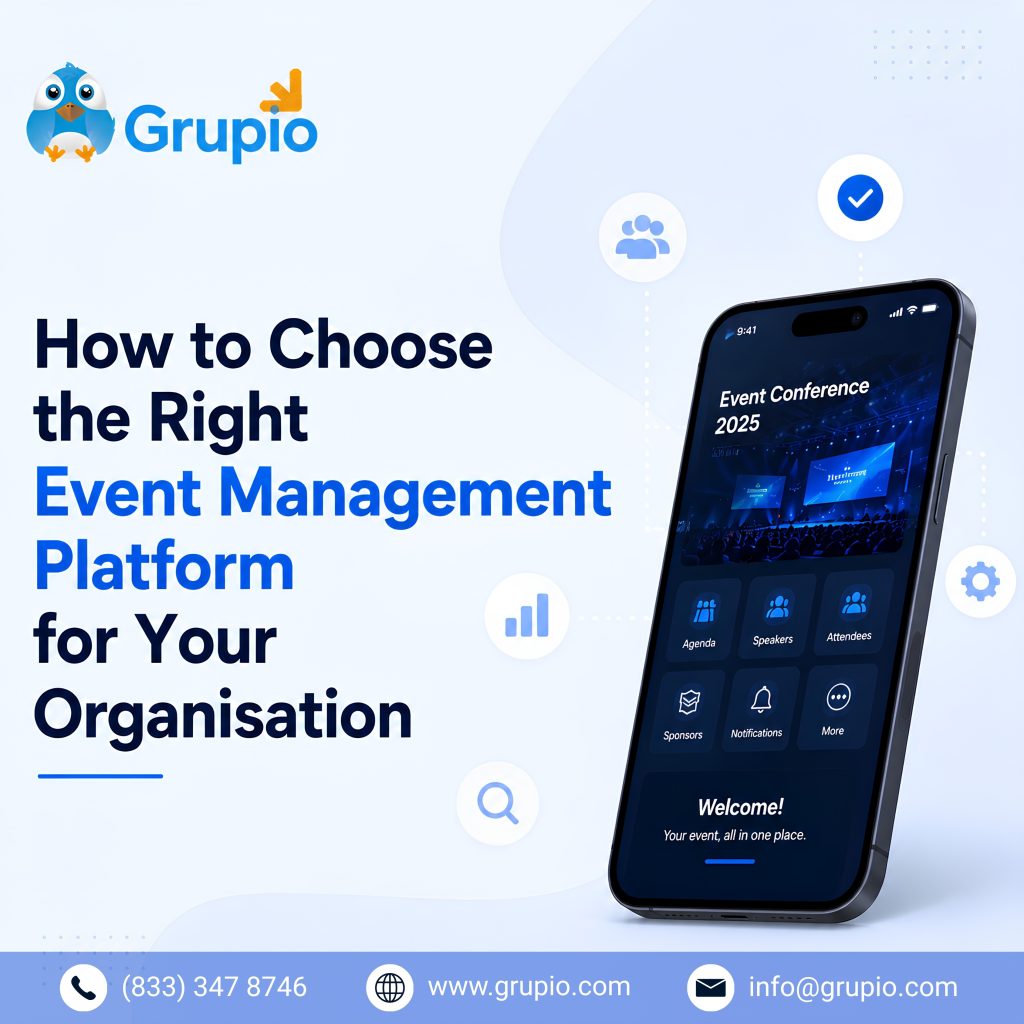
With so many options on the market, choosing the right event management software comes down to a few key considerations:
- Event size and type: Make sure the platform can comfortably handle your typical event size and supports in-person, virtual, or hybrid formats as needed.
- Ease of use: Both your team and your attendees should be able to navigate the platform without a steep learning curve.
- Customisation and branding: Look for a platform that lets you maintain consistent branding across registration pages and the mobile app.
- Reporting and analytics: Strong, real-time reporting is essential for making informed decisions before, during, and after your event.
- Integration capabilities: Check that the platform connects with your existing CRM, email, and payment tools.
- Support and reliability: Live events don’t pause for technical issues, so responsive customer support is critical.
- Scalability: Choose a platform that can grow with your organisation, rather than one you’ll need to replace as your events get bigger.
Grupio checks each of these boxes, offering a flexible, scalable, and easy-to-use platform that supports organisations at every stage of their event journey.
Conclusion
Successful events today aren’t built on spreadsheets and scattered tools; they’re built on smart, centralised technology that brings every part of the planning and attendee experience together. From streamlined registration and real-time analytics to mobile apps, networking, and gamification, a modern event management platform gives organizers the tools they need to deliver events attendees actually remember.
Grupio brings all of these benefits into one easy-to-use platform, helping event organisers save time, reduce manual work, and create more engaging, more connected events—whether in-person, virtual, or hybrid. If you’re ready to simplify your event planning and deliver a better experience for your attendees, it’s worth exploring what an all-in-one platform like Grupio can do for your next event.