

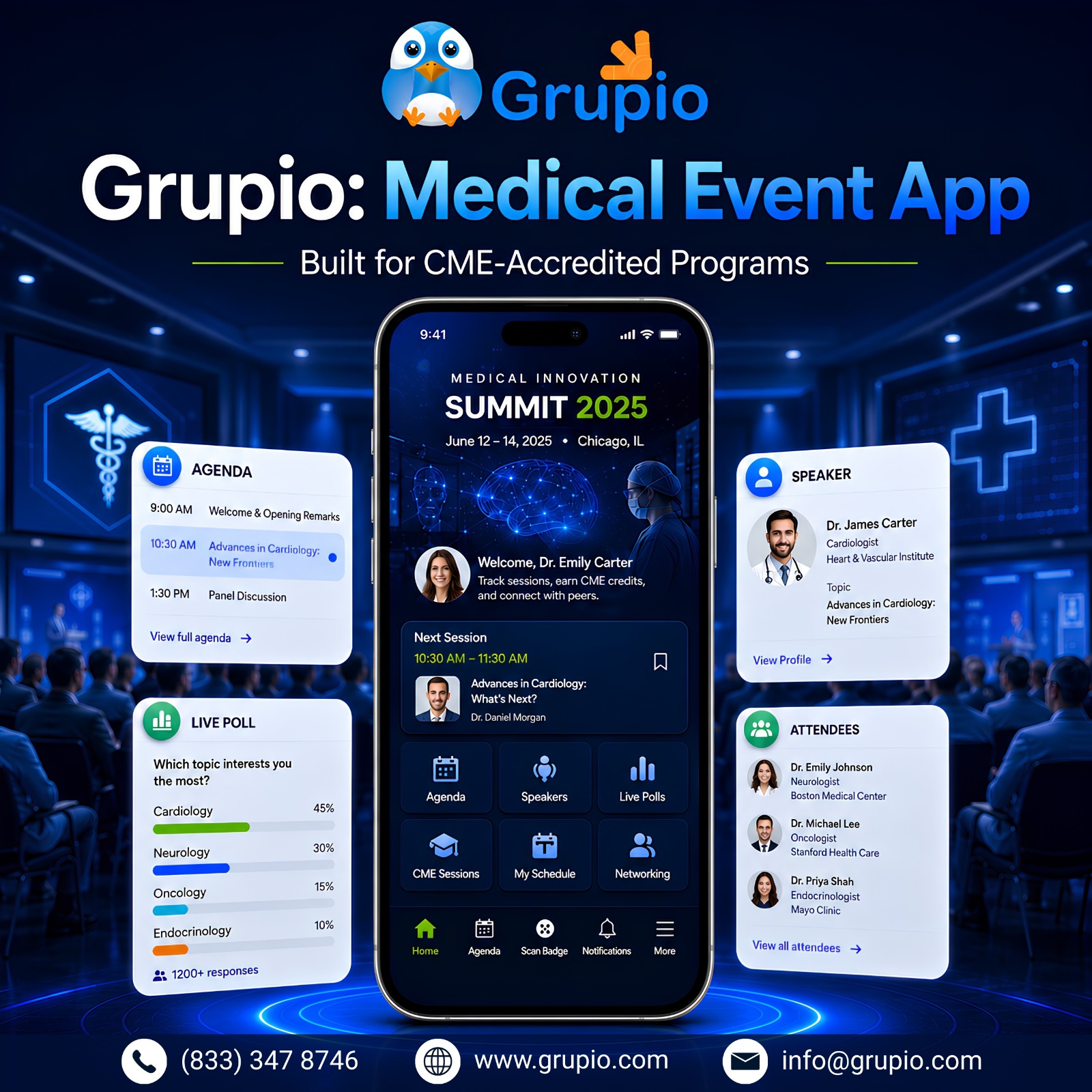
Picture a 600-attendee medical event of cardiology congress on a Tuesday morning. Five parallel tracks run across three wings of the convention centre. The printed handbook went to the printer ten days ago and is already out of date: two speakers swapped sessions, one room changed, and a satellite symposium moved up by an hour.
Delegates are clinicians with hospital pagers in their coat pockets. They cannot afford to walk into the wrong room. This is the operational reality medical conference apps are built to handle, and it is why platform choice has stopped being optional for CME-accredited programs.
This guide is for organisers evaluating platforms. It covers why generic event apps fall short, the features that matter for CME programming, how attendance tracking actually works, what to ask vendors, and where Grupio fits.
The same logic applies whether you run medical current events for a national specialty society or coordinate CME programming inside an academic medical centre.
Why Medical Events Need Apps Built for Clinical Teams
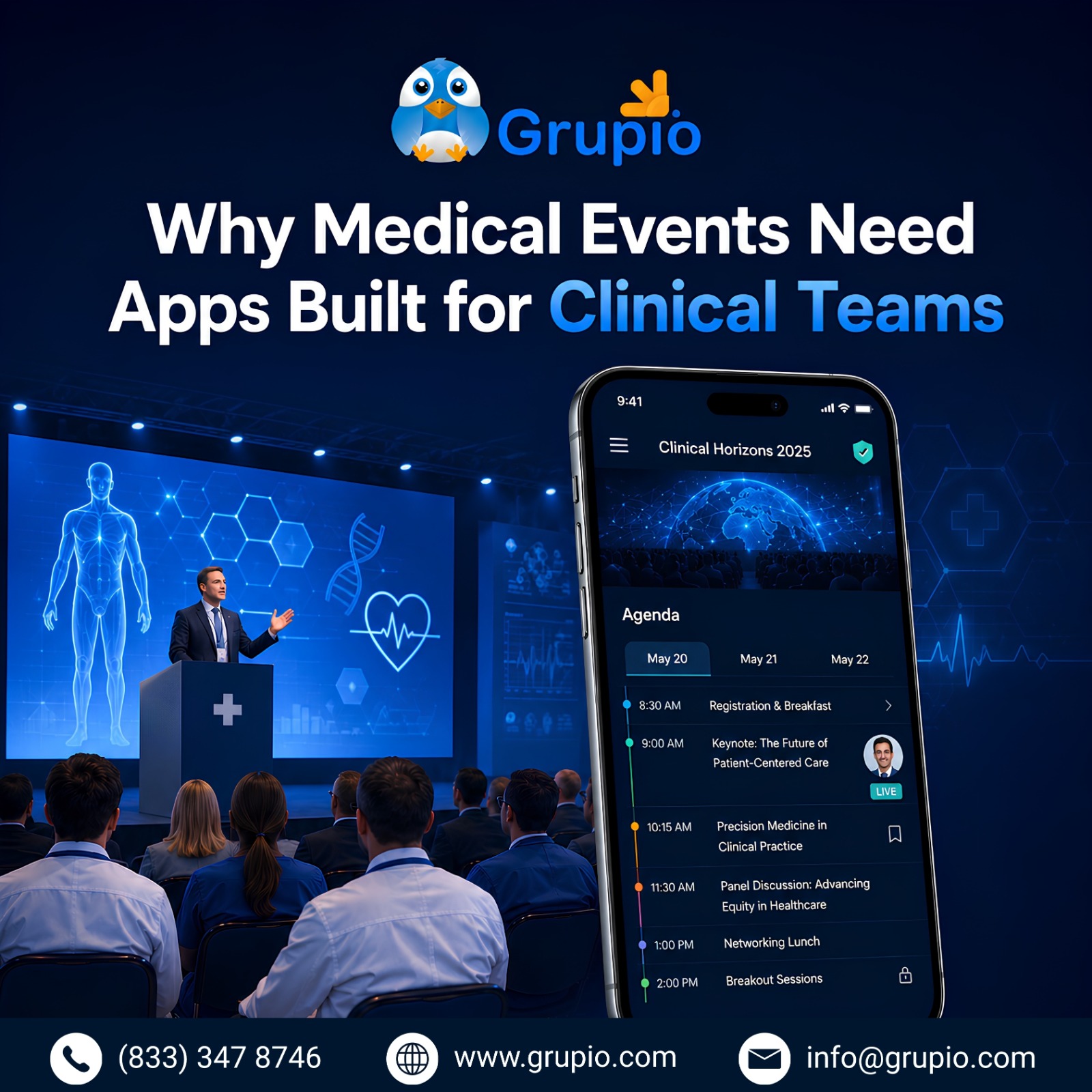
Generic event apps are built for marketing summits and trade shows. Medical congresses are not those. Four realities make the gap obvious.
1. Density of Content
A national specialty meeting routinely runs five to ten parallel tracks for three to five days, plus poster halls with several hundred contributions and satellite symposia. A standard agenda module designed for a one-track corporate event breaks at this scale.
2. CME Accreditation Requirements
ACCME-accredited events need session-level attendance tracking, preserved credit categories, and audit-ready exports. Most generic apps were never designed to produce these. CME compliance is the single feature most often missing from event platforms marketed as healthcare-ready. Many organisers discover that a generic healthcare event platform cannot support the reporting requirements expected from a continuing medical education app.
3. Clinical Workload and Offline Reality
Delegates are working clinicians. Hospital pagers go off mid-keynote. Convention centre Wi-Fi predictably collapses by mid-morning when hundreds of devices connect simultaneously. An offline event app is not a premium feature here; it is the baseline. Any mobile app for medical events should continue functioning when connectivity drops.
4. Privacy Expectations
Clinical audiences are conservative about data collection. Forced social profiles, mandatory account creation, and attendee tracking drive adoption rates near zero with this group.
Six Essentials for a CME-Ready Healthcare Event Platform
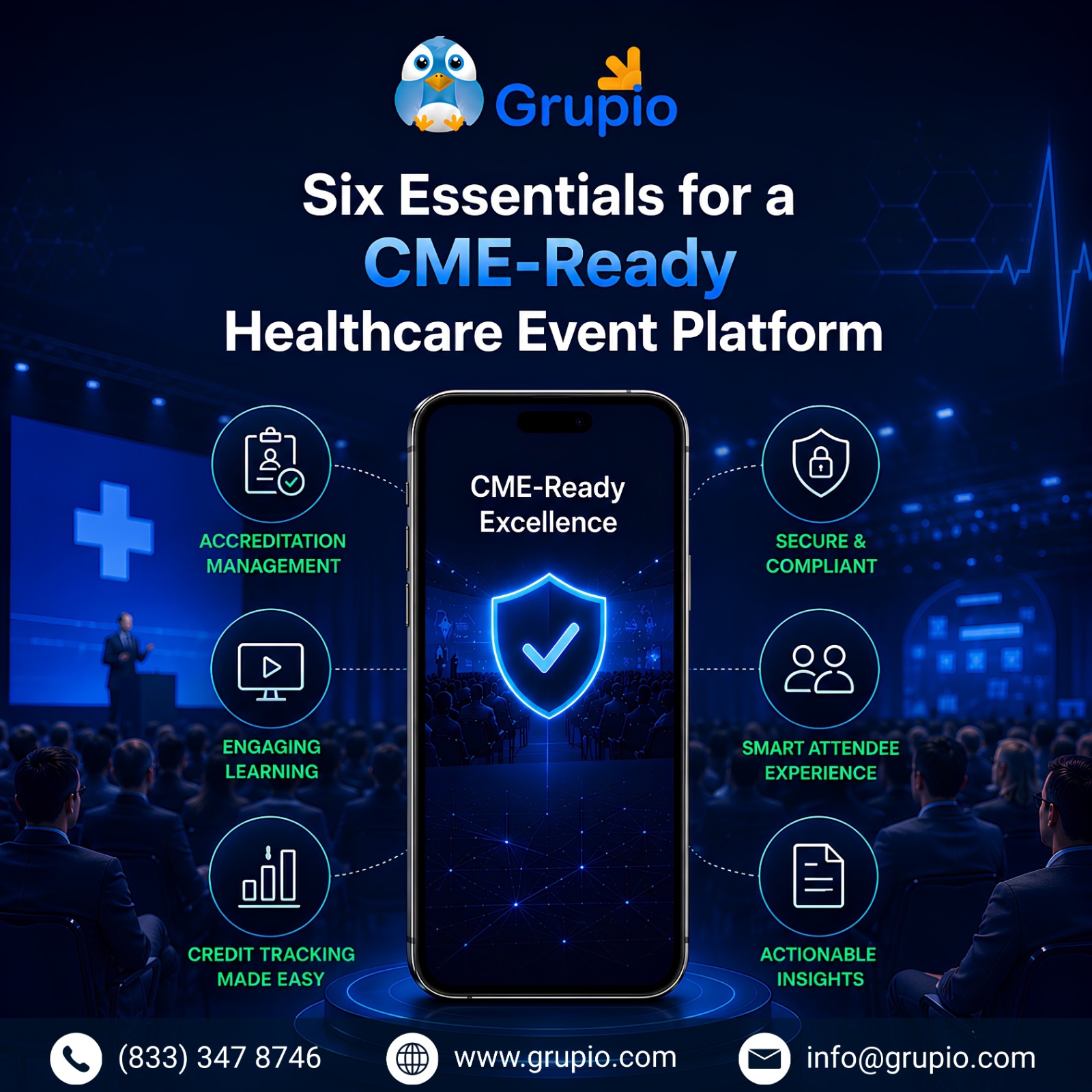
Once organisers accept that medical conference apps are a separate category, the question becomes what specifically to require.
1. Session-Level CME Tracking
Attendance has to be recorded against each accredited session individually, not the event as a whole. Credit categories need to be preserved, including AMA PRA Category 1, MOC, and specialty board credits. Certificates should be generated from the credentialed provider’s template rather than a generic vendor template.
2. Offline Access for the Whole Programme
Full agenda, abstracts, speaker bios, and room maps should cache to each delegate’s device on first open. The programme must remain usable in lecture halls, exhibition floors, and conference centres where connectivity is unreliable.
3. Multi-Track Conflict Detection
When a delegate bookmarks overlapping sessions, the personal agenda should flag conflicts at both the day and session level. This is especially important when both sessions offer CME credits.
4. Poster Hall Search
A clinical event app should treat poster halls as searchable, filterable inventories organised by disease area, study phase, or subspecialty.
5. Privacy-First Architecture
- No mandatory account creation
- Aggregated usage analytics only
- Privacy-aware handling of clinical identifiers
- GDPR readiness for international congresses
6. Integration With Existing Submission Systems
The scientific committee already manages submissions in platforms such as Indico, ConfTool, or society-specific systems. A continuing medical education app should integrate with these systems through clean imports.
How Medical Event Management Software Tracks CME Credits
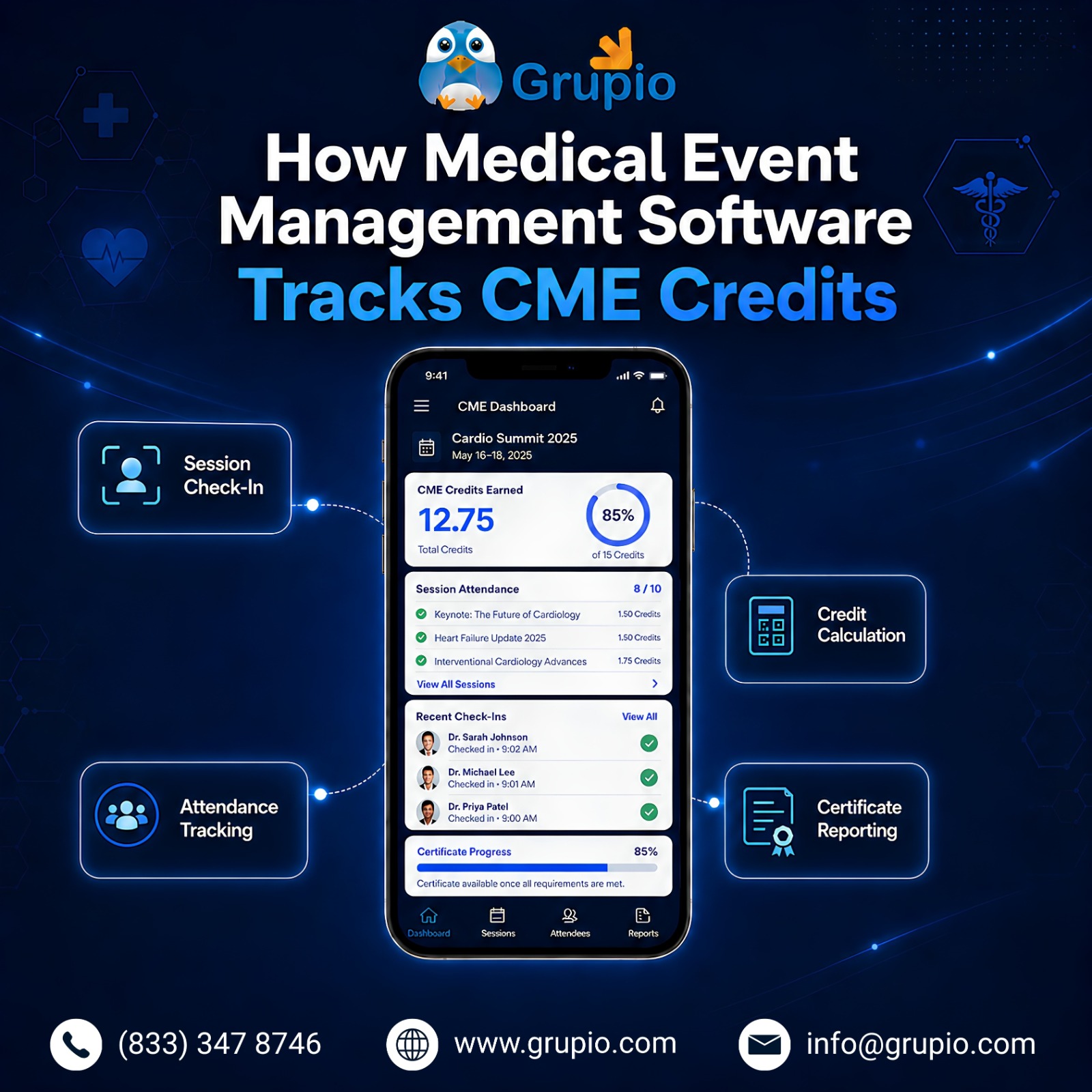
The mechanics matter because this is where most platforms claiming healthcare support actually fall apart. A real medical event management software solution and mobile app for medical events must handle the entire CME lifecycle, from session-level attendance tracking to certificate generation and audit-ready reporting.
CME credits attach to individual sessions during programme import, carried over from the source system without manual re-entry. Delegates check in via QR code or session-level confirmation at the door, which records timestamped attendance against the specific credit category. At event close, the platform exports an attendance log in the format the accrediting body requires, whether that is ACCME PARS, a specialty board template, or a state medical society format.
For organizations managing medical current events throughout the year, automation becomes even more valuable. Event medics, event medical services teams, and coordinators responsible for event medic services often rely on accurate schedules and attendance records to support operational planning around congress activities.
Certificates generate automatically from the credentialed provider’s template. The platform is the automation layer; the accreditation itself stays with the provider. Audit-ready reports compile to a single export rather than a week of spreadsheet stitching across registration, badge scans, and certificate vendors.
This matters more than any delegate-facing feature, because ACCME reaccreditation cycles depend on clean attendance records. A medical conference app that handles the credit chain correctly pays for itself in administrative time, and a mobile app for medical events that gets it wrong creates risk that lasts longer than the event.
What Medical Event Apps Must Prove Before You Buy
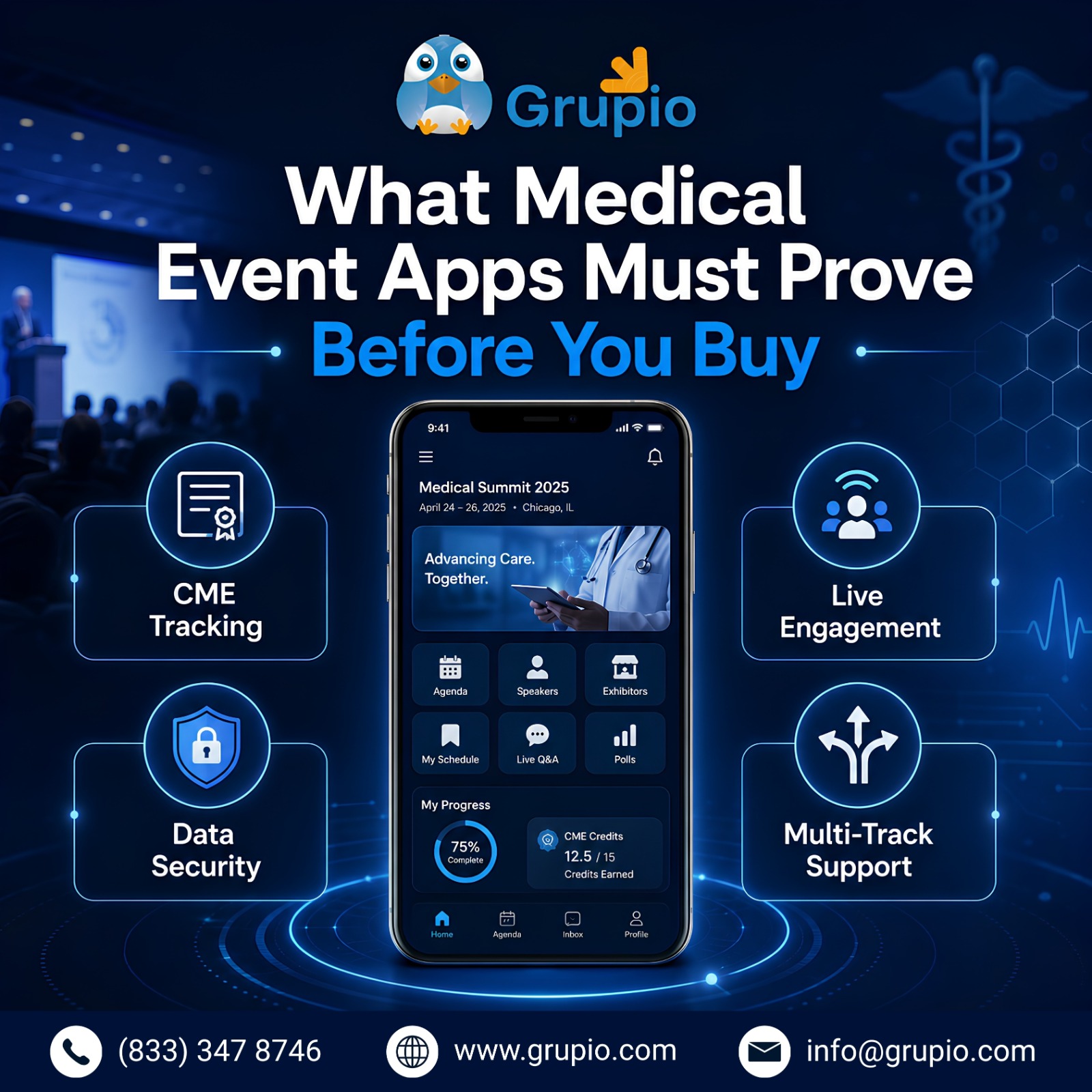
Treat vendor demos as evidence-gathering, not theater. Seven questions separate medical event apps that hold up in production from ones that look polished in a sales call.
Whether the event is a specialty congress, annual meeting, or series of medical current events, organizers should verify that every feature works in a real-world clinical environment.
Is offline mode complete, or partial? Some platforms cache the agenda but leave abstracts, poster lists, or maps online-only. Ask the sales engineer to enable airplane mode mid-demo and navigate live.
Is CME tracking native, or bolted on? Ask to see the actual attendance export format and a sample certificate, not a feature checklist.
What happens with last-minute schedule changes? Real congresses see speaker swaps the morning of. Delta updates should push to delegate devices without requiring a full app rebuild.
Does it require attendee logins? Forced sign-up reliably tanks adoption in clinical audiences.
How does it handle pharma-supported satellite symposia? The boundary between commercial visibility and medical education integrity needs explicit handling.
What is the import path from Indico, ConfTool, or your society’s system? A good healthcare event platform and clinical event app layer on top of the existing scientific workflow, not next to it.
Pricing model. Per-attendee, per-event, or annual? For larger congresses, scale economics shift the answer. Confirm exactly what is included against Grupio’s pricing page before signing.
Where Grupio Fits in the Picture
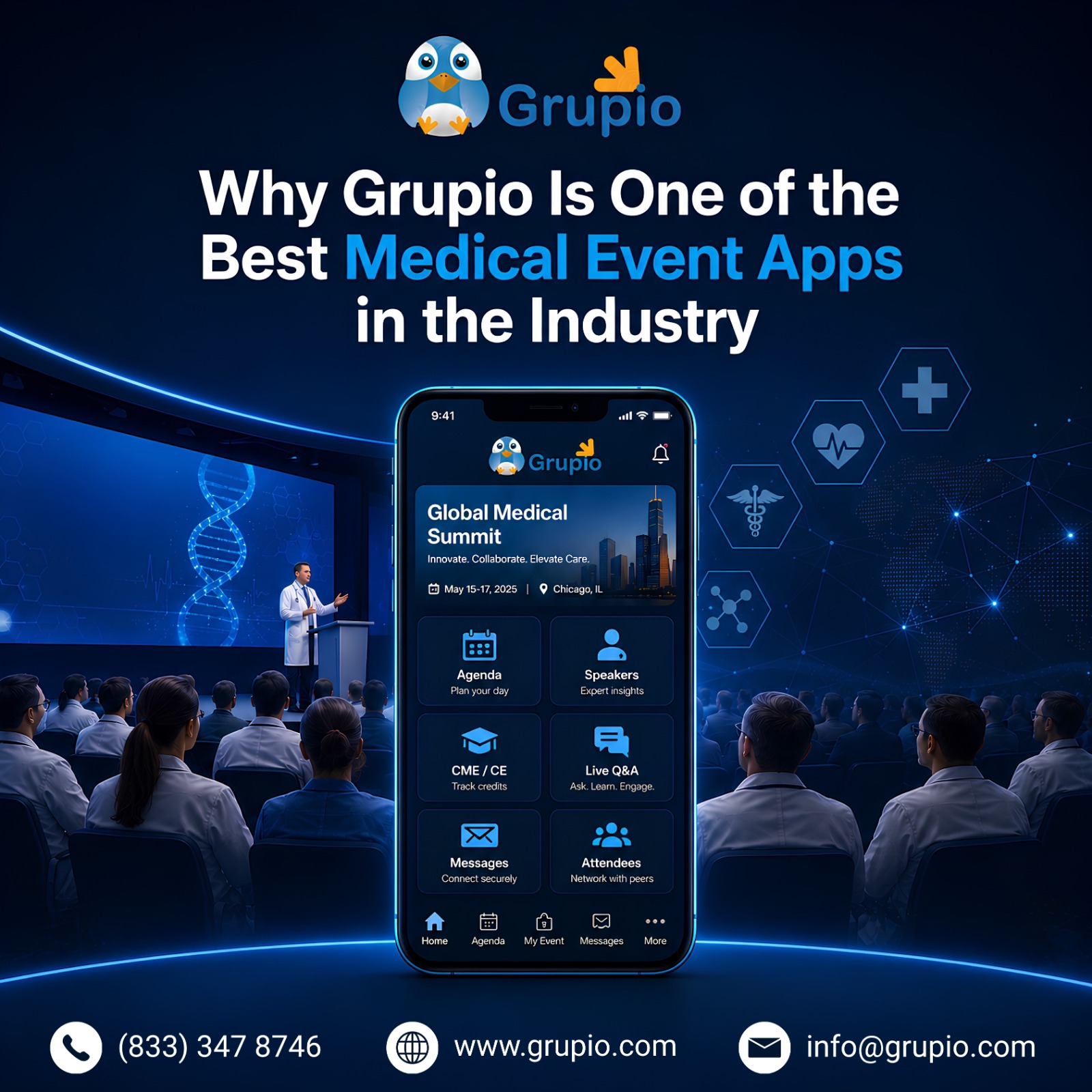
Grupio has powered CME and healthcare events for over a decade, including specialty society annual meetings, hospital grand rounds programs, and continuing medical education courses. The platform handles parallel tracks, session-level attendance, custom-branded apps, offline functionality, and audit-ready exports without forcing organizers into a second CMS.
For organizations running medical current events, the platform provides a practical way to keep clinicians informed without relying on printed materials. Event medics, event medical services providers, and event medic services teams benefit from the same real-time schedule updates used by attendees and faculty.
Setup runs two to four weeks. Accredited university medical centres qualify for the free university plan, which covers a meaningful share of US CME programming since so much of it runs through academic medical centres. Reviews on G2, Capterra, and the App Store frequently call out the support team by name, which matters when something needs fixing at 7 AM on day one of a congress.
Organisers can review the healthcare and CME solutions page or request a working demo against their actual programme.
Frequently Asked Questions
What Is a Medical Conference App?
A purpose-built mobile app for medical events that handles CME tracking, parallel tracks, offline access, and accreditor-ready reporting. These are features generic event apps lack, which is why medical conference apps exist as a distinct category.
How Do Medical Conference Apps Handle CME Credits?
Credits attach to individual sessions during programme import. Attendance is recorded against each session at check-in, and certificates generate from the credentialed provider’s template at event close. The platform handles automation; the accreditation stays with the provider.
Are Medical Event Apps HIPAA-Compliant?
Most well-designed medical event apps and clinical event app solutions avoid handling protected health information altogether, which is a cleaner answer than chasing certification. They default to privacy-first analytics, support CME compliance requirements, skip mandatory accounts, and produce audit trails aligned with hospital and academic medical center expectations. Confirm specific compliance posture with each vendor before signing.
How Much Do Medical Conference Apps Cost?
Pricing varies widely. Mid-market platforms like Grupio start around $500 to $1,000 per event and scale with attendee count. Enterprise platforms typically run higher with custom annual quotes. Accredited university medical centres may qualify for free plans.
Why CME Events Need the Right Medical Event App Now
Medical conference apps have moved from optional enhancement to required infrastructure for CME-accredited events. The right mobile app for medical events reduces administrative load on the program team, improves the delegate experience for working clinicians, and produces the audit trail accreditation review requires.
Whether you manage large annual congresses, recurring medical current events, or programs supported by event medics, event medical services, and event medic services teams, selecting the right platform has become a strategic decision rather than a technical one.
The worst time to evaluate event technology is two months before a major congress. By then, the scientific programme is locked, the registration system is processing, and the program team has no bandwidth to switch tools.
Organisers ready to walk through Grupio against a specific congress can request a demo. Bring the programme structure, the CME categories in play, and any integration constraints.